President responds to semiconductor industry's push for exemptions from 52-hour workweek rule
Lee says exemptions without extra compensation are unacceptable, stresses right to health
Orders Employment and Labor Ministry to review revisions to enforcement decree and procedural improvements
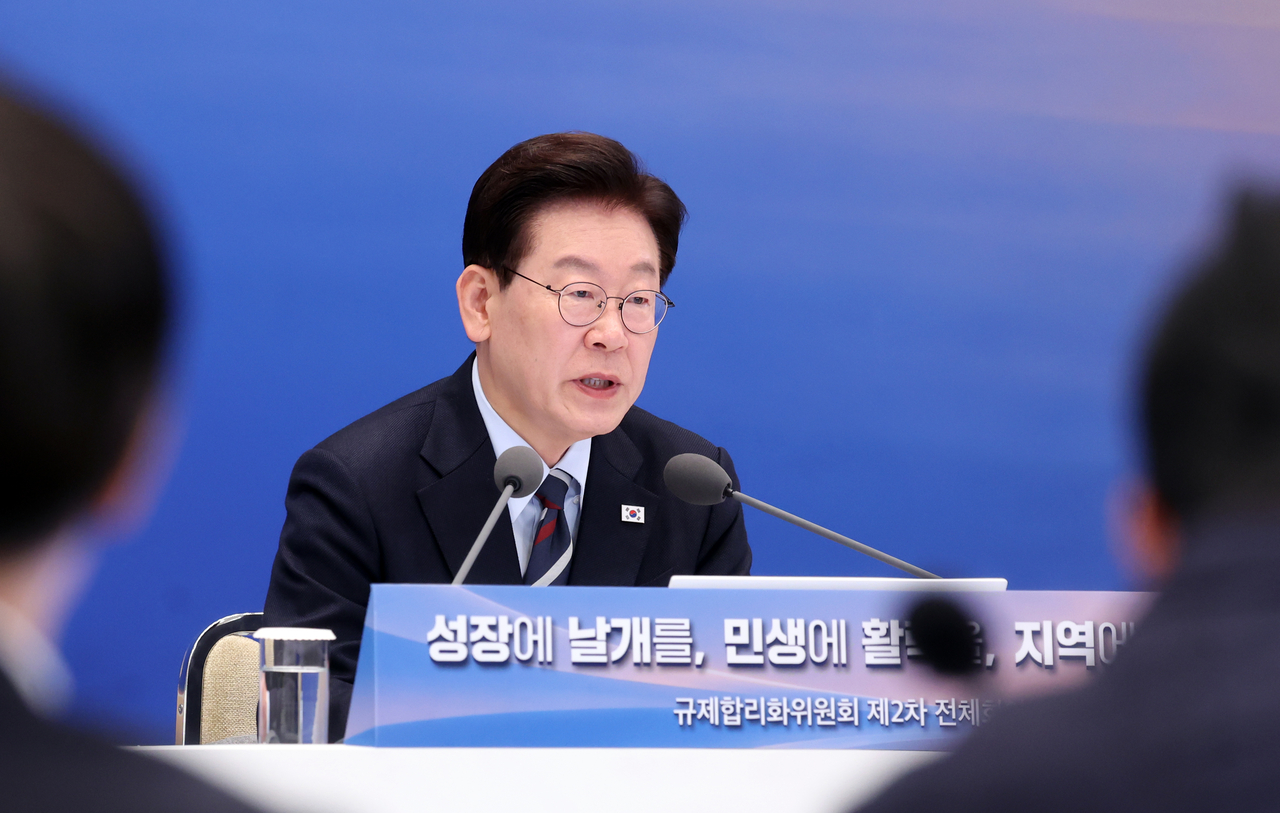
President Lee Jae Myung said Friday that any exemption from the 52-hour workweek rule sought by the semiconductor industry must be premised on the payment of overtime wages.
Speaking at the second plenary session of the Regulatory Rationalization Committee at Cheong Wa Dae, Lee said the fundamental condition for any exemption is that it cannot be designed to leave additional labor uncompensated. "Whatever special legislation is created, a system that does not compensate for extra work is absolutely unacceptable," he said. "Premium wages must be paid."
He said the remaining sticking point appeared to be workers' right to health. "If someone researches 20 hours a day for five days, can they survive?" he said. "There has to be some limit set on that as well."
Lee directed Employment and Labor Minister Kim Young-hoon to explore ways to resolve the dispute short of a full legislative overhaul. "I don't think the differences are serious enough to warrant extreme confrontation," he told Kim. "Look into whether there are ways to amend the existing enforcement decree, simplify procedures — have a thorough discussion on that."
He went on to say that mutual trust was essential. "There is a serious lack of trust — the Ministry of Employment and Labor needs to make an effort," he said.
Kim said in response that the ministry would carefully examine the difficulties companies face in using existing systems, build trust and ensure concrete results.
The National Assembly is currently debating whether to include an exemption clause in legislation on broad regional special zones aimed at promoting locally driven growth — a provision that would exclude high-income and research workers from the 52-hour rule.
Park Geon-su, standing vice chairman of the Korea Semiconductor Industry Association, attended the session and said exemptions on working hours for core research and development personnel have long been a priority for the semiconductor industry. He called for the relevant clause to be included in the bill.
The semiconductor industry argues that the nature of R&D work requires the flexibility to concentrate hours intensively at certain times. Critics, however, warn that easing working-hour regulations could lead to excessively long shifts. Balancing flexibility for R&D workers against protections for their health is expected to be the central issue in future discussions on any exemption.
Lee also addressed the question of collecting behavioral data from factory workers for the development of physical AI technology.
"Any policy is bound to have side effects or potential for misuse," he said. "Open and candid debate and a process of adjustment to reconcile competing interests will be needed."
He also called on the National Assembly to cooperate in moving regulatory reform legislation forward quickly. "There is a great deal that needs to be legislated, and there are many sources of conflict that will make it difficult — but please help ensure it is handled swiftly, with clear priorities," he said.
boo@heraldcorp.com