[Senior Reporter Park Jong-il's Autonomy Square] Oh Se-hoon returns to Seoul City Hall after resigning and losing two Assembly races — a political narrative forged by adversity — but whether he can translate that story into a vision on real estate and urban competitiveness will determine his presidential prospects
A politician who aspires to the presidency needs two things: a grasp of the defining challenge of the age — what Koreans call "the spirit of the times" — and a personal narrative that shows why he or she is the right person to meet it.
Every president since democratization has built both. Kim Young-sam and Kim Dae-jung rode the democracy movement; Roh Moo-hyun championed balanced regional development; Lee Myung-bak projected an image of economic growth; Park Geun-hye, Moon Jae-in, Yoon Suk Yeol and President Lee Jae Myung each constructed their own story within the political circumstances of their time.
The defining challenges shifted from era to era — democratization, regime change, economic growth, welfare, the candlelight protests, political reform — but in every case the way a leader navigated political crises shaped the public image that ultimately carried them forward.
Viewed through that lens, the political journey of Seoul Mayor Oh Se-hoon is worth examining closely. A dazzling start, a steep fall, a long absence from the political stage, a dramatic comeback, and then a fresh legal crisis resolved by an acquittal on appeal — these episodes form the main chapters of his political narrative.
Oh entered politics as a lawyer who had also worked as a prominent television host. He won a National Assembly seat in Gangnam, drew attention for legislation on political reform, and was elected Seoul mayor at a relatively young age, going on to win re-election.
That smooth trajectory snapped abruptly over a referendum on free school lunches. He resigned as mayor, spent years on the political sidelines, and then lost consecutive Assembly races in Jongno and Gwangjin-gu. A politician who had once stood at the peak of Seoul politics found himself fading from the national stage.
The reversal came with the 2021 Seoul mayoral by-election. Oh returned to City Hall after a decade away and has led the city through subsequent elections. Had he won again at the 2026 local elections against expectations, he would have secured a record fifth term as an elected Seoul mayor.
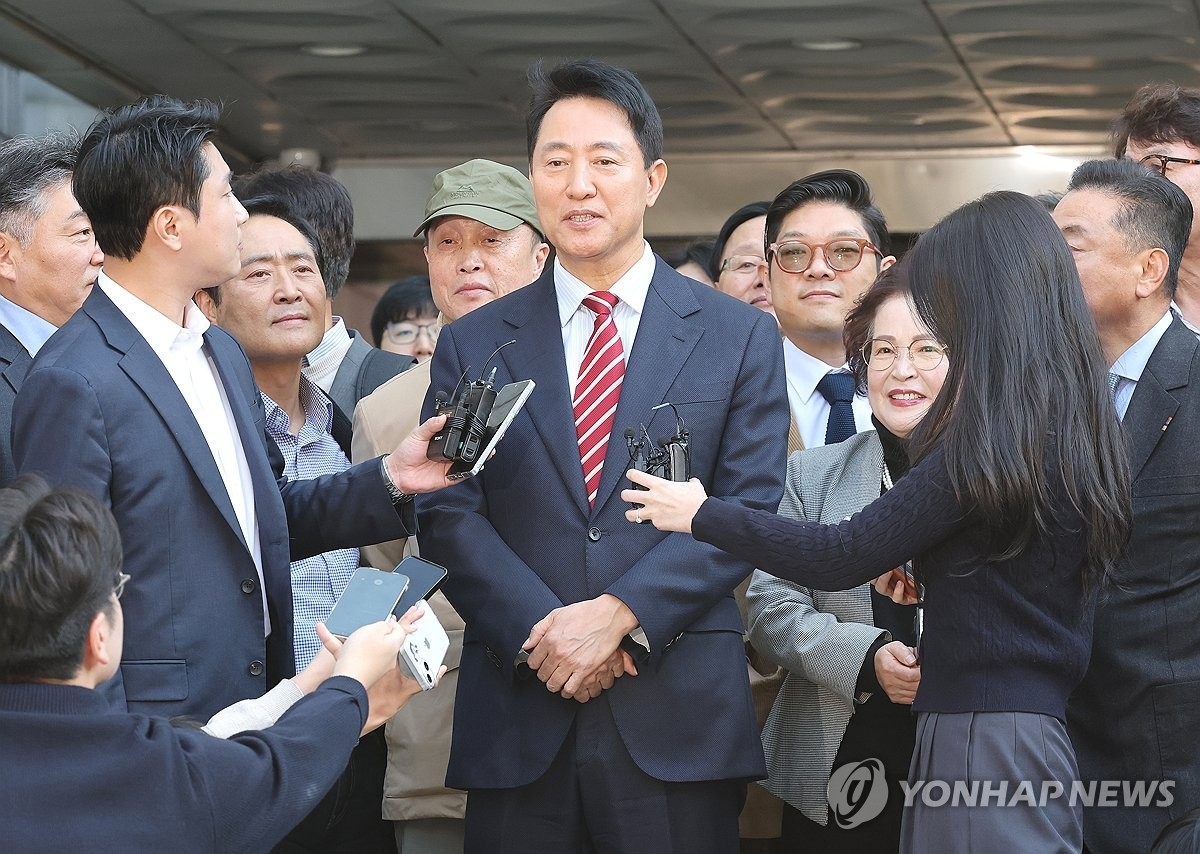
Then came the legal crisis. He was indicted over allegations that political operative Myung Tae-kyun paid for opinion polls on his behalf ahead of the 2021 by-election, and a lower court sentenced him to a 10 million won ($7,550) fine. On Friday, however, an appeals court acquitted him, lifting a significant legal burden.
The ruling could reshape the political environment around Oh. That said, an acquittal does not automatically translate into stronger standing as a presidential contender or broader political influence. Whatever the verdict's significance, he will ultimately be judged on policy results and political leadership going forward.
The challenge before him is clear: whether his political ups and downs remain merely a record of success and failure, or whether he can connect them to a coherent policy vision for Seoul's future.
Real estate is the field where Oh has the clearest opportunity to articulate a spirit of the times. The key question is whether he can deliver housing solutions that residents actually feel — through faster redevelopment and reconstruction, easing of regulations, expanded supply, and the swift execution of neighborhood renewal projects such as Moa Town. That means addressing not only the pace of housing supply but also home prices, jeonse and monthly rent stability, protection of existing residents, and the public interest dimension of each project.
Seoul's urban competitiveness, balanced development, the low birth rate, aging, traffic and the environment are also major challenges. To translate his experience as Seoul mayor into a national governing vision, he will need to explain — with concrete evidence — both the achievements and the limits of the policies he has pursued in the city.
Political crisis alone does not create a spirit of the times. What matters is how a leader overcame the crisis and what policies and values he drew from the experience. The narrative Oh needs is not one that simply replays his past falls and comebacks, but one that uses his record running Seoul to point toward a direction for governing the country.
"The appeals court acquittal could become an important variable in Oh's future political path," a political insider said. "What matters now is whether he can offer differentiated alternatives to the government on key issues, starting with real estate policy, and demonstrate real results."
Ultimately, Oh Se-hoon's narrative is not yet finished. The political turbulence, the return to City Hall, the legal crisis and its resolution are raw material — nothing more. Whether he can weave that material into credible answers to the challenges of the age is the central question that will define where his political path leads.
seouldream01@heraldcorp.com