72 times the size of Yeouido
State funds to be recouped through sale rather than development
Chile farm to shift to lease model, with solar potential
South Korea is moving to sell or convert to lease two state-owned farms in South America that were purchased decades ago to support agricultural emigration but have since been neglected or poorly managed.
According to documents submitted Monday by the Korea International Cooperation Agency to the office of Democratic Party of Korea lawmaker Han Jeong-ae of the National Assembly's Foreign Affairs and Unification Committee, KOICA has begun asset-disposal proceedings for its two South American farms, located in Argentina and Chile.
KOICA is conducting land appraisals and analyzing development potential and economic benefits — drawing on on-site surveys and legal advice — to devise an asset-utilization plan that maximizes the national interest. The Ministry of Foreign Affairs, the supervising ministry, has approved the approach and is exploring the necessary procedures.
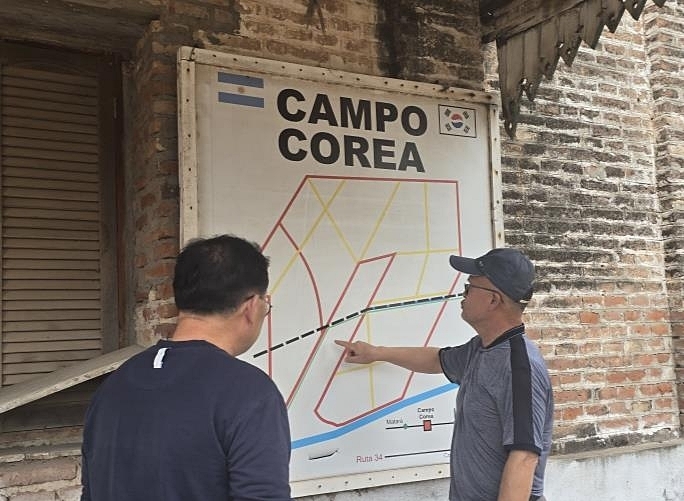
The Yattamauca farm, located 1,050 kilometers northwest of the Argentine capital Buenos Aires, was purchased in August 1978 by the Overseas Development Corporation, then under the Ministry of Foreign Affairs, for approximately $2.12 million during the Park Chung-hee administration. The site covers 20,882 hectares (approximately 208.9 million square meters) — roughly one-third of Seoul's total area and approximately 72 times the size of Yeouido.
The government had envisioned a large-scale farm for Korean emigrants, but four subsequent government surveys all concluded the land was unsuitable for development. When KOICA was established in 1991 and took over management, it could find no viable use for the property, leaving it idle for about 50 years.
Tallying only the period for which KOICA's electronic records are available — 2001 through 2026 — cumulative expenditures have reached 4.95 billion won ($3.74 million), including roughly 1.07 billion won ($808,000) in land taxes and 3.88 billion won in local operating costs. Until recently, fixed annual costs ran at about 300 million won.
Development prospects were effectively shut down after the provincial government tightened environmental regulations in 2015, designating a substantial portion of the farm as a protected forest zone, and then rejected a development plan KOICA submitted in 2024.
An eco-friendly development scheme combining forestry and ranching was also examined, but analysis showed it would require at least an additional $2.94 million in upfront infrastructure investment and would take more than 18 years to recoup costs.
Ultimately, KOICA decided to sell the asset and recover the public funds, citing significant country risk from potential shifts in provincial policy, a lengthy payback period if developed, and ongoing management costs if retained.
To head off criticism of a fire-sale price, KOICA plans to maximize the land's value before selling. The agency estimates the undeveloped farm is worth $10.44 million and is currently preparing to sign a contract with an appraisal firm for an official valuation based on that figure.
However, the sale will incur various concessions, including a 15 percent capital gains tax, a provincial stamp duty, notarization and brokerage fees, and foreign-exchange remittance charges.
After taxes and other concessions, KOICA expects net proceeds to amount to roughly 80 to 90 percent of the estimated land value.
By contrast, the Teno farm in Chile — covering 185.33 hectares and located 173 kilometers south of the capital Santiago — will not be sold but instead restructured under a lease arrangement designed to maximize returns.
Purchased in December 1980 for approximately $530,000, the farm has been run on short-term temporary contracts since its previous tenant's lease expired in 2017, with no long-term operating plan in place. Critics have pointed to poor management, including rents set below market rates.
For the new lease, KOICA is actively considering designating the site for solar power generation rather than simple agricultural use. An appraisal found the location ideal for a solar plant, given a nearby substation, high-voltage distribution lines and proximity to a national highway.
A recent topographic survey put the actual land area at 178.61 hectares. Of that, the flat Zone 3R — covering 145.4 hectares and offering the highest solar efficiency — could, if leased for 25 to 35 years, generate an asset value up to 1,480 times greater than a standard agricultural lease.
"Overseas farmland purchased in the name of supporting emigration has been poorly managed — left idle or undervalued through temporary short-term contracts," Han said. "The remaining steps, including repatriating the proceeds from the Argentine sale and normalizing water rights in Chile, must be carried out without a hitch."
bigroot@heraldcorp.com