Palisade US transfer cut from 200,000 to 74,000 units
New Kona to be split between Plants 2 and 3
Ioniq 5 to move to EV factory in Sept. next year
GV70 EREV to begin Ulsan production in March next year
Ulsan EV factory Line 2 to reach full operation in 2028
Avante to be co-produced at Asan
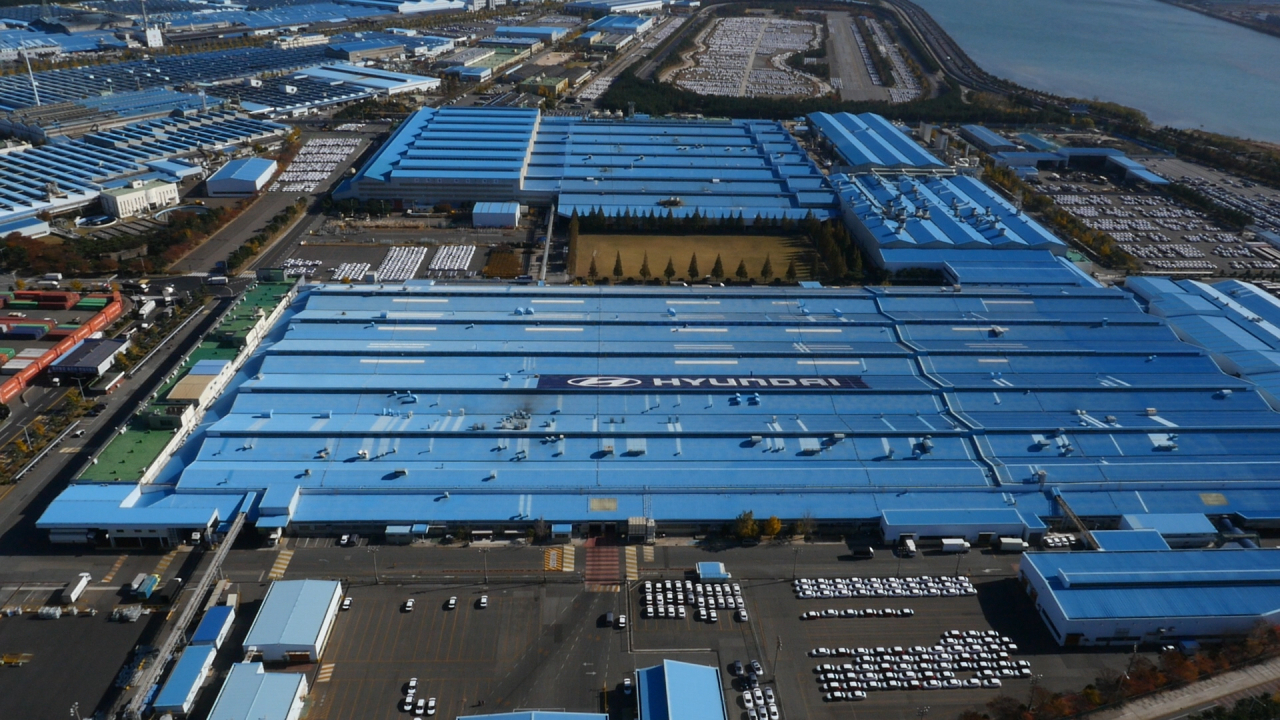
Hyundai Motor's management and union reached a final agreement after months of negotiations on a domestic production realignment tied to the reconstruction of the Ulsan factory. The two sides agreed to reduce the volume of production to be transferred to the United States from an initially proposed 200,000 units to 74,000 units. Production of the Kona, previously handled by Plant 1, will also be restructured — starting with the next-generation model, output will be split between Plants 2 and 3 — while the Ioniq 5 is set to move to a dedicated electric vehicle factory in September next year, signaling a significant reshaping of Hyundai Motor's domestic production map.
According to industry sources Monday, management and union signed an "Employment Stability Committee Agreement" on Thursday covering the allocation of output and job security measures stemming from the reconstruction of Ulsan Plant 1 and Plant 4 Line 2 (Line 42).
The deal resolves months of disagreement between management and labor over reduced domestic output and workforce redeployment arising from the reconstruction of aging facilities at the Ulsan factory. The two sides had been in talks since June, negotiating over the allocation of vehicle models and production volumes by plant, as well as employment stability measures.
The most significant change is the reduction in the scale of Palisade hybrid production to be transferred to the United States. The volume was cut from the 200,000 units management had originally proposed to 74,000 units — a reduction of 126,000 units, or 63 percent. Hyundai Motor had sought the transfer to cope with US tariff burdens and local demand, but the union pushed back, demanding that output levels be maintained to protect domestic factory utilization rates and job security.
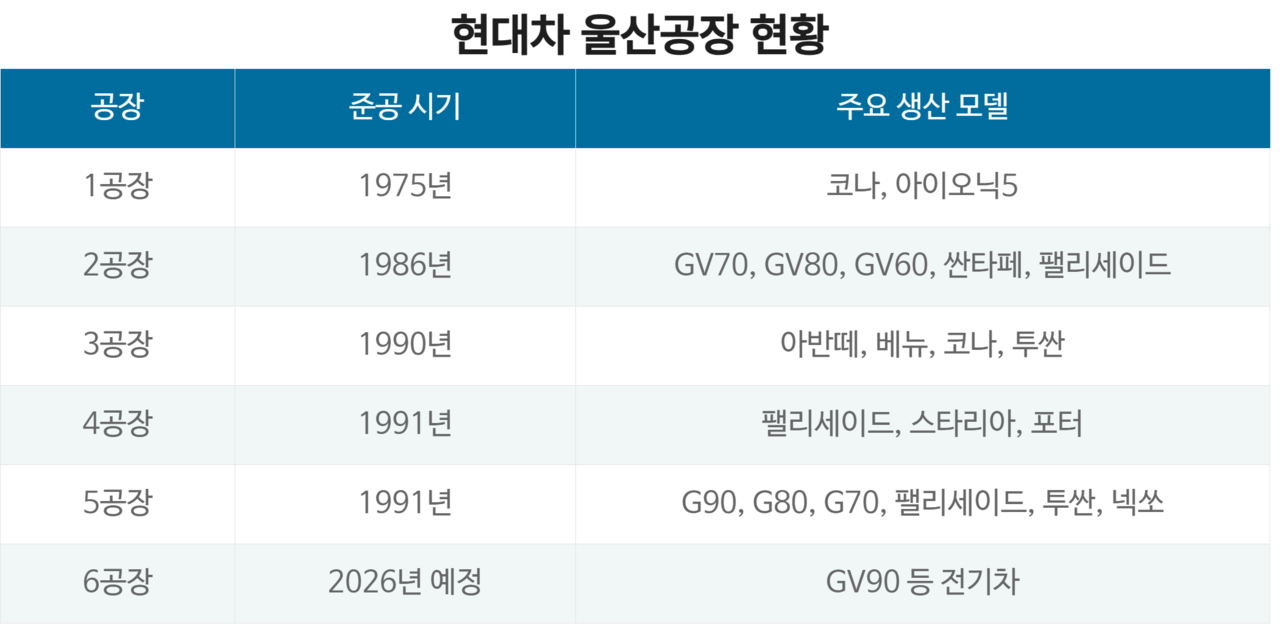
A model-by-model production realignment also took shape. The existing Kona, produced at Plant 1 — one of the facilities slated for reconstruction — will be discontinued, and the successor next-generation Kona will be split between Plants 2 and 3.
Plant 3 will begin producing the domestic-spec next-generation Kona in March next year. Plant 2 will take over production of the North America-spec next-generation Kona starting in August.
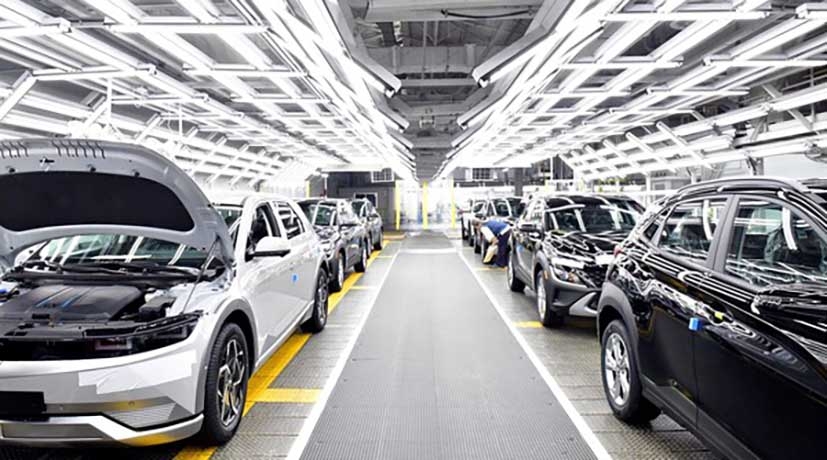
The Ioniq 5, currently produced at Plant 1, will move to Ulsan's dedicated EV factory. Management and union agreed to begin Ioniq 5 production on EV factory Line 1 in September next year, with two-shift operations to commence at the same time.
The Genesis GV70 extended-range electric vehicle (EREV) will also enter production at the Ulsan EV factory starting in March next year. The model had initially been considered for US local production targeting the North American market, but the direction shifted to domestic production as part of the Ulsan factory realignment.
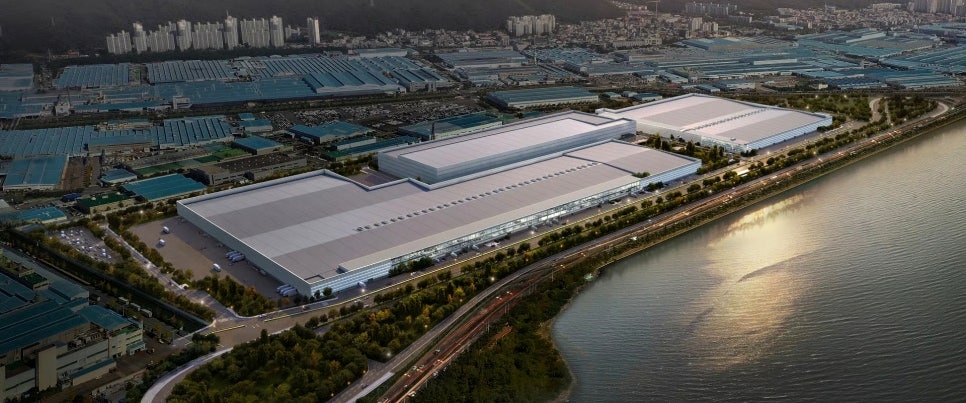
With this agreement, the newly built Ulsan EV factory — set to begin mass production later this month — will produce the Genesis GV70 EREV and the Ioniq 5 in addition to the GV90. The company plans to carry out electrification-related construction across all lines of the EV factory next year in preparation for growing EV demand, and will also finalize additional vehicle models to be assigned to the facility. On that basis, Hyundai Motor aims to bring EV factory Line 2 to full operation sometime in 2028.
Ulsan Plant 4 will retain its status as the primary Palisade production facility and will be given priority assignment of successor models — including eco-friendly variants — when a next-generation Palisade is developed.
The Asan factory will begin co-producing a portion of the North America export volume of the Avante currently made at Ulsan Plant 3, starting in January next year. However, if Plant 3's output falls below the level that existed when the co-production arrangement was established, the volume allocated to the Asan factory will be returned to Plant 3.
Management and union also agreed to align production plans for engine, transmission and materials factories with finished-vehicle output levels. The seat factory will similarly seek to secure volume through the introduction of new vehicle models should output decline as a result of the reconstruction and production transfers.
kwater@heraldcorp.com