Korea leads in biosimilar variety with 13 active ingredients yet posts lowest market penetration rate at 33%
Celltrion, Samsung Bioepis each earn more than 90% of revenue overseas
Savings tied to originator price cuts, not prescription switches; new incentive regime urgently needed
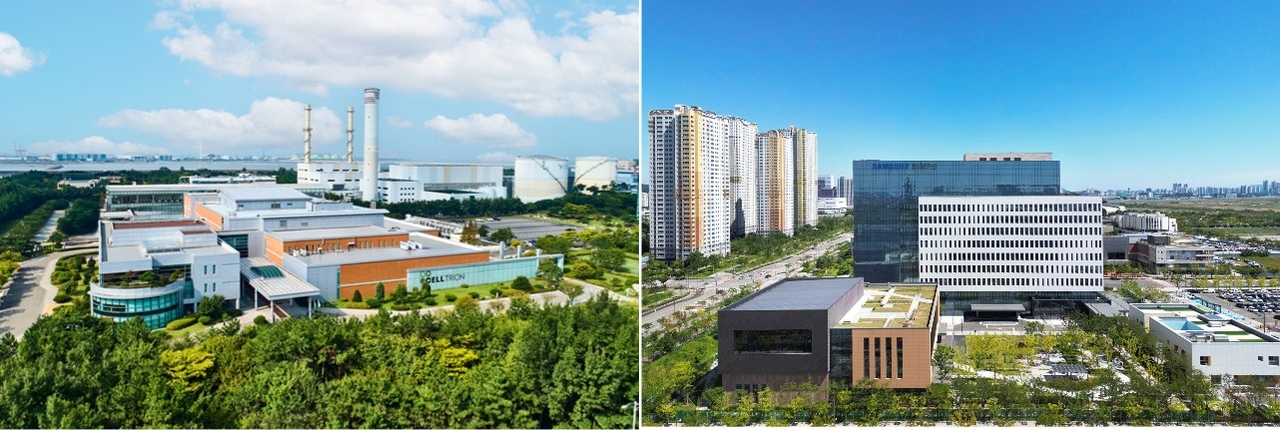
South Korean biotech companies have made a strong mark in the global biosimilar market, yet at home their products are barely gaining traction — with Korea posting the lowest market penetration rate among major nations, a new industry report shows.
Analysts say a lack of economic and institutional incentives to encourage prescription switching to biosimilars is preventing the country from fully realizing potential savings in national health insurance spending.
According to a policy report on biosimilar adoption published recently by the Korea Biotechnology Industry Organization, Korea has launched biosimilars for all 13 biopharmaceutical ingredients analyzed in the study — the highest number among the 12 countries compared.
Yet as of the third quarter of 2025, Korea's average biosimilar market penetration rate stood at just 33.1%, the lowest among the 12 countries surveyed. That figure trails major European markets such as the United Kingdom (80.1%) and Italy (74.1%), as well as Japan (58.2%) and the United States (44.9%).
New Zealand ranked first at 83.6%, though its figure covers only four ingredients, limiting direct comparison. Even setting New Zealand aside, Korea's 33.1% rate was more than 10 percentage points below the next-lowest country, the US at 44.9%.
Although Korea has launched biosimilars for all 13 ingredients, the tocilizumab ingredient was excluded from the penetration calculation because data for the analysis period were unavailable, leaving 12 ingredients as the basis. Korea's average penetration rate within one year of launch — measured over four quarters — was also just 11.4%, ranking 10th among the 12 countries. Not a single ingredient exceeded a 50% penetration rate within the first year.
The stagnation in the domestic market is clearly reflected in the earnings structure of Korea's leading biosimilar companies. According to disclosures filed with the Financial Supervisory Service's DART system, Samsung Bioepis, a subsidiary of Samsung Epis Holdings, recorded total sales of 847 billion won ($639 million) in the first half of 2026, of which 796.4 billion won, or 94.0%, came from overseas. Domestic sales were limited to 50.6 billion won, or just 6.0%.
Celltrion similarly derived 2.33 trillion won, or 91.6%, of its total consolidated first-half sales of 2.54 trillion won from overseas, based on the domestic-versus-overseas breakdown in its financial statement notes. Domestic sales amounted to only 212.5 billion won, or 8.4%.
Celltrion's domestic sales figure appears to include a substantial portion from chemical pharmaceuticals — its business-segment sales for chemical drugs in the first half came to about 142 billion won — suggesting the actual share of biosimilars alone in domestic revenue could be even lower. The companies driving Korea's trillion-won achievements on the global stage are in practice confined to single-digit domestic revenue shares at home.
The report also noted that national health insurance savings from biosimilar adoption have relied far more heavily on originator drug price reductions than on expanded prescribing.
Drug expenditure for the 12 biosimilar-launched ingredients in 2025 totaled about 1.15 trillion won, a saving of about 549.9 billion won compared with the projected 1.7 trillion won that would have been spent without biosimilar entry.
Of that saving, however, 87.1% — or 478.7 billion won — came from linked price reductions applied to originator drugs following biosimilar market entry. Savings from actual prescription switching, where patients moved to biosimilars, amounted to only 71.2 billion won, or 12.9%.
The report attributed the low uptake to government policy having focused exclusively on the supply side — research and development and product approvals — while failing to put in place demand-side incentives that would lead healthcare providers and patients to choose biosimilars.
In practice, the current prescription and dispensing drug-cost savings incentive program excludes biosimilar ingredients that fall under certain therapeutic categories, including biologics and oncology drugs, leaving little motivation for prescription switching in clinical settings.
Major overseas markets, by contrast, actively operate incentive schemes to encourage switching. The United Kingdom applies a gain-sharing model in which a portion of the savings generated by biosimilar use is reinvested in healthcare providers or local health services. Ontario, Canada, pays physicians 61.20 Canadian dollars ($44) per patient as a one-time fee when they support a patient's switch from an originator to a biosimilar, and pharmacists receive a one-time support fee of 15 Canadian dollars. Japan has introduced an add-on reimbursement of up to 1,500 yen ($10) per month for up to three months when a physician first prescribes a biosimilar and counsels the patient.
The report recommended that Korea consider introducing a high-cost biopharmaceutical drug-cost savings incentive for healthcare institutions, a prescription-switching counseling fee to compensate physicians for the consultation work involved, and a drug-cost savings incentive for patients.
Scenario estimates for each proposed policy suggest that, if adopted, the measures could generate additional national health insurance drug-cost savings of between 394.5 billion won under a drug-cost savings incentive scheme and 411.7 billion won under a patient incentive scheme over the next five years.
The report cautioned that across-the-board price cuts risk eroding pharmaceutical companies' profitability and undermining development incentives, and said the possibility of product withdrawals and supply instability from price adjustments should be minimized. It said a policy shift is needed to drive actual prescribing and broader use — including compensating physicians for the counseling and consultation work that accompanies prescription switching, and expanding the list of therapeutic categories eligible under the existing drug-cost savings incentive program.
silverpaper@heraldcorp.com