Exhibition 'Dokdae: Eight Characters Left by An Jung-geun' opens Tuesday
Work critiques great-power hegemony, declaring international law no match for cannons
Single piece spotlighted in darkened gallery to evoke a face-to-face encounter
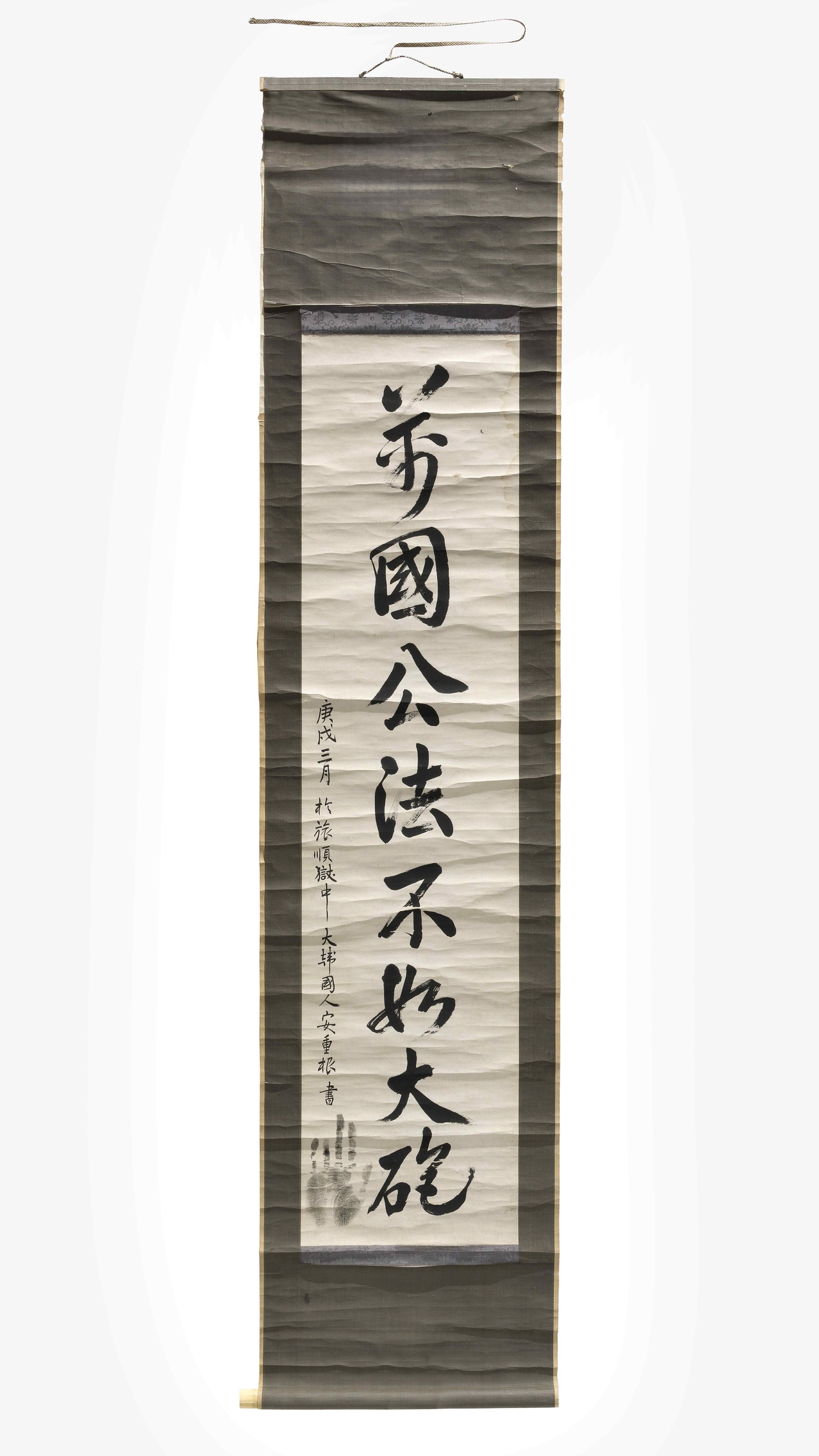
A calligraphic work by independence activist An Jung-geun — in which he condemned great-power hegemony by declaring that international law was no match for cannons — is returning to public view in South Korea for the first time in 116 years. The exhibition, the first formal showing since the piece was repatriated, is expected to offer visitors a chance to reflect on An's conviction that went beyond Korean independence to embrace peace across East Asia.
The Cultural Heritage Administration's National Palace Museum of Korea announced Monday that it will hold a special exhibition, "Dokdae: Eight Characters Left by An Jung-geun," at the museum's special exhibition hall from Tuesday through Dec. 27, marking the 117th anniversary of An's armed action in Harbin.
The centerpiece of the exhibition is An's calligraphic work "Mangukgongbeop Bulyeo Daepyo," which translates as "international law is no match for cannons." An wrote the piece at Lushun Prison in March 1910, shortly before his execution. It encapsulates his sharp critique of a world in which international law bent to the logic of powerful nations and failed to protect the sovereignty of weaker ones.
The work was returned to South Korea in November 2025 following a field investigation and repatriation process conducted by the Overseas Korean Cultural Heritage Foundation, and was first introduced to the public at a press event on Aug. 13. On the reverse side, a note written by Kurihara Sadakichi — the warden of Lushun Prison at the time — records the circumstances under which he received the piece, making it a historically significant document for understanding An's activities during his imprisonment.
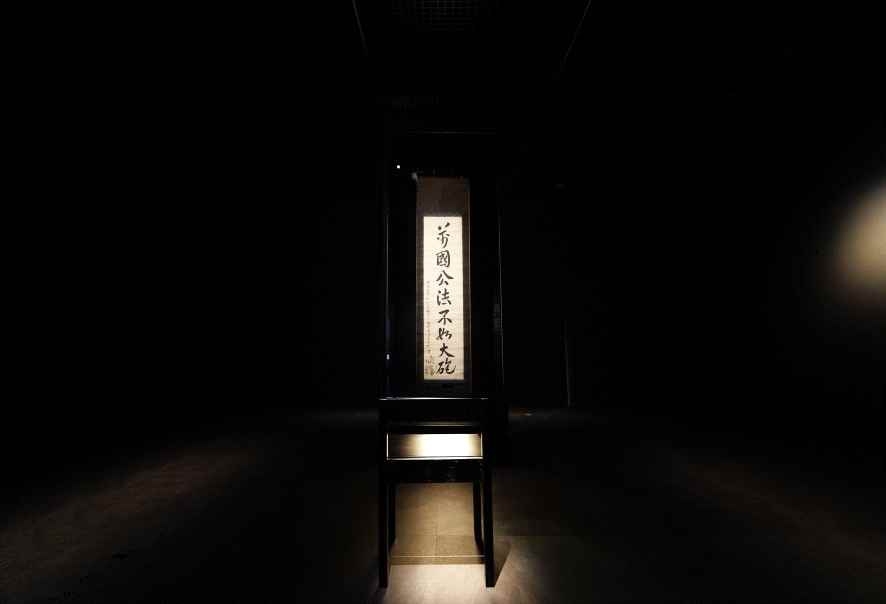
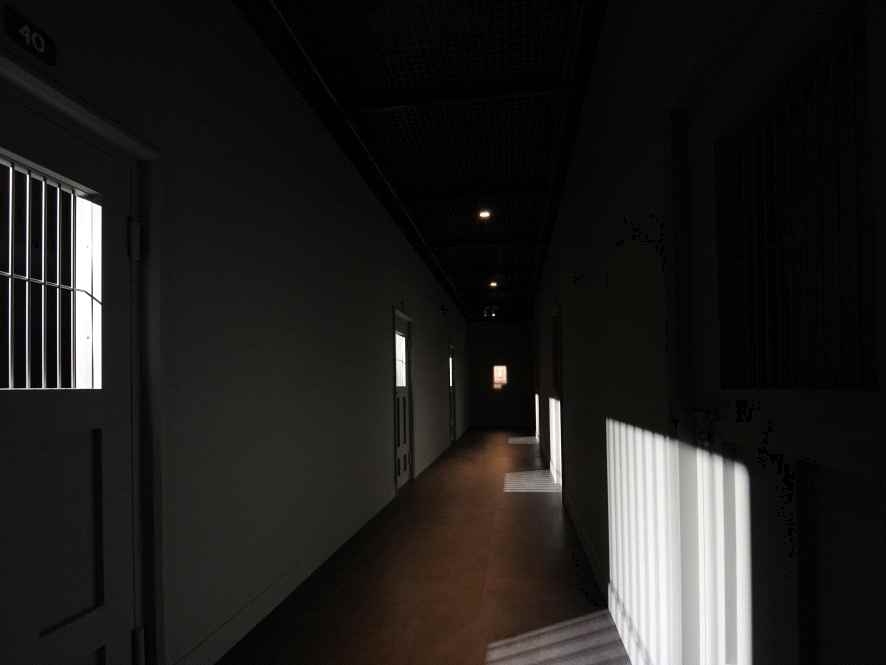
The exhibition is designed to focus attention on the single calligraphic work. Visitors pass through a darkened corridor before coming face to face with the piece, illuminated under a spotlight. The setting is intended to evoke a "dokdae" — a private, one-on-one encounter — with An at Lushun Prison in 1910, inviting reflection on the meaning of his eight characters and the conviction that drove his pursuit of independence.
Alongside this, an interactive video experience has been set up at the gallery exit. Visitors can press their hand against An's ink handprint on a touch screen and leave a message about the kind of peace they envision. The messages are then displayed in vertical script on a large screen.
Admission is free. The museum opens at 9:30 a.m. daily, except on the last Monday of each month when it is closed. Evening hours are available on Saturdays. Further details are available on the National Palace Museum of Korea's website.
terry@heraldcorp.com