Two-week exercise at Gunsan base runs Monday through Nov. 6; South Korea leads planning in preparation for operational control transfer
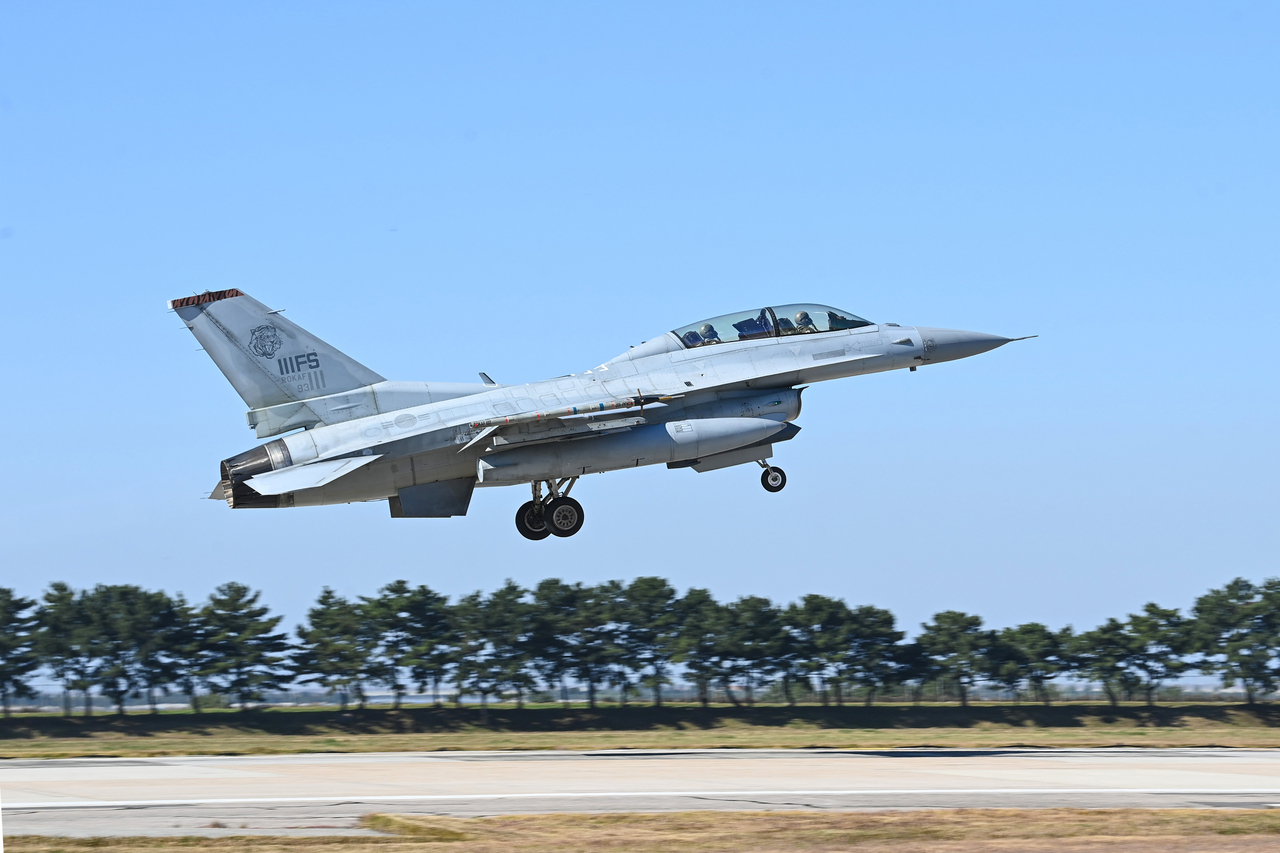
South Korean and US air forces launched Freedom Flag, a large-scale combined air exercise, on Monday — the first second-half drill of its kind since the Ulchi Freedom Shield (UFS) joint exercise was scaled back in August at Washington's request. Military authorities said the exercise is a "routine, defensive training held every year" and that no unusual developments arose during preparations.
The two air forces will conduct the "26-2 Freedom Flag" exercise at Gunsan Air Base through Nov. 6, a two-week training period.
Freedom Flag is a large-scale combined air exercise held twice a year — once in the first half and once in the second half. Its goal is to strengthen the two countries' combined operational capabilities and survivability. Since the second half of 2024, it has operated under its current name, merging the first-half Korea Flying Training (KFT) and the second-half Vigilant Defense exercise.
South Korea is contributing F-5E/F, F-15K, KF-16, FA-50 and F-35A fighter jets, along with KC-330 aerial refueling tankers, C-130J transport aircraft, E-737 airborne control aircraft and HH-47 and HH-60 helicopters. The US side is providing Air Force F-16 fighters, RC-135 reconnaissance aircraft and KC-135 tankers, as well as Navy MH-60S helicopters, Marine Corps F-35B fighters and MQ-9 drones.
On Thursday, a US Air Force RC-135S Cobra Ball ballistic missile tracking aircraft and an RC-135V Rivet Joint signals intelligence aircraft were spotted parked side by side at Osan Air Base in Pyeongtaek, Gyeonggi Province. The Air Force said the deployment was part of the Freedom Flag exercise.
The combined air forces will carry out defensive counter air, extended air interdiction and air interdiction missions, with the aim of enhancing interoperability and building wartime combined mission capabilities. Both air forces will also operate day and night mission planning cells throughout the exercise, where personnel from the two sides will exchange the latest tactics and expertise and refine wartime operational and mission procedures.
South Korea is leading the planning and execution of this exercise in preparation for the transfer of wartime operational control. The drill will also test the ability to operate fifth-generation stealth fighters — including the F-35A and F-35B — alongside legacy fourth-generation aircraft, reflecting changes in the modern operational environment. Simulated enemy aircraft will be deployed to replicate real combat conditions, and the latest tactical procedures will be reviewed and practiced.
The exercise is drawing attention as it proceeds amid a broader trend of scaling back combined US-South Korea drills. This year's UFS was cut from 11 days to five at the direction of US President Donald Trump, and only seven of 14 scheduled battalion-level or higher combined field maneuver exercises were carried out as planned. During last year's second-half Freedom Flag, the US Seventh Air Force conducted the first week independently, with South Korean forces joining only for the second week.
Asked whether the US side had shown a different attitude during consultations — as it had during UFS — a Defense Ministry official said Freedom Flag "is a routine, defensive air exercise conducted twice a year, in the first and second halves," adding that "it is something we have done every year and there was nothing unusual in the preparation process."
Col. Lee Seung-hwan, chief of the operations and training division at Air Force Operations Command, said the exercise would allow the two sides to "share strategies and expertise suited to the modern battlefield environment through intensive, realistic training and advance the combined defense posture." He added that the drill would serve as an opportunity to strengthen teamwork between South Korean and US pilots, sharpen their combat skills and build capabilities in preparation for the transfer of wartime operational control.
rimsclub@heraldcorp.com