Eighth Army says Delta Battery certified, more units to follow within weeks
Separated radar-launcher deployment boosts survivability
THAAD integration watched; South Korean assets remain unlinked
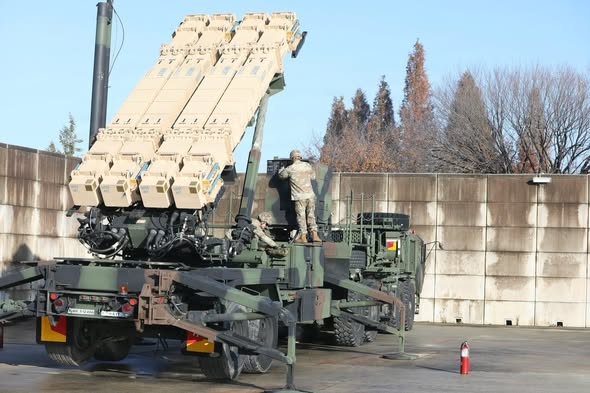
US Forces Korea has begun full-scale operations of the Integrated Air and Missile Defense Battle Command System, known as IBCS, on the Korean Peninsula — a network that links detection and intercept assets from different air defense systems into a single command framework. Analysts say the shift will increase the flexibility and survivability of the air defense network against North Korean missile threats by allowing radars and launchers to be deployed separately.
The US Eighth Army announced Wednesday on Facebook that Delta Battery, a Patriot air defense battery under the 6th Battalion, 52nd Air Defense Artillery Regiment, 35th Air Defense Artillery Brigade, had successfully completed IBCS operational certification.
"By transitioning from separate, legacy weapon networks to the IBCS integrated fire control network, Delta Battery Soldiers demonstrated technical proficiency in seamlessly decoupling sensors and launchers from the fire control unit," the Eighth Army said. It added that the battery had proven its ability "to defend critical assets from complex regional missile threats and integrate the Army's modernized air defense technology."
The Eighth Army also said other Patriot units within the battalion would receive IBCS certification within the coming weeks.
Developed by US defense contractor Northrop Grumman, IBCS is a battle command system that connects multiple ground, air and maritime detection assets and intercept weapons in real time. Under the previous system, individual batteries detected targets with their own radars and responded with their own interceptor missiles. IBCS separates detection from intercept and links different assets together so the most suitable weapon can be used against any given threat — a concept the US Army describes as connecting "any sensor to the best shooter."
The most significant change is survivability. Legacy Patriot systems required radars and launchers to be positioned close together, but IBCS allows them to be dispersed. Even if one radar is destroyed, data from other sensors continues to flow in real time, keeping the air defense network functional.
IBCS equipment has been deployed to the 35th Air Defense Artillery Brigade — which operates eight Patriot batteries — since last year, according to sources familiar with the matter. The Eighth Army began converting two Patriot battalions under the brigade to the IBCS operational framework in January, sources said.
In March, during a field training exercise linked to the combined exercise Freedom Shield, the Eighth Army also integrated the Indirect Fire Protection Capability system — designed to counter drones and cruise missiles — into IBCS, evaluating its performance as part of a layered defense architecture on the Korean Peninsula.
Because the brigade also operates the Terminal High Altitude Area Defense system, some observers expect USFK to integrate THAAD into IBCS roughly a year from now. If that happens, analysts say it would become possible to use the THAAD radar in Seongju, North Gyeongsang Province, to detect ballistic missiles and intercept them with Patriot batteries in the greater Seoul area.
Over the longer term, linking assets beyond the Korean Peninsula to others across the Indo-Pacific region has also been discussed. In July, the US Army's publication Army Communicator reported that assets of the 6th Battalion, 52nd Air Defense Artillery had conducted a test in which an engagement operations center was remotely linked to US military assets stationed in the Philippines to exchange radar data.
However, South Korean military detection assets are not yet integrated into the US IBCS network, according to sources. Target coordinates and other data acquired by South Korean radars are not connected in real time to the US command and control system, making real-time combined engagements based on IBCS effectively impossible for now.
rimsclub@heraldcorp.com