- Korea University presents new framework analyzing functional decline of beneficial microbes
- Findings expected to aid diagnosis and treatment of obesity, diabetes and atopic dermatitis

Even when beneficial gut bacteria are present in sufficient numbers, their failure to function properly can contribute to chronic conditions such as obesity, diabetes and atopic dermatitis, according to new research. The findings suggest that assessing gut microbiome health requires looking beyond the types and quantities of bacteria to how well they actually perform their functions.
The National Research Foundation of Korea announced Monday that a research team led by Professor Kim Hee-nam of the Department of Biosystems and Biomedical Sciences at Korea University has proposed a new theoretical framework for evaluating gut microbiome damage from two perspectives: the loss of bacteria and the functional decline of bacteria that remain.
Gut microbes play a critical role in human health, regulating digestion, nutrient metabolism and the immune system. Imbalances in the gut microbiome have long been associated with a range of chronic diseases, including obesity, diabetes and atopic dermatitis.
Previous research in the field focused primarily on which bacteria were present and in what quantities. The prevailing view held that a reduction or disappearance of beneficial bacteria worsens the gut environment and raises the risk of disease.
However, cases in which chronic diseases developed despite adequate levels of beneficial bacteria revealed the limits of existing analytical approaches, raising questions about whether they could accurately capture the true state of gut microbiome health.
The research team focused on the possibility that beneficial bacteria, even without disappearing, can lose their original functions or acquire harmful characteristics due to genetic mutations or changes in the gut ecosystem.
In their research, the team found that genetic mutations in Akkermansia — one of the most well-known beneficial gut bacteria — can weaken the bacterium's ability to support metabolic health.
In another beneficial bacterium, Faecalibacterium, the team found that strains with the potential to cause disease can come to outnumber beneficial strains, potentially contributing to the development of atopic dermatitis.
The findings suggest that the genetic and functional characteristics of bacterial strains present in the gut may matter more to health outcomes than the sheer abundance of beneficial bacteria.
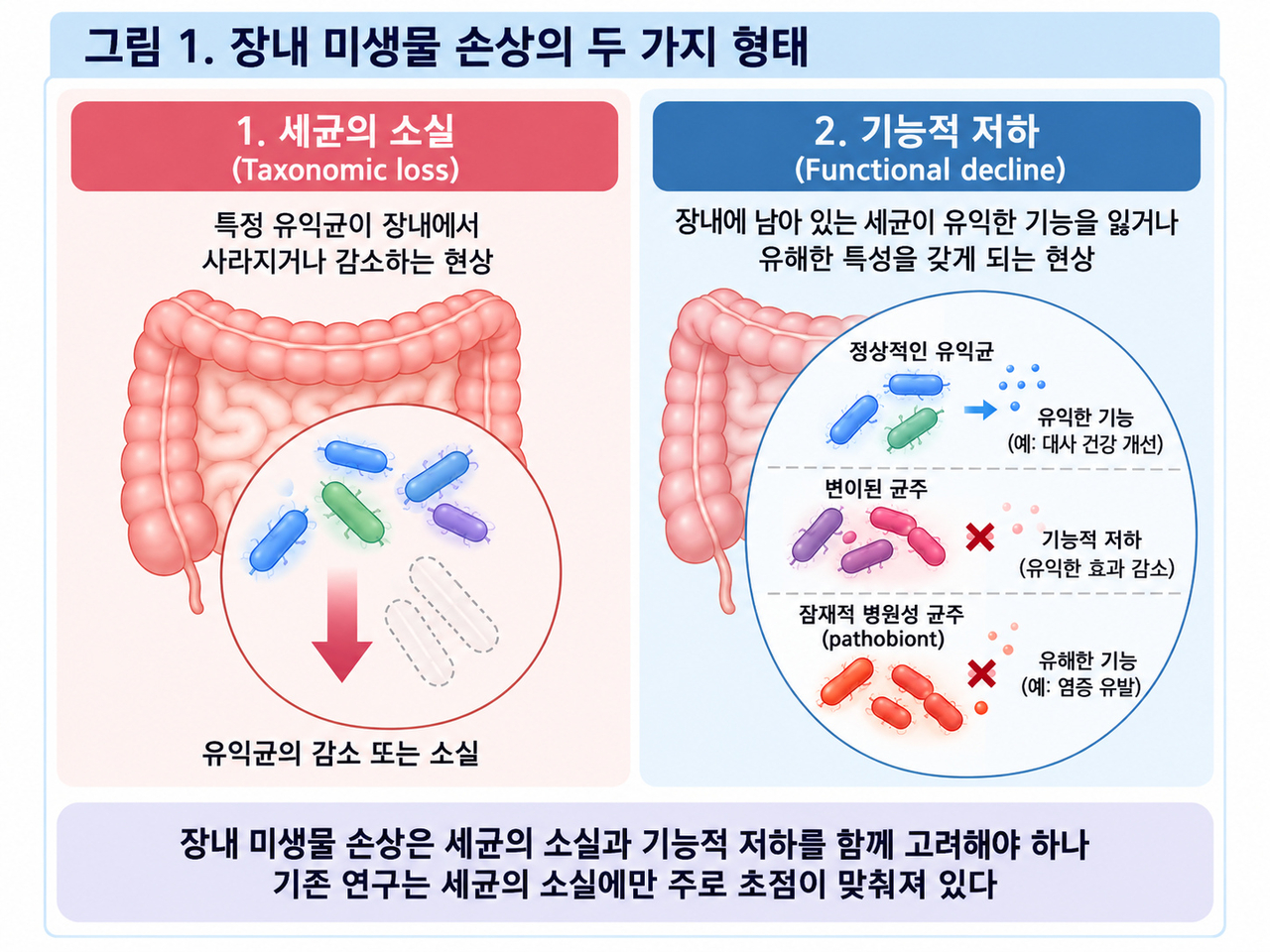
The study is also significant for extending the "disappearing microbiota hypothesis" advanced by prominent microbiome researcher Martin Blaser. While that hypothesis centers on the loss of bacteria, the research team proposes that functional damage in surviving bacteria must also be evaluated — a concept that goes beyond the existing framework.
The team expects the approach to inform the development of biomarkers and diagnostic technologies capable of detecting gut microbiome abnormalities that conventional tests have struggled to identify. For diseases where a sufficient body of related research already exists, the team said early practical application in precision diagnosis and treatment could be within reach.
"This research presents another important form of damage — the functional decline of gut microbes — that has been overlooked until now," Kim said. "It will enable more accurate assessment of hidden gut microbiome damage that existing analyses have struggled to detect, and contribute to the development of precision diagnosis and treatment technologies for chronic diseases."
The findings were published in the Oct. 15 online edition of Gut Microbes, an international journal in the field of gut microbiology.
nbgkoo@heraldcorp.com