About 140 officials and experts to gather Thursday to discuss system improvements
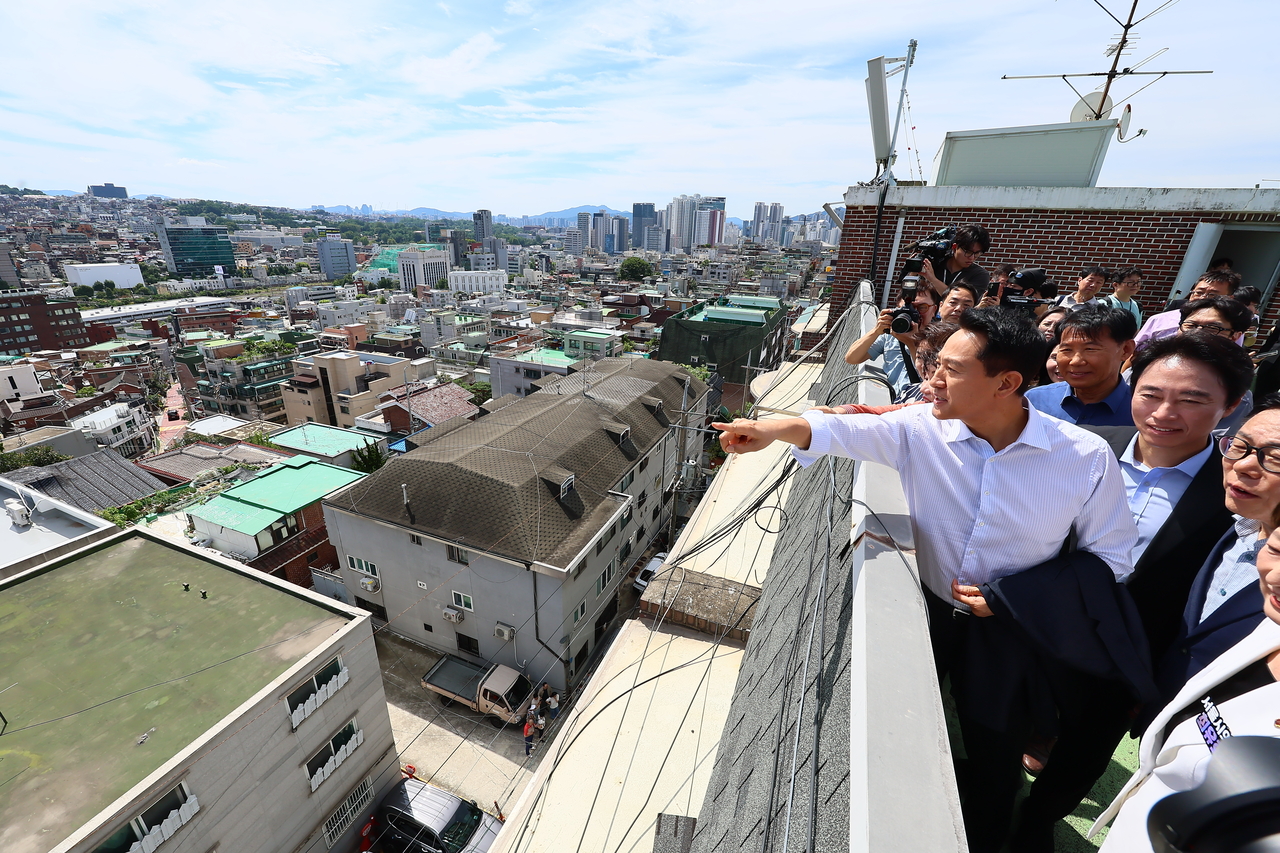
Five years after introducing its rapid integrated planning system, the Seoul Metropolitan Government has designated 214 redevelopment zones, laying the groundwork for the supply of about 310,000 homes. The time required to designate a redevelopment zone has been cut from roughly five years to around two.
The city announced Tuesday that it will hold the "2026 Rapid Integrated Planning Stakeholder Workshop" on Thursday to review the program's five-year track record and discuss its future direction.
The rapid integrated planning system is a redevelopment support regime the city introduced in 2021. Under it, the Seoul Metropolitan Government, district offices and residents collaborate on planning from the earliest stages of a project, shortening the overall approval process.
Going forward, the city plans to accelerate housing supply by strengthening project management, expanding deregulation and broadening planning support.
About 140 participants are expected at Thursday's workshop, including rapid integrated planners, conflict management officers, participating firms, district and city civil servants, and outside experts. Ten specialists and officials who contributed to the program's implementation will receive commendations from Seoul Mayor Oh Se-hoon.
The workshop will feature three presentations and a general discussion covering redevelopment project management, operational improvements to the rapid integrated planning system, and deregulation.
In the first presentation, Im Hee-ji, a researcher at the Seoul Institute, will analyze the current state and management framework of Seoul's redevelopment projects and propose an approach to coordinating infrastructure and housing supply at the district level.
Song Jeong-mi, head of the city's rapid integrated planning division, will present the program's achievements over the past five years and outline future priorities. Her presentation will cover an online archive built in March based on field feedback collected last year through a public consultation initiative, a project management framework spanning stages through integrated deliberation, and plans to develop an official rapid integrated planning manual.
Kim Seok, head of the city's residential policy team, will explain policies and case studies aimed at improving project viability and shortening timelines — covering profitability adjustment coefficients, upzoning to quasi-residential areas, expanded integrated deliberation, and a standard processing deadline system.
The city said it will incorporate feedback from the workshop into future operations and system improvements for the rapid integrated planning program.
"Over the past five years, rapid integrated planning has built a foundation for redevelopment through deregulation and collaboration, and has grown by translating voices from the field into policy improvements," said Kim Chang-gyu, head of the Seoul Metropolitan Government's Urban Space Bureau. "We will strengthen planning support in line with changing redevelopment conditions and underpin a stable supply of housing."
quq@heraldcorp.com