'Not rejected, not approved — under review'
'I hope my visa issue does not harm the Korea-US alliance'
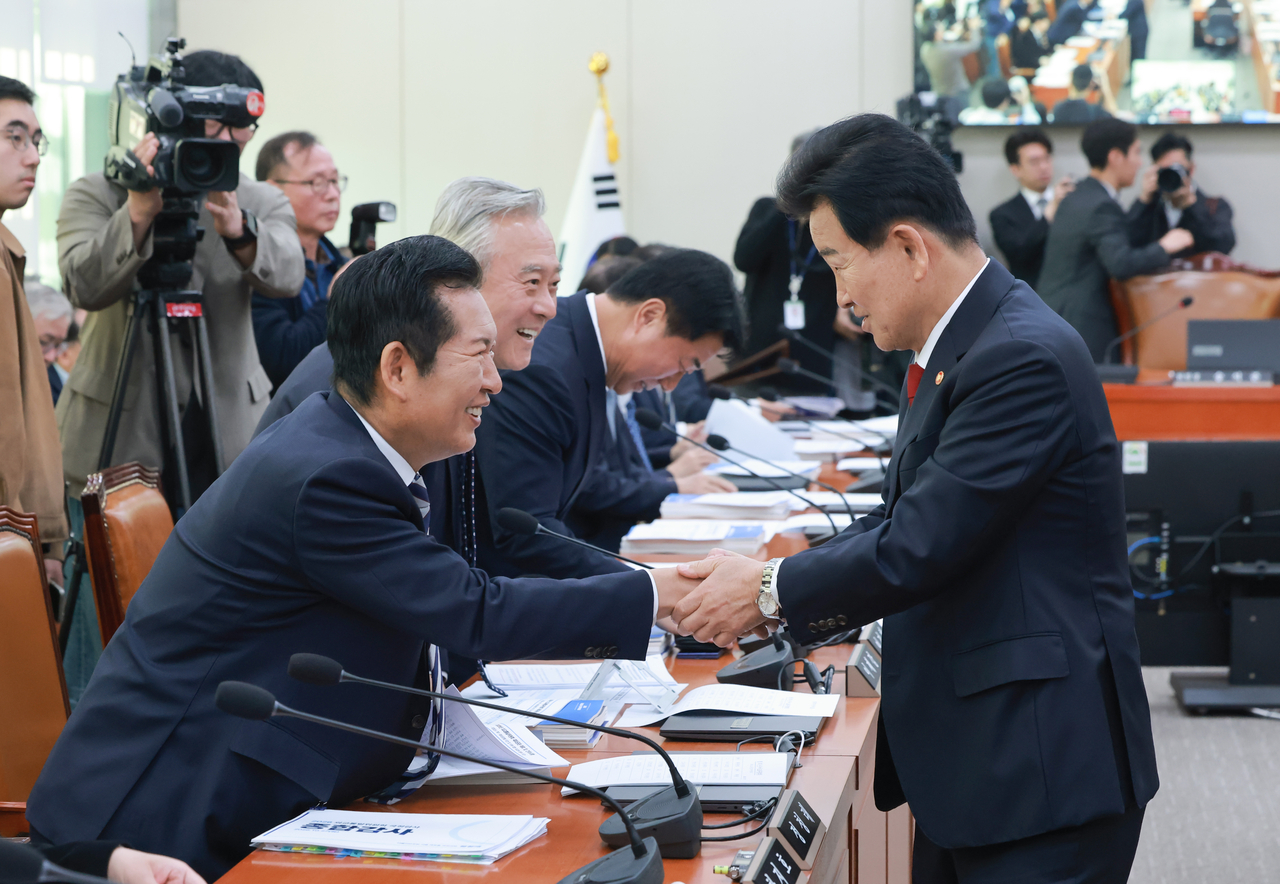
Democratic Party of Korea lawmaker Jung Chung-rae said Tuesday he feels "regret toward the US administration" over the prolonged delay in processing his American visa.
Speaking during a personal statement at the National Assembly's Foreign Affairs and Unification Committee's comprehensive national audit, Jung said the matter "calls for bipartisan protest to the United States, transcending the ruling and opposition divide — not an attack on our own government."
"This time, the US visa was neither rejected nor denied — it is under review," he said, adding that he had switched to a different overseas audit team because it appeared he would be unable to participate in the original one.
"In that case, we should criticize and protest the US administration's handling of the matter," Jung said. "I regret that it has instead turned into a controversy suggesting the Korea-US alliance has been broken and that our national interests have been damaged. I hope that does not happen, and I hope my visa issue does not end up harming the alliance."
Jung also outlined his record of legislative diplomacy with the United States, drawing a clear line against the controversy being framed as anti-American sentiment. He said he had traveled to the Americas as part of the Foreign Affairs and Unification Committee's overseas audit during the 19th National Assembly, and that in 2014 he had visited the US Congress on a personal trip, meeting five House members in consecutive meetings.
He also recalled his connection with Donald Gregg, the US ambassador to South Korea at the time of the 1989 sit-in occupation of the ambassador's residence. Jung, then a university student, took part in the October 1989 occupation and was sentenced to prison. He later met Gregg for the first time when the former ambassador visited South Korea in 2006 and apologized to him, then traveled to Gregg's home in the United States in January 2014.
"I visited former Ambassador Gregg at his home and we shared a warm friendship," Jung said. "I was the first person he consulted about whether it would be a good idea to visit North Korea. I told him it would be worth going, and he went."
Gregg visited Pyongyang in February 2014.
Jung said Gregg had encouraged him, saying the students who entered the residence had been driven by patriotism and that he should channel that same spirit into his work as a lawmaker. "We resolved the past and reconciled," Jung added. Gregg told him at the time, "Do not forget the spirit that drove you to enter the US ambassador's residence — carry that same conviction into your work in the Assembly."
Jung also claimed that his activities opposing the removal of comfort women statues in the United States had been officially entered into the Congressional Record. "There are very few lawmakers in Korea who have done this," he said. "I have done a great deal to promote Korea-US friendship in the United States."
Jung had been scheduled to travel with the Americas subgroup of the Foreign Affairs and Unification Committee's overseas audit team, which covers the United States, Brazil, Colombia and Canada. When his visa had still not been issued by Oct. 8 — three days before departure — he switched to the Europe subgroup. At the time, he said he "could not wait any longer in a state of neither approval nor denial" and had urgently applied to join the Europe team.
The Department of State said "all visa cases are adjudicated based on the specific facts and circumstances of each case" and declined to provide a specific reason for the delay. The Ministry of Foreign Affairs has also said it does not consider it appropriate to interpret the matter as a broader issue in the Korea-US relationship.
Jung had also been unable to obtain a US visa during the 19th National Assembly in 2013, missing the Americas audit trip and joining the Europe team on that occasion as well.
rimsclub@heraldcorp.com