Korea Concrete Institute certifies technology
Concrete achieves strength in temperatures as low as -2 C with daily swings of up to 20 C
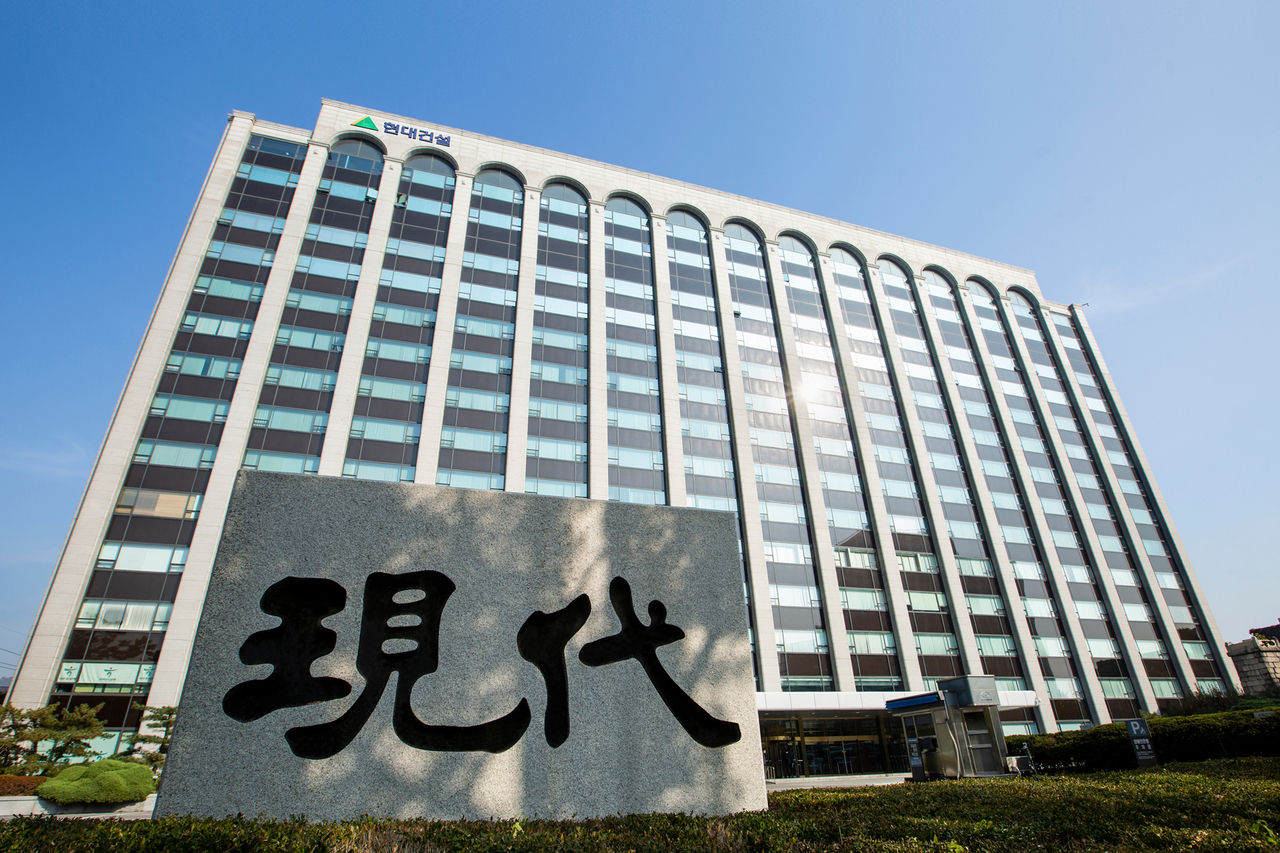
Hyundai Engineering & Construction announced Wednesday that it has received technology certification from the Korea Concrete Institute for its "transitional-season special concrete," a mix designed to maintain stable quality even in the challenging weather conditions of spring and autumn.
The Korea Concrete Institute certification verifies the excellence and field applicability of concrete materials and construction technology through expert review. The certification recognizes the research and development capabilities Hyundai E&C has built up in eco-friendly construction materials and high-performance concrete, and its ability to secure quality in the face of seasonal environmental changes.
During transitional seasons, large daily temperature swings and low overnight temperatures can delay concrete strength development, requiring extra caution in quality management. To reliably meet design-standard strength requirements in cold conditions, the industry has generally applied higher strength specifications than those used for ordinary concrete — a practice that drives up costs through greater cement consumption and adds to on-site management burdens.
To ease those burdens, HMG Construction Technology Research Institute — the integrated R&D organization of Hyundai E&C and Hyundai Engineering — co-developed the transitional-season special concrete with Sampyo Industry. The technology uses an early-strength slag cement with improved initial strength development compared with ordinary slag cement, combined with an enhanced admixture. It is designed to reliably achieve strength of 5 MPa (megapascals) or more within 48 hours even in environments where the daily minimum temperature falls to -2 C and the daily temperature swing reaches up to 20 C.
Because the required performance can be achieved without additional heat-curing measures or raising design strength specifications, the technology is expected to improve quality while also boosting construction efficiency and reducing on-site management burdens.
Hyundai E&C applied the technology at its "The Parkside Seoul" and "DH Classt" construction sites in March and completed field validation. Results showed that the concrete reliably reached the strength needed for formwork removal within 48 hours of pouring, and continued to exceed the specified compressive strength standard 28 days after placement. The concrete also maintained excellent workability throughout the construction process, demonstrating that stable quality can be secured even in transitional-season conditions.
"This certification officially recognizes the outstanding technical performance and field applicability of our transitional-season special concrete," an HMG Construction Technology Research Institute official said. "We expect it to help improve structural safety, shorten construction schedules and enhance on-site management efficiency by enabling stable quality even in cold conditions."
Meanwhile, Hyundai E&C recently developed an "allergy care solution" that monitors indoor air quality and adjusts ventilation levels by zone.
lucky@heraldcorp.com