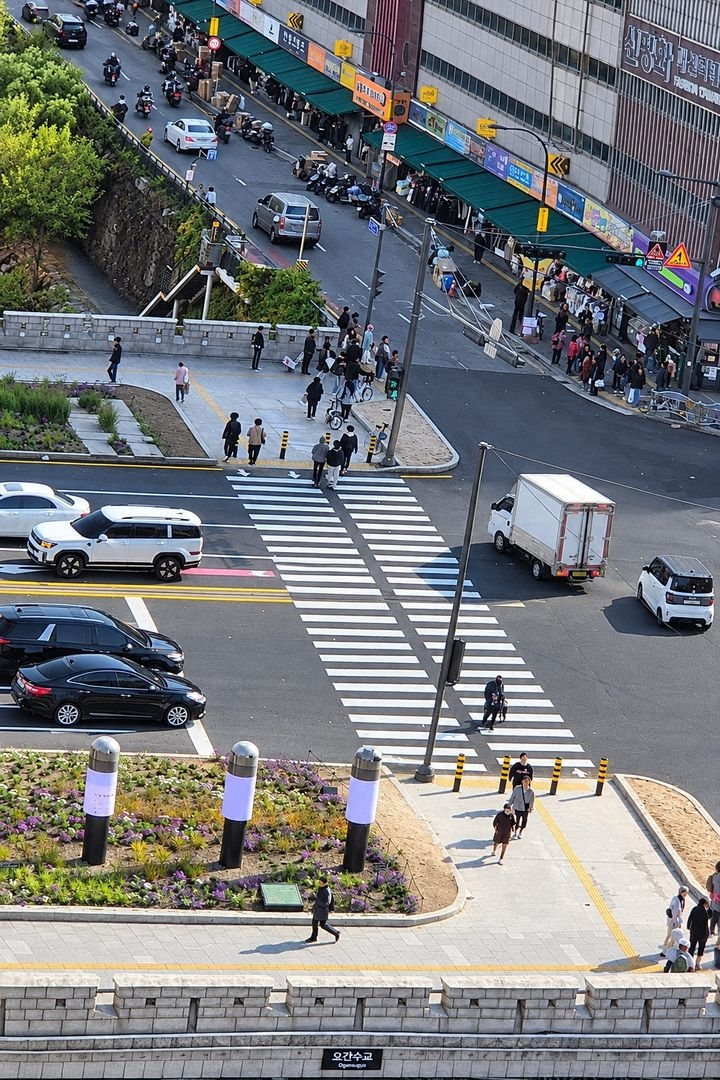
Cash-rich tenants recruited ahead of Banpo124 pre-sale
Jeonse deposit combined with private loan to cover balance
Post-sale format and lending curbs drive winners to private financing
Future purchase option also on the table amid permit uncertainty

A new form of private financing has surfaced in Seoul's Gangnam apartment pre-sale market amid tightened lending regulations: "tenant financing," in which a cash-rich tenant pays an above-market jeonse deposit and collects interest from the winning buyer on the excess amount. A consulting firm has now emerged to connect lottery winners who cannot cover their pre-sale payments through bank loans alone with wealthy tenants seeking high-yield returns.
According to real estate agents in the area, the consulting firm has begun recruiting cash-rich tenants through licensed brokerages in the Banpo neighborhood, targeting DH Banpo124 — formerly known as Banpo DH Classt — which is scheduled for general pre-sale in December. The firm is arranging private financing to help lottery winners cover the funds needed after winning a subscription for the complex, which is being built through the reconstruction of Banpo Jugong 1 complex's sections 1, 2 and 4.
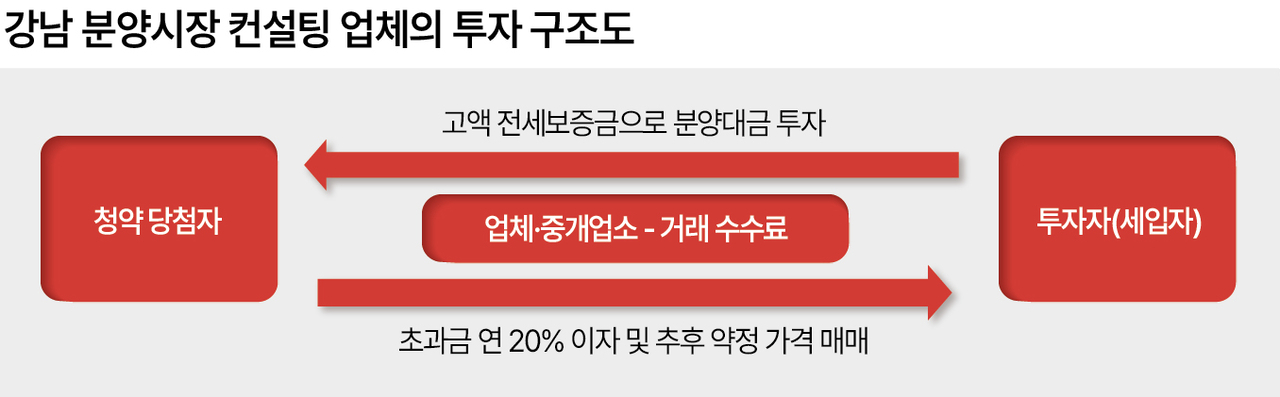
The complex is a large post-sale development of 5,007 units subject to the price ceiling on new apartments. No official subscription announcement has been issued yet, but the pre-sale price for an 84-square-meter unit is expected to be around 3 billion won ($2.25 million). Units priced above 2.5 billion won are subject to a mortgage cap of 200 million won, so buyers must cover the remainder in cash — and with move-in scheduled for the second half of 2027, the full pre-sale payment must be made within roughly a year of the subscription.
Initial pre-sale subscriptions are exempt from land transaction permit requirements, and the residency obligation for units subject to the price ceiling is waived for three years from the first available move-in date. A lottery winner can therefore put the unit up for jeonse immediately rather than moving in, using the deposit to cover the remaining balance.
The tenant financing scheme exploits these subscription rules by having the homeowner pay a fixed interest rate to the tenant. The consulting firm is offering a rate of around 20% per year — a figure that reflects the gap between the expected pre-sale price and surrounding market prices.
If the 84-square-meter unit at DH Banpo124 is priced at 3 billion won, the expected capital gain would be around 2.7 billion won, given that a unit of the same size at the nearby One Bailey complex traded last month for 5.7 billion won. Even after paying out 600 million won in interest over three years on a 1 billion won loan from a tenant at 20% annually, the expected net gain would still reach around 2 billion won.
"The tenant can simply collect interest on the loan, but we are also consulting on arrangements where the tenant has the option to purchase the unit at a pre-agreed price once it becomes available for sale in a few years," a representative of the consulting firm said. The representative added that licensed brokerages introducing tenants can receive a commission through a co-brokerage arrangement with the firm.
Seller financing — in which a homeowner lends money directly to a buyer — has already gained traction as a major funding method in the high-end Gangnam housing market. The emergence of tenant financing alongside it has raised concerns about the broader spread of private financial transactions.
Analysts also warn that a jeonse loan tied to an ownership transfer condition — through which a tenant's deposit would cover the seller's remaining balance — has been blocked, meaning the housing market's "rich get richer, poor get poorer" divide could deepen further depending on one's ability to mobilize cash.
Ham Young-jin, head of the real estate research lab at Woori Bank, said the tenant financing arrangement "is a phenomenon that has emerged from the convergence of lending regulations, the price ceiling on new apartments and the land transaction permit system." Ham added that "particular caution is needed for future purchase option contracts, as they may not receive land transaction permit approval."
A representative of the Korea Association of Realtors said that while similar private financing arrangements have existed in the past, they were not common. "The tenant loan itself is not illegal, but if the firm is collecting a separate fee, it needs to be examined whether moneylending regulations apply, and whether the fee amount and tax payments are appropriate," the representative said.
shy@heraldcorp.com
lucky@heraldcorp.com