Beijing Hanmi's receivables delay drags Q3 operating profit down 31%
Board meeting Tuesday erupts in criticism; CEO's past Cory deal review resurfaces
Special audit under way as questions linger over ties between debt recovery and Hong Kong listing
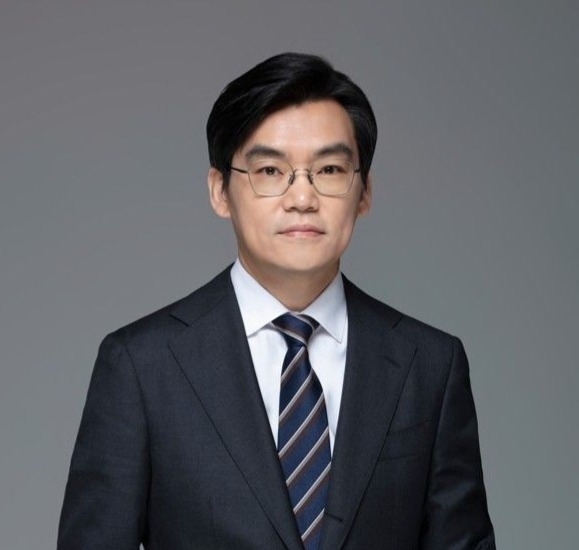
Calls for management accountability are mounting against Hanmi Pharm CEO Hwang Sang-yeon after the pharmaceutical group posted an earnings shock in the third quarter, driven by its Chinese subsidiary Beijing Hanmi's failure to collect around 100 billion won in outstanding receivables.
A board meeting held Tuesday at Hanmi Pharm Group's Seoul headquarters focused on measures to stabilize Beijing Hanmi — and broke into sharp criticism directed at Hwang.
Directors raised concerns not only about the delayed receivables recovery but also about a potential conflict of interest: Hwang previously reviewed a roughly 50 billion won investment in Cory Group, a private company controlled by Hanmi Science board member Lim Jong-yoon, during his time at a private equity fund.
According to filings on the Financial Supervisory Service's DART system and sources in the pharmaceutical and biotech industry, Hanmi Pharm's consolidated operating profit for the third quarter came to 37.8 billion won, while net profit for the period was 14 billion won — down 31.3 percent and 69.1 percent, respectively, from the same period last year. Parent company Hanmi Science also saw its operating profit fall 51.3 percent year-on-year, to 19.2 billion won.
The primary drag on the group's overall earnings was Beijing Hanmi, whose third-quarter operating profit shrank 75.1 percent from a year earlier. The collapse stems from unresolved long-term receivables tied to Chinese distributor Runmeikang. Those receivables ballooned from 35.1 billion won at the end of 2023 to 125.4 billion won by the end of last year, and still stood at 108.4 billion won as of the end of the first half of this year. Runmeikang is an affiliate of Cory Group, which Lim in effect controls.
The board meeting Tuesday was tense, with raised voices as directors focused on the prolonged failure to resolve Beijing Hanmi's receivables. Several board members sharply criticized the financial damage caused by the delays and what they described as an inadequate response from management.
Beyond the receivables issue, directors also questioned Hwang's past conduct — particularly his role, while serving as executive vice president at HB Investment, in reviewing a 50 billion won redeemable convertible preferred share investment in Cory Group. At the time, Cory Group's enterprise value was assessed at around 500 billion won ($378 million), and discussions reportedly included a condition requiring a stock listing within three years.
Some board members argued that Hwang likely became aware of the abnormal transaction structure between Beijing Hanmi and Cory Group — and of the receivables problem — during that earlier investment review, making him ill-suited to oversee recovery efforts as the company's professional CEO. Critics also pointed to what they described as Hwang's passive handling of issues surrounding the abrupt replacement of Beijing Hanmi's top management earlier this year.
Some market observers have also raised questions about the timing, noting that the push to recover the receivables appears to coincide with Lim's efforts to list Cory Group on the Hong Kong stock exchange. The concern is that management may be deliberately delaying aggressive collection action to avoid damaging Cory Group's valuation ahead of the listing.
Hanmi Pharm's audit committee is currently conducting a special audit of the Runmeikang transaction structure and the overall receivables recovery process through Samil PwC and law firm Sejong. The release of the audit findings, originally targeted for the end of October, may now be pushed back to year-end.
Hwang pushed back in recent media interviews, saying the Cory Group matter amounted to nothing more than preparing materials to gauge the interest of limited partners for a private equity fund deal, and that no formal due diligence or investment was ever carried out.
On the receivables delay, Hwang said he had introduced "strong shipment controls that no previous management had ever implemented," adding that Beijing Hanmi was now operating under a strict policy of blocking new shipments whenever overdue receivables remain uncollected. He said Runmeikang had recently repaid a portion of the outstanding debt and indicated its intention to make further repayments, and that he would continue pressing for full recovery.
"The Beijing Hanmi receivables issue goes beyond a governance problem — it is an urgent task essential to restoring the Hanmi Group's profitability," an industry official said. "The longer it drags on, the heavier the burden on CEO Hwang's leadership will become."
silverpaper@heraldcorp.com