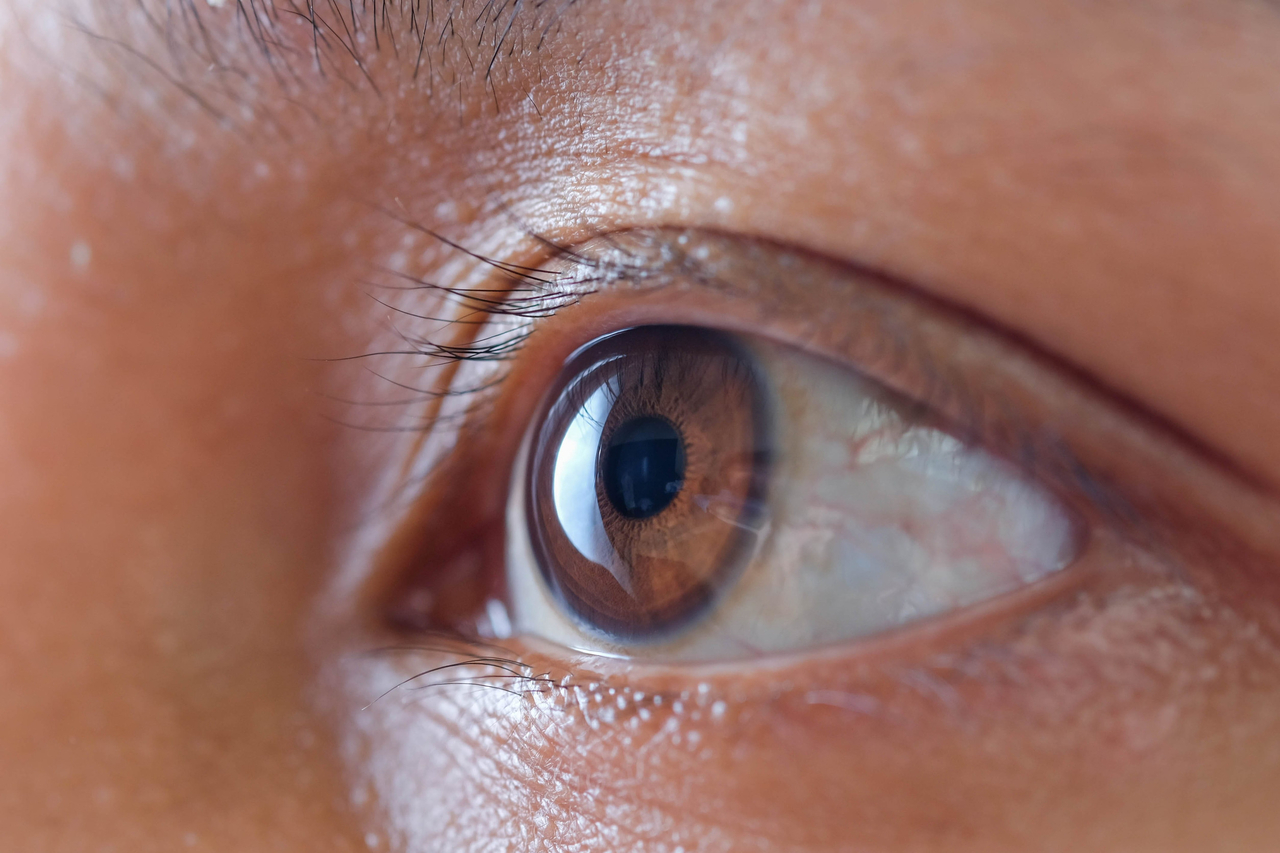
Eleven live parasites were found in both eyes of a South Korean farmer in his 70s who visited an ophthalmology clinic complaining of a foreign-body sensation, redness and blurred vision. The rare infection case has since been published in a leading international medical journal.
A research team led by Song Ji-eun, a professor at Kangwon National University Hospital, published a case report documenting the diagnosis and treatment of the ocular parasitic infection in a 71-year-old farmer, identified only as A, in "Images in Clinical Medicine," the clinical section of the New England Journal of Medicine. The paper was published online Saturday (local time).
A, who had no notable prior medical history, sought treatment after experiencing persistent symptoms in both eyes — including a foreign-body sensation, redness and blurred vision — for about two months.
Examination revealed conjunctival redness in both eyes, along with corneal epithelial erosion. Moving white roundworms were observed in the upper and lower conjunctival fornices.
After administering local anesthesia, medical staff used fine forceps to remove 11 live parasites ranging from 11 to 20 millimeters in length. Microscopic examination confirmed the parasites were the nematode Thelazia callipaeda.
Also known as the oriental eyeworm, Thelazia callipaeda is a zoonotic parasite transmitted between humans and animals through flies. Infection can cause a foreign-body sensation, redness, excessive tearing and itching in the eye.
Some of the female parasites removed had released eggs and larvae from their bodies, while spicules involved in reproduction were observed in the males. Based on the findings, the medical team diagnosed the patient with thelaziasis.
The patient's symptoms improved after the parasites were removed, and no recurrence was detected at a follow-up examination two months later.

"Oriental eyeworm infection is rare but has been reported intermittently in South Korea," Song said, adding that people should take care to keep insects away from the area around their eyes during outdoor activities and that anyone experiencing persistent eye irritation or redness should visit an ophthalmologist to identify the exact cause.
bbo@heraldcorp.com