Mushroom up to 50 cm tall and weighing 2.2 kg discovered in Yunnan Province, China; genetic analysis suggests lineage diverged around 65 million years ago, shortly after dinosaurs went extinct; species named Dianjunus rex, Latin for 'king'
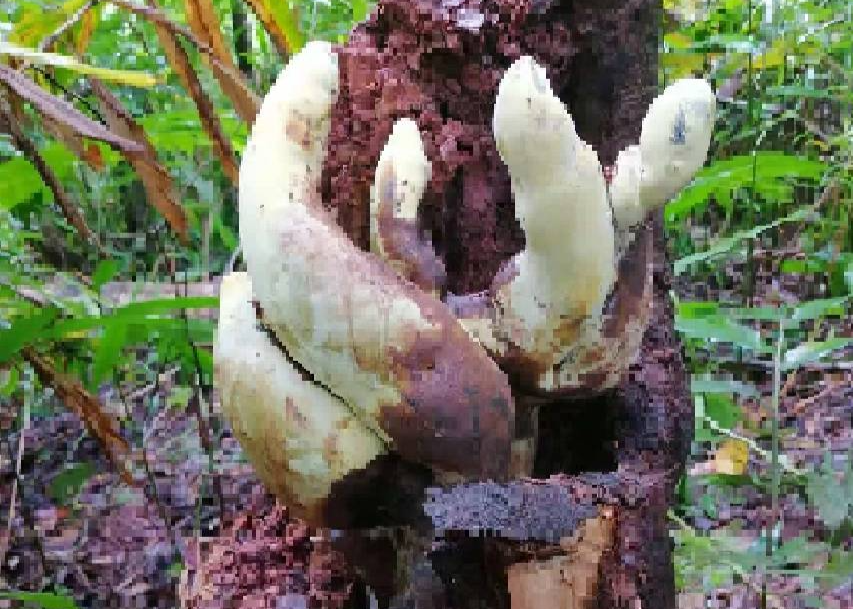
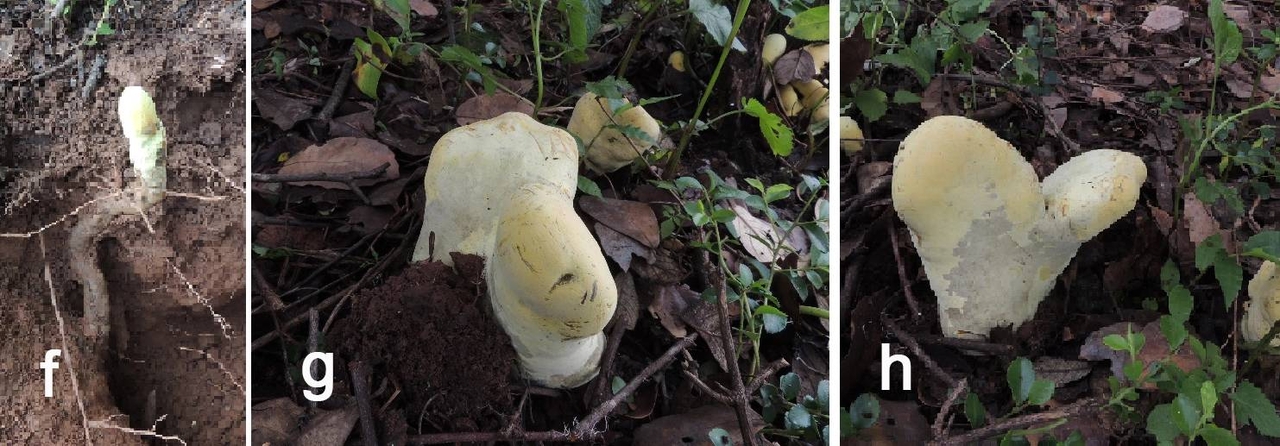
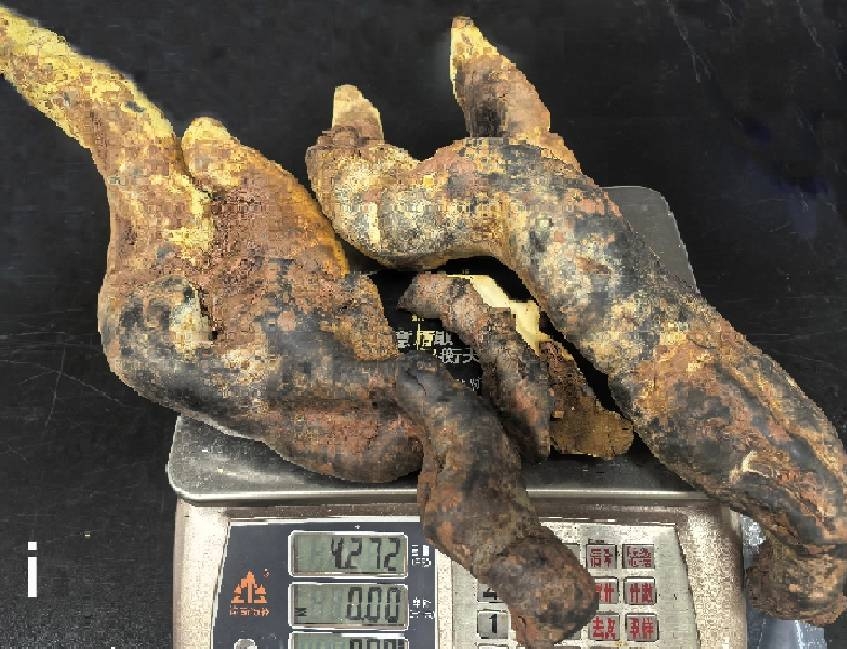
A yellow, pillar-shaped mushroom standing up to 50 centimeters tall and weighing 2.2 kilograms has been found in forests in Yunnan Province in southwestern China.
Genetic analysis confirmed the fungus is a new species unlike any previously known mushroom. The lineage is estimated to have diverged from other fungi around 65 million years ago — shortly after the mass extinction that wiped out the dinosaurs.
A research team led by Professor Yu Fucheng of the Kunming Institute of Botany at the Chinese Academy of Sciences published the findings in the international journal Frontiers in Fungal Biology, formally registering the giant mushroom as a new species.
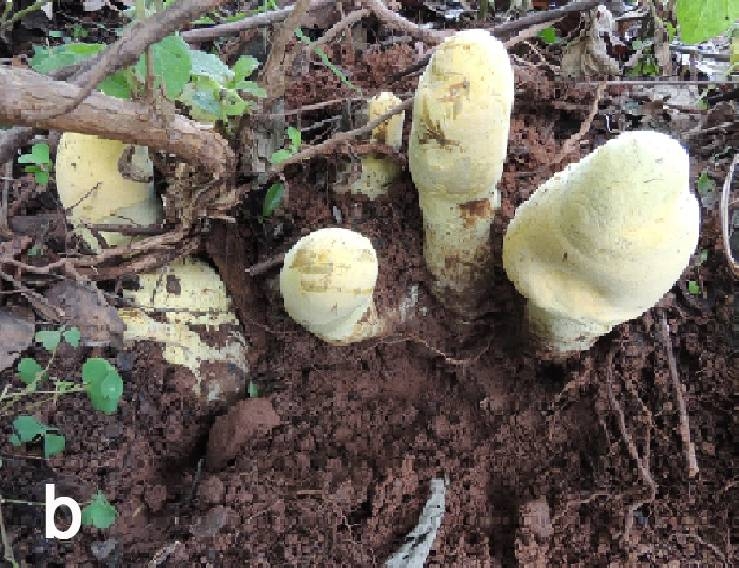
A 50 cm yellow mushroom rising from Chinese soil
The research team first discovered the mushroom between August and September 2024 in forests in Luquan County, Kunming, Yunnan Province. The following July, specimens were also collected in Xishuangbanna — a tropical rainforest region at the southern tip of Yunnan bordering Laos — and in Lufeng, west of Kunming.
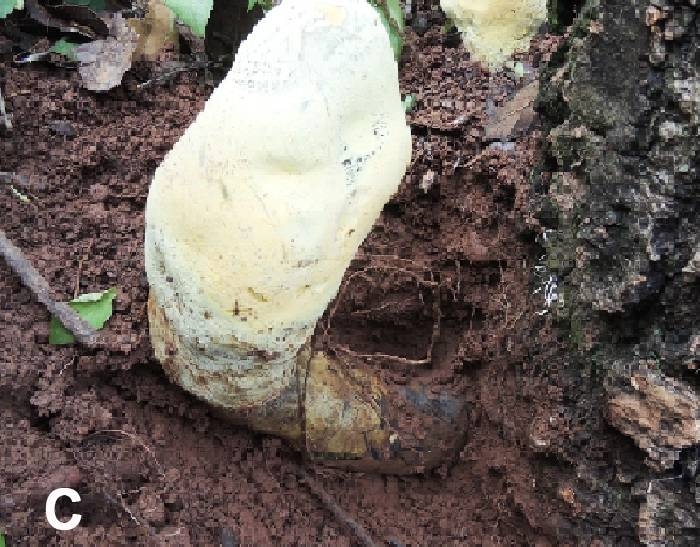
According to the team, the mushrooms grew from the roots of dying trees and rose straight up through the soil. The portion buried underground extended like a long black stalk, while the part above ground took the form of a cylinder or palm shape.
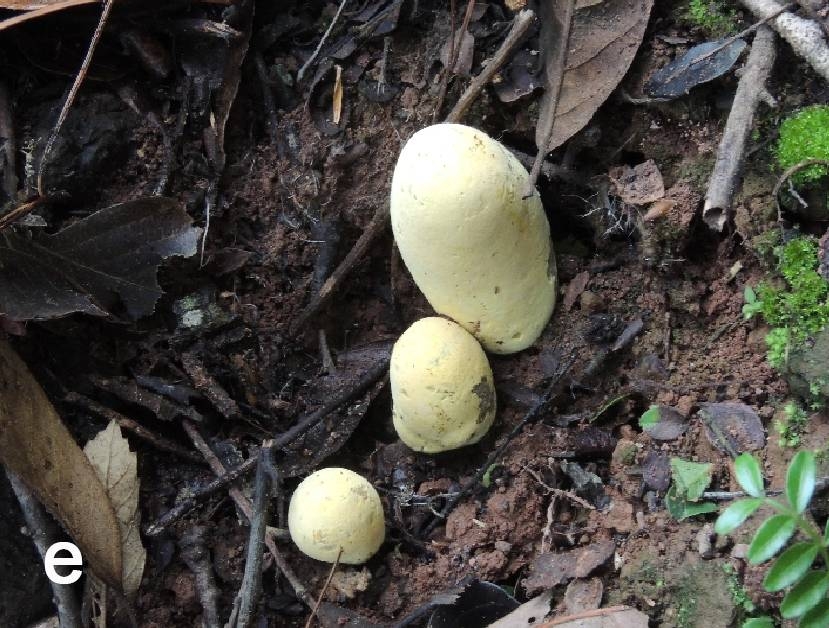
The new species measures 20 to 50 centimeters in total height and 7 to 15 centimeters in diameter. The surface is covered in a whitish-yellow powder that deepens to a vivid yellow as the fungus matures.
Unlike cap-and-gill mushrooms such as matsutake or shiitake, the new species belongs to the same group as morels and truffles. Thousands of tiny spore-producing sacs are embedded just beneath the surface of the fruiting body.
The new species' closest relatives are typically small, dark mushrooms standing just 5 to 8 centimeters tall. At up to 50 centimeters, Dianjunus rex is more than six times larger than comparable fungi in the same group.
A new fungal lineage that evolved just after the dinosaurs vanished
The team analyzed four genes and the full genome of the mushroom. The results showed it was not closely related to any previously known fungal species. The researchers created an entirely new family-level taxonomic classification — a rank above genus and species — and named the organism Dianjunus rex.
"Dianjunus" combines "Dian," the name of an ancient kingdom that once occupied present-day Yunnan, with the Chinese word for mushroom, "jun." "Rex" is Latin for "king," a nod to the species' imposing size and appearance.
By calculating the rate of genetic change, the team estimated that the ancestor of the new species diverged from other fungi around 65 million years ago — shortly after the asteroid impact that triggered a mass extinction killing roughly 75 percent of all species on Earth, including the dinosaurs.
The team suggested that as forest ecosystems recovered from the mass extinction, the ancestor of the new species may have emerged by adapting to newly formed environments. However, the margin of error in the estimated age is wide, ranging from 50 million to 80 million years ago.
The largest known mushroom in its group
The research team said Dianjunus rex is the largest mushroom ever recorded among fungi in the morel and truffle group.
In the paper, the team explained that the new species' ability to grow so large did not come from a single common ancestor, but evolved independently multiple times across different lineages, including truffles.
Heavier specimens have been recorded in other fungal groups. A pod-type fungus that grows on bamboo stalks in Kenya has been documented at roughly 30 centimeters in diameter and 3.2 kilograms. That species grows in a spherical form, wrapping around bamboo stems.
The team said the discovery shows that forests in East Asia — and particularly southwestern China — still harbor many undescribed fungal species.
More than 6,000 species of mushrooms and fungi have been recorded in Yunnan Province, but the actual number is estimated to exceed 100,000.
Reference
DOI: 10.3389/ffunb.2026.1940464
Song J, Yan Z, Pérez-Moreno J, Zhang F, Yang S, Xie T, Su L, Liu J, Wang Y, Liu D, Yang Z, Yang C, Liu W, Shi X, Wan S, Cheewangkoon R, Dai D, Senanayake IC and Yu F (2026) Unearthing a fungal giant: Dianjunaceae fam. nov., a novel Paleocene lineage of Xylariales harboring Dianjunus rex gen. et sp. nov. Front. Fungal Biol. 7:1940464.
dbsdn1110@heraldcorp.com