US researchers found blood pressure and heart rate rose least when people were with their pets — and most when their spouses were present
Just 10 minutes of stroking a dog or cat was enough to cause a measurable drop in stress hormones, even for children
A look at what can happen to our dogs and cats — exploring the research, policies and global cases behind the stories.

Research shows that when people are under stress, their blood pressure and heart rate rise less when a pet is nearby than when a spouse is present.
With the College Scholastic Ability Test scheduled for Thursday and anxiety running high among test-takers and their families, studies examining how much pets can ease human stress are drawing renewed attention.
Karen Allen, a researcher at the University at Buffalo, and colleagues published findings from a study on married couples in the journal Psychosomatic Medicine in 2002.
The research team gave participants two stress-inducing tasks: solving simple arithmetic problems mentally and submerging a hand in cold water. Researchers measured heart rate and blood pressure under four conditions — when participants were alone, with their pet, with their spouse, and with both their pet and spouse present.

The results showed that blood pressure and heart rate climbed highest when a spouse was present — regardless of whether participants owned a pet. Among pet owners, both measures rose least when only the pet was in the room.
Pet owners also saw their elevated blood pressure and heart rate return to baseline more quickly after stress. There was no notable difference between dogs and cats.
The researchers suggested that having a spouse nearby creates a sense of being evaluated, adding to the pressure rather than relieving it.
"No matter how much you believe that person is on your side, there is always an evaluative aspect to it," Allen said. "When I'm stressed, my pet seems to take the edge off somewhat."
Pet owners also tended to have lower resting heart rates and blood pressure than non-owners. They were also more likely to perceive the same tasks as a challenge rather than a threat.
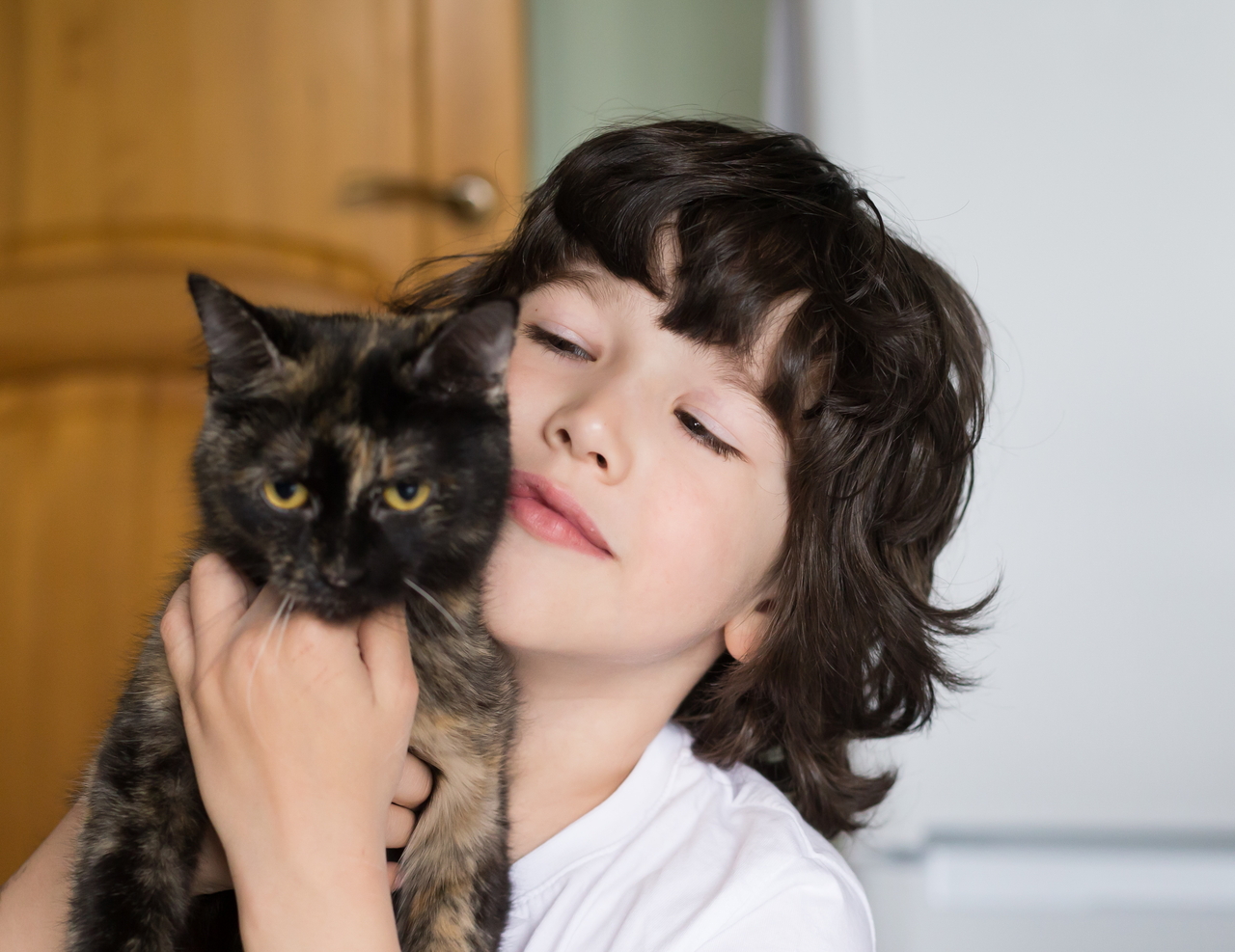
Animals ease stress in children, too
The same effect was found in children. A joint research team from the University of Rostock in Germany and the University of Vienna in Austria published results in the journal Frontiers in Psychology in 2012, based on an experiment involving 47 boys aged 7 to 11. The children were given a standardized stress task that required them to make up and deliver a story in front of unfamiliar adults and solve arithmetic problems aloud.
The team divided the children into three groups, each accompanied by a different companion throughout the task: 24 were paired with a trained therapy dog, 10 with a friendly female university student, and 13 with a stuffed toy dog.
After the task, children who had been with the therapy dog showed the lowest cortisol levels. The gap between them and the stuffed-toy group was pronounced, and their cortisol levels were also lower than those of children accompanied by the student.
The more the children petted the dog, the faster their cortisol levels dropped after the stressful task.
The researchers said the affectionate physical contact may have boosted the release of oxytocin — often called the love hormone — which in turn helped dampen the stress response.

Just 10 minutes is enough
Other research suggests that even brief interaction can make a difference.
Patricia Pendry, a professor at Washington State University, and colleagues published findings from a study of 249 university students in the journal AERA Open in 2019.
Students were randomly assigned to one of four groups: one group spent 10 minutes directly petting and playing with dogs and cats, while the others watched fellow students interact with the animals, looked at photos of animals, or waited quietly.
Saliva samples collected multiple times from the morning onward showed that students who had directly interacted with the animals had significantly lower cortisol levels than those in the other groups.
"Just 10 minutes can have a significant impact," Pendry said.
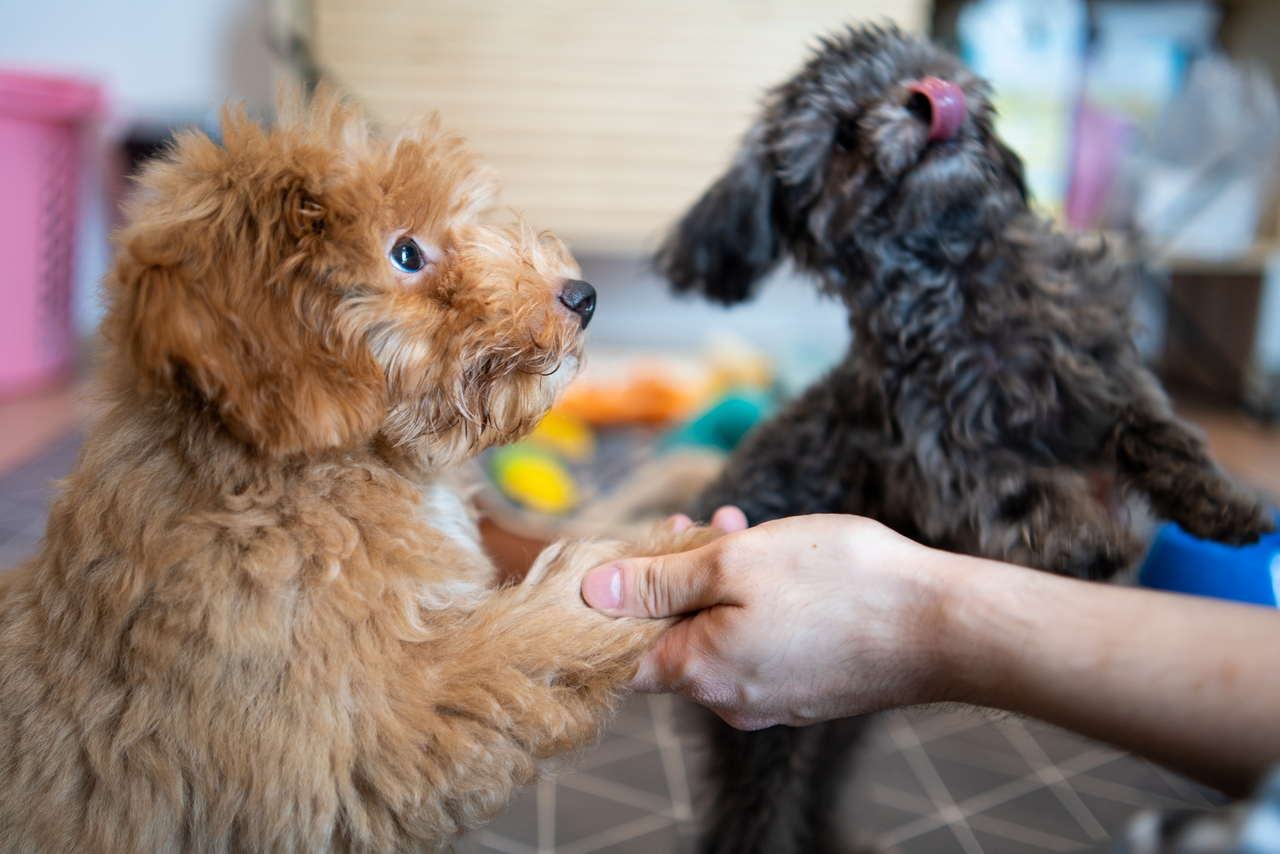
A follow-up study published last year in the journal Pets followed 105 first-year university students, each of whom spent two hours with therapy dogs once every two weeks over seven sessions.
Students who did not meet with therapy dogs showed a marked increase in depressive symptoms as the semester progressed, while those who did showed almost no change. Perceived stress also declined among students who met with the dogs and rose among those who did not.
Drawing on such findings, universities abroad have begun bringing therapy dogs to campus during exam periods. Several US universities run programs called "Pet Your Stress Away." Nottingham Trent University in the United Kingdom also held an event this past April during its exam season, giving students time with therapy dogs.

A calming effect, not a shield against stress
Not all research suggests pets can actively prevent stress. A team at the Open University of the Netherlands published findings this year in Frontiers in Psychology, tracking the daily lives of 188 dog and cat owners.
Using a smartphone app, the researchers checked in with participants multiple times a day, asking about their mood, stress levels and how much they had interacted with their pet at that moment.
Time spent with both dogs and cats was associated with more positive emotions and fewer negative ones. However, interacting with a pet during a stressful moment did not produce a "buffering effect" that reduced negative feelings.
The team acknowledged a limitation: the study measured only the amount of interaction, not whether participants found it enjoyable. "Interactions with dogs and cats appear to offer similar emotional benefits," the researchers concluded.
dbsdn1110@heraldcorp.com