A fire at a laboratory inside a federal nuclear weapons complex in South Carolina released radioactive material, though authorities said radiation monitoring detected no contamination.
According to the US Department of Energy and local broadcaster WRDW, the fire broke out at approximately 5:39 p.m. Wednesday (local time) in a room at the Savannah River National Laboratory, which is located within the Energy Department's Savannah River Site.
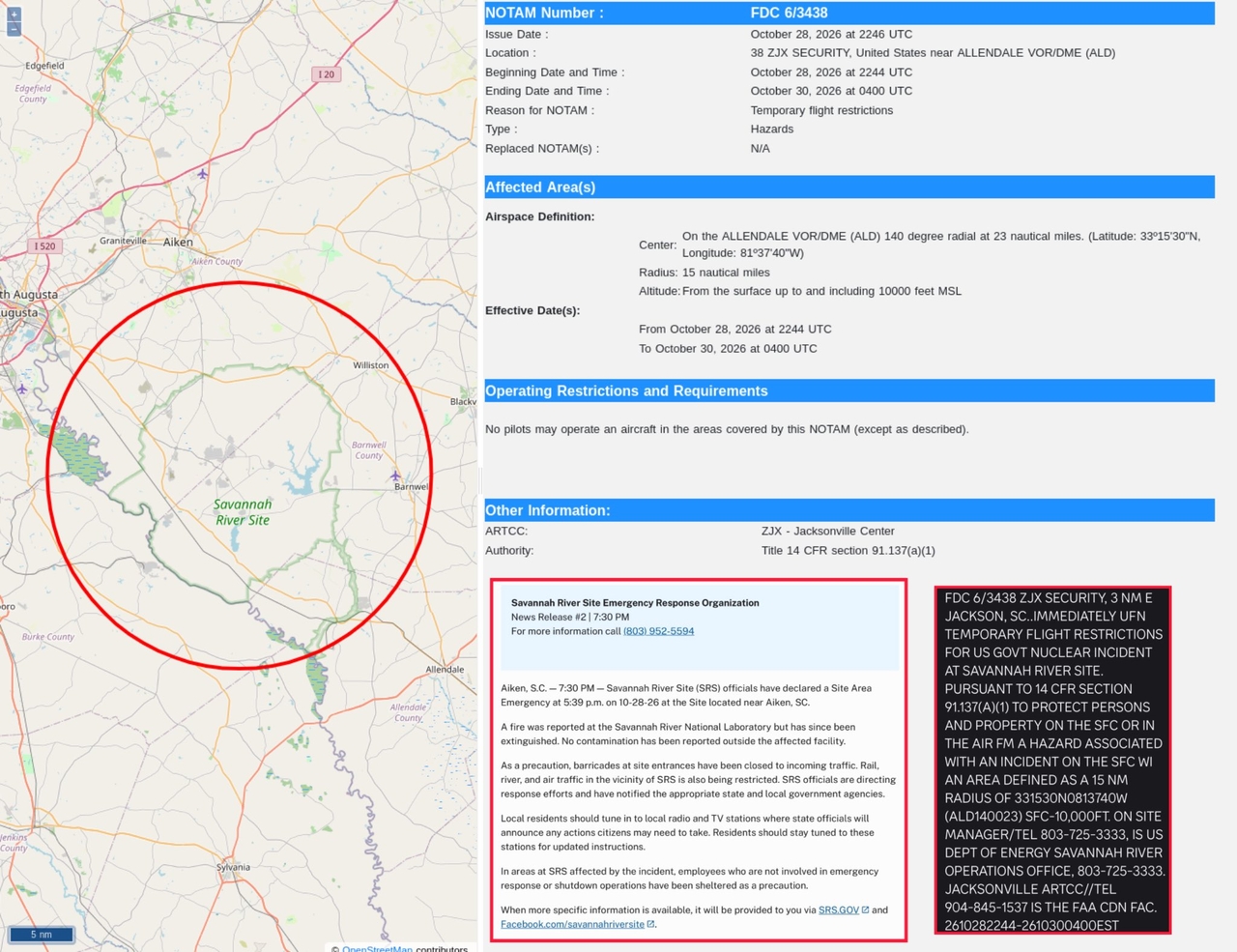
Savannah River Site officials said the fire caused unfiltered radioactive material to be released above ground and declared a site emergency. The fire was extinguished in under two hours.
Employees in Area A, where the laboratory is located, sheltered behind barriers for about 30 minutes. Workers not involved in emergency response or facility shutdown operations also remained indoors as a precaution.
Savannah River Site closed the complex's entrances to block outside vehicles and restricted nearby rail, river and air traffic.
The Federal Aviation Administration imposed a temporary flight restriction within a 15-nautical-mile (about 28-kilometer) radius of the complex below 10,000 feet (about 3,000 meters), citing a "US government nuclear incident."
Savannah River Site lifted the emergency declaration at 9:45 p.m. Wednesday, about four hours after the fire began. In an official statement, the site said radiation monitoring found "no detectable levels of contamination."
However, the cause of the fire, the extent of any damage and whether anyone was injured were not disclosed. Nuclear industry publication Exchange Monitor noted that the Energy Department's press release omitted the exact location of the fire, its cause, the scale of damage and any injury information. The type and quantity of radioactive material released also remained unknown.
Savannah River Site is an Energy Department complex spanning 803 square kilometers (310 square miles) in South Carolina.
According to the Associated Press, the site opened in the early 1950s at the start of the Cold War to manufacture plutonium pits, a key component of nuclear bombs, and produced tritium and plutonium-239 used in nuclear weapons. Plutonium processing facilities and spent nuclear fuel disposal facilities remain on the complex. As production has wound down, the site has taken on a cleanup mission to manage remaining radioactive waste.
The Savannah River National Laboratory, where the fire occurred, is one of 17 national laboratories under the Department of Energy.
dbsdn1110@heraldcorp.com