The 4th KAIST Failure Studies Conference, running Nov. 4–13, invites students to share setbacks and trial-and-error experiences, while also analyzing AI-era failure scenarios set in 2036 to get ahead of future risks.
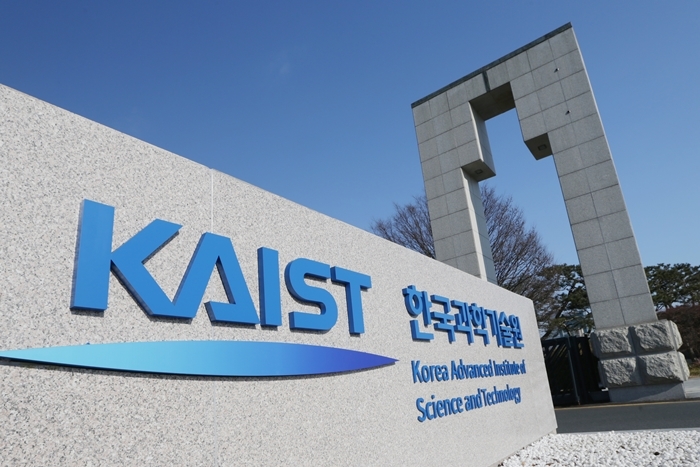
An unusual academic event is coming to KAIST — one where students proudly showcase failed research projects and where the risks of an AI-saturated world a decade from now are examined in advance.
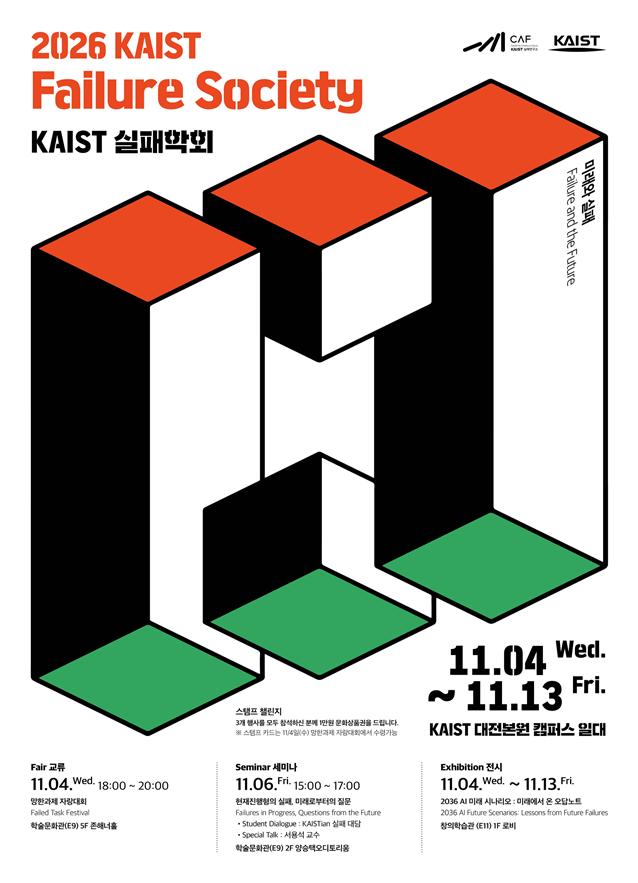
KAIST announced Friday that it will hold the 4th KAIST Failure Studies Conference at its main campus in Daejeon from Nov. 4 to Nov. 13, under the theme "The Future and Failure."
Organized by the KAIST Failure Research Institute, the event is designed to move beyond the conventional view of failure as something simply to be overcome, reframing it as an opportunity to learn, embrace new challenges, and prepare for future risks.
The opening event, a "Failed Project Showcase," will be held Wednesday at the KAIST Academic and Cultural Center. Structured as a fair, it will let students present their academic, research, and everyday failures through photos and videos. Audience voting will determine winners in five categories.
On Friday, a failure seminar titled "Failure in Progress, Questions from the Future" will take place. Three KAIST graduate students — winners of a failure essay competition — will share their experiences navigating the difficulties of interdisciplinary research, career uncertainty, and repeated trial and error.
Seo Yong-seok, a professor at KAIST's Graduate School of Future Strategy, will deliver a lecture titled "Why Human Failure Matters More as AI Gets Smarter," exploring the significance of human judgment and accountability in an era when AI provides ready answers.
A highlight of this year's conference will be the public unveiling of failure scenarios for 2036 — an AI-integrated future imagined by ordinary citizens.
The KAIST Failure Research Institute analyzed 429 scenarios that met its analytical criteria, drawn from a public competition that attracted 732 participants. The scenarios examined not only AI malfunctions but also situations in which over-reliance on normally functioning AI erodes human judgment and learning opportunities, or leaves accountability unclear when problems arise.
The findings will be presented through an exhibition and report titled "2036 AI Future Scenarios: A Wrong-Answer Notebook from the Future," alongside 16 student essays on personal failure and a photo series documenting everyday trial and error.
KAIST President Bae Choong-sik said a university should be a place that respects and learns from the trial and error encountered in the process of taking on challenges, not just from successful outcomes. "I hope this conference becomes a space where we draw courage for our next challenge from each other's experiences and think together about the problems we will face in the AI era," Bae said.
nbgkoo@heraldcorp.com