FSC, FSS prepare financial administration reform package
Banks to get at least 7 business days between notice and inspection start
Exceptions allowing unannounced inspections to be narrowed
Plan to be reported to public institution management committee
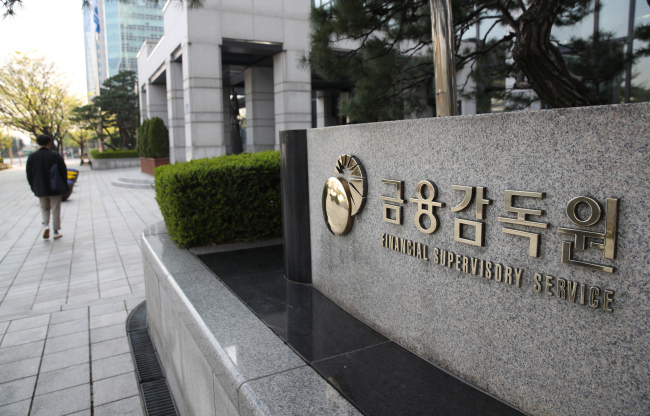
Financial regulators have agreed to a banking industry request for more preparation time ahead of on-site inspections, sources said. Under the planned change, financial firms will secure at least 10 days to prepare for field inspections — a move aimed at strengthening their defense rights as part of a broader administrative reform effort.
According to financial industry sources Thursday, the Financial Services Commission and the Financial Supervisory Service are preparing a financial administration reform package containing these measures.
One of the key items in the reform package is bolstering the defense rights of financial firms. The most notable measure is extending the lead time between advance notice and the start of ad hoc inspections.
Under current supervisory regulations, the FSS must notify financial firms at least seven calendar days before launching an on-site ad hoc inspection, delivering a formal advance notice that includes the purpose and duration of the inspection.
The authorities are reviewing a plan to extend that window to a minimum of seven business days from the date of notice to the start of the inspection. With weekends factored in, financial firms would gain roughly 10 or more days to prepare.
Extending the advance notice period has been a consistent demand from the financial industry.
Regular inspections are typically announced a month in advance and focus on work already being carried out, making them relatively predictable.
Ad hoc inspections, by contrast, are triggered by sudden issues in financial markets and often require firms to prepare materials they do not handle on a routine basis. The industry has long argued that the current preparation window of around five business days is insufficient for adequate inspection readiness.
"Ad hoc inspections cover areas outside our normal operations, so multiple rounds of data verification are needed," a financial industry official said. "Even securing a minimum of seven business days instead of the current five or so would make the preparation process considerably smoother."
The exceptions that allow the FSS to launch inspections without advance notice will also be revised.
Under current supervisory regulations, the FSS may proceed with an ad hoc inspection without prior notice in four circumstances: when advance notice risks the manipulation or destruction of records; when disclosure of the inspection could unsettle investors or depositors and cause significant harm to financial markets; when the urgency of the review leaves no time for advance notice; and when there is a risk that advance notice would make it difficult to achieve the inspection's objectives.
The fourth exception — covering cases where achieving the inspection's objectives might be compromised — has drawn criticism from financial firms for being broad enough to apply across a wide range of situations, making it difficult to prepare.
The authorities plan to narrow the conditions for skipping advance notice by making some of the more abstract criteria more specific.
"For cases involving illegal conduct such as embezzlement, launching an inspection without notice is entirely appropriate given the risk of evidence destruction," an industry official said. "But for some thematic ad hoc inspections that do not involve such concerns, advance notice would allow financial firms to prepare more smoothly."
Requirements for extending inspections will also be tightened. Ad hoc inspections typically run one to two weeks and are extended as needed. Currently, an extension requires only the approval of the FSS department head in charge, but the authorities plan to raise the approval threshold to the FSS executive level and introduce additional safeguards.
Separately, discussions are underway to formally prohibit "interim inspection announcements" — a practice that has already largely disappeared in effect — and to restrict demands for materials dating back more than five years, which exceeds the statute of limitations for sanctions against financial firms.
The reform package is subject to reporting to the Public Institution Management Committee. Earlier this year, the committee agreed to defer the FSS's designation as a public institution on the condition that it would be supervised at public institution standards across its overall management. The FSC plans to report the reform package to the committee as early as next month.
Some observers caution that discussions on strengthening financial firms' defense rights should not be interpreted as a weakening of the FSS's inspection authority. "The discussion should be framed around improving the efficiency of inspection administration and increasing acceptance by financial firms," a former senior financial regulatory official said. "Care must be taken not to let financial firms misread this as a dilution of supervisory powers."
Earlier this year, the FSS identified the following priority themes for its inspection agenda: internal controls over financial product manufacturing, branches with elevated consumer risk factors, unfair sales practices, internal controls over digital financial transactions, and anti-money laundering internal controls.
hyuk@heraldcorp.com
rim@heraldcorp.com