Analysis of Q3 2026 card spending data
Transport sector up 7.8% as accommodation and restaurants fall 0.6%
International air passengers rise 9.3% while domestic routes drop 6.9%
'High prices push consumers to cut everyday spending and focus on experiences'
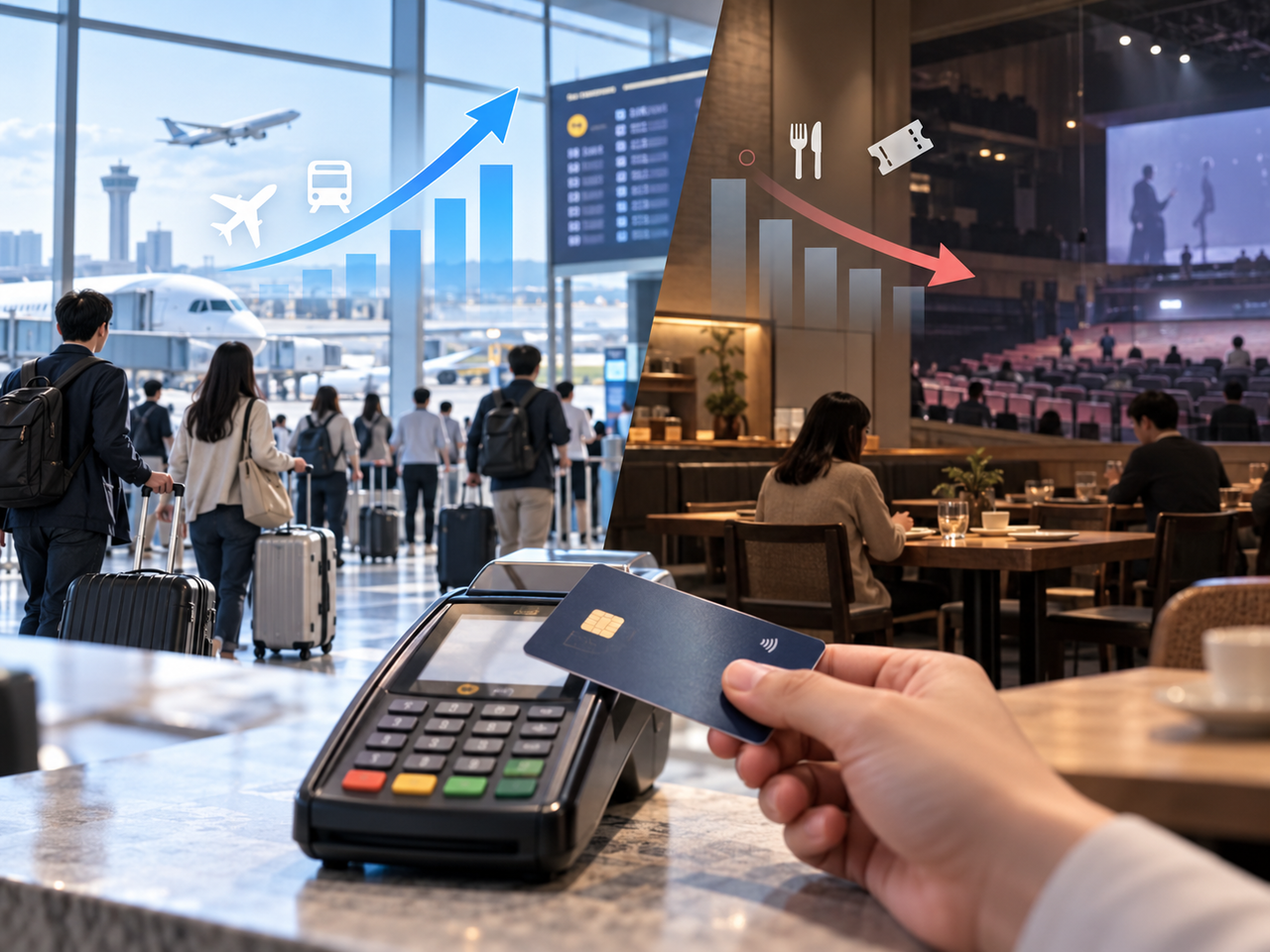
A clear split in consumer behavior is emerging amid high prices: Koreans are cutting back on everyday spending while continuing to spend on travel. Card spending in the transport sector rose in the third quarter of this year even as accommodation, restaurants and leisure-related industries declined. Total card approvals approached 339 trillion won ($254 billion), but the growth rate fell to less than half that of the previous quarter.
According to an analysis of third-quarter 2026 card approval data released Saturday by the Credit Finance Association's Credit Finance Research Institute, overall card approval growth slowed to 3.4% in the third quarter — less than half the rate recorded in the second quarter. Total approvals reached 338.9 trillion won, up from the same period last year, but the pace of growth slowed sharply. The number of approved transactions rose just 1.3%, to about 7.94 billion.
The card approval growth rate decelerated from 7.2% in the first quarter and 7.6% in the second quarter to 3.4% in the third. Transaction volume growth also slowed, from 6.0% in the second quarter to 1.3% in the third. The average amount per transaction, however, rose 2.1% year on year to 42,684 won.
Analysts attributed the slowdown to a base effect from consumer voucher distributions last year, fewer business days due to additional public holidays, and the burden of high prices and interest rates. Business days in the third quarter fell from 65 last year to 62 this year, and domestic car sales dropped 17.9%. The Bank of Korea's consumer sentiment index for October, released Tuesday, also fell 1.2 points from the previous month to 105.4.
While overall card spending growth slowed, results varied sharply by sector. Driven by rising travel and mobility demand, card approvals in the transport sector grew 7.8% year on year. International air passenger numbers climbed 9.3%, while domestic air passengers fell 6.9%. Tourism spending by both Koreans and foreign visitors rose 6.6% and 48.8%, respectively.
Dining and leisure spending, by contrast, was weak. Card approvals in the accommodation and restaurant sector fell 0.6% year on year, and approvals in arts, sports and leisure services dropped 2.3%. The accommodation production index for July and August rose 7.5% year on year, while the restaurant and bar production index edged up just 0.1%.
"There is a possibility that stronger demand for overseas travel over domestic travel contributed to the decline in card approvals for domestic accommodation and restaurants," an official in the credit finance industry said. "Accommodation held up to some extent, but weakness in the restaurant sector may have dragged down overall approvals."
Experts said that with consumer spending power constrained by high prices, people are cutting back on routine expenditures and directing their money toward special experiences such as travel. Leisure time has increased, but spending cannot grow across all categories, forcing consumers to set priorities.
"Working hours have shortened and flexible work arrangements have become more common, giving people more leisure time — but high prices make it hard to spend freely across the board," said Lee Young-ae, a professor in the department of consumer science at Incheon National University. "As the tendency to value experiences grows stronger, consumers appear to be trimming everyday spending and concentrating their budgets on travel."
The retail sector also showed a divided picture. Department store sales for July and August rose 8.0% year on year, while hypermarket sales fell 4.4%. Online shopping transactions grew 7.3% over the same period. Within online shopping, food and grocery transactions rose 8.9% and food delivery service transactions climbed 8.2%.
However, the growth of payments made through online platforms — including online food delivery apps and accommodation booking apps — may mean that card approval figures by sector understate actual consumer spending. The Credit Finance Research Institute noted that the rise in online payments could cause sector-level approval data to be undercounted.
By card type, credit card approvals reached 264.9 trillion won, up 4.1% year on year. Debit card approvals totaled 69.9 trillion won, a 2.7% increase. Approvals on personal cards and corporate cards came to 275.5 trillion won and 63.6 trillion won, rising 3.7% and 2.3%, respectively.

snsd@heraldcorp.com