Kakao Bank launches Apple Pay 3 years and 8 months after Hyundai Card's debut
Applied to debit and teen prepaid cards
Debit card users hold four times more in deposits than non-users
Toss Bank targets year-end launch; overseas payment boost expected
Strategy targets younger iPhone users to secure future primary customers
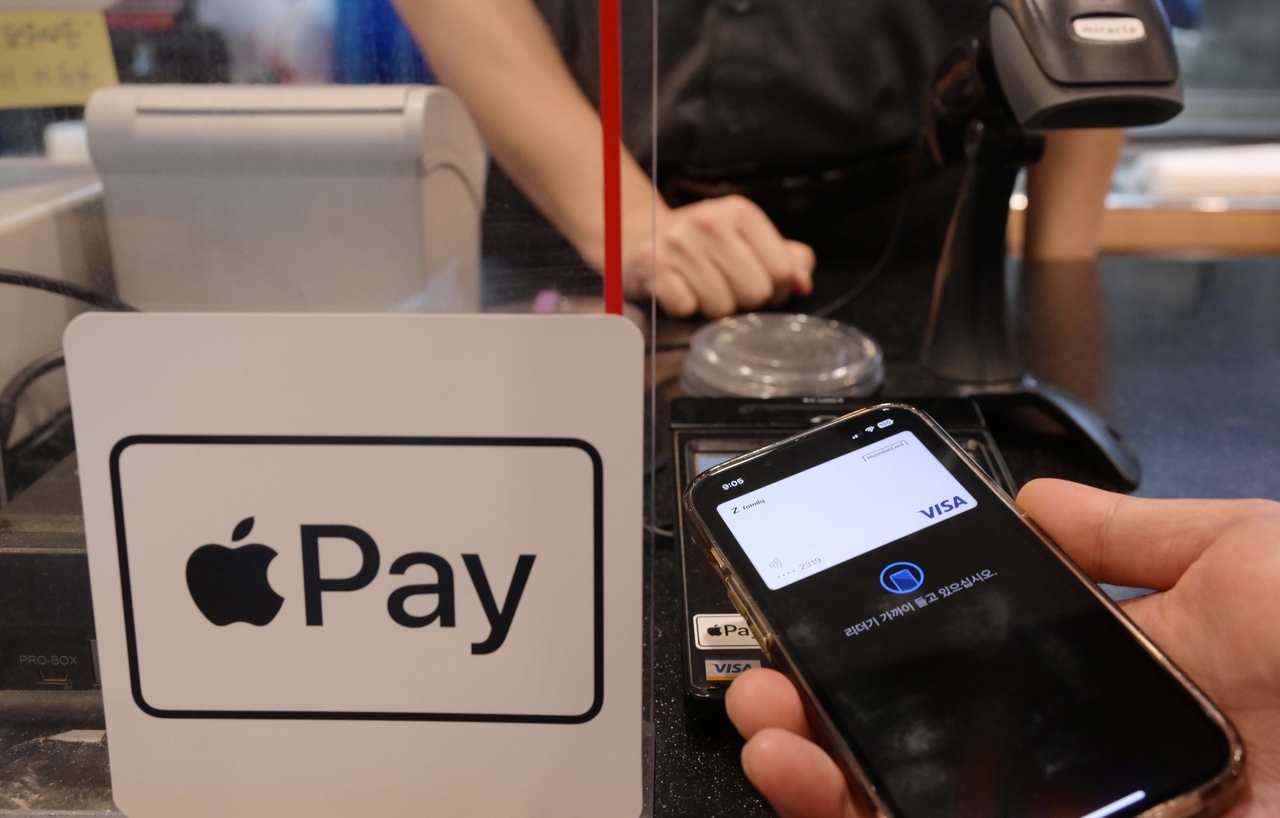
Nearly four years after Hyundai Card first brought Apple Pay to South Korea's financial sector, Kakao Bank has fully rolled out the service — and Toss Bank is expected to follow before year's end. The moves are drawing attention, with analysts saying internet-only banks are adopting Apple Pay not for immediate payment revenue but to secure future primary customers. Expanding to Apple Pay on top of existing Samsung Pay support is seen as a strategy to draw in iPhone users and convert them into long-term banking clients. Analysts note that customers who actively use debit cards also tend to keep higher account balances and visit their banking app more often, making debit card adoption a key lever for customer acquisition.
According to financial industry sources, Kakao Bank applied Apple Pay to its debit card and its teen prepaid card, the mini card, starting Monday. The launch comes 3 years and 8 months after Hyundai Card introduced Apple Pay in South Korea in March 2023. Toss Bank is also preparing to launch the service before the end of the year.
Internet banks are eager to adopt Apple Pay because debit card payments drive broader account usage, which in turn opens the door to deposit growth and cross-selling of other financial products. The long-term value of a loyal customer relationship, the thinking goes, outweighs any direct revenue from payment processing.
Kakao Bank's own data supports this view. According to debit card usage figures the bank released in August, customers who used their debit card for 300,000 won ($225) or more per month for three consecutive months in the first half of this year held an average deposit balance of about 3.6 million won — four times that of non-debit-card users. Their app visit frequency was also five times higher. The figures suggest that the more actively a customer uses a debit card, the more engaged they are with the bank overall.
Kakao Bank's decision to extend Apple Pay to its teen prepaid card also fits squarely into a future customer acquisition strategy. The mini card works by loading funds in advance without requiring a bank account, and users aged 14 and older can now pay with Apple Pay. International payments are not supported, keeping the focus on improving payment convenience for domestic teenage users. As of the end of the third quarter this year, the mini card had accumulated about 2.6 million subscribers. While the card itself is not a deposit account, the bank sees it as a way to encourage those users to open a regular account and become primary customers once they reach adulthood.
"People sometimes stick with the first bank they used when they were young," a financial industry official said. "Internet banks appear to be using Apple Pay to bring in young customers early, aiming for long-term customer retention rather than immediate profit."
Among domestic smartphone users, younger generations — including teenagers — show a notably stronger preference for iPhones. According to the "Z-Alpha Generation Trend Report 2026" released by Open Survey in August, 54.2 percent of teenagers chose Apple as the smartphone brand they want to use next, ahead of Samsung at 38.2 percent. A survey released by Gallup Korea in July also found that 53 percent of people in their 20s use an iPhone, compared with 47 percent for Galaxy. The data reinforces the case for targeting iPhone users early and converting them into primary banking customers down the line.
Toss Bank also stands to strengthen its overseas payment offering. When its debit card is linked to a foreign currency account, international transaction fees and network surcharges are waived. Adding Apple Pay would allow customers to pay at contactless merchants abroad without carrying a physical card, potentially driving simultaneous growth in both foreign currency account usage and debit card spending.
The potential for overseas payment growth after adopting Apple Pay is already visible in Hyundai Card's experience. Hyundai Card posted overseas credit card sales of 3.94 trillion won last year, topping the industry for three consecutive years. "Overseas payment volume started rising sharply after Apple Pay launched," a Hyundai Card official said. "We believe Apple Pay has contributed to the earnings growth."
An improving Apple Pay ecosystem is also giving internet banks' customer acquisition strategies a boost. Unlike when Hyundai Card first launched the service in 2023, Toss and Naver Pay have since expanded the rollout of near-field communication terminals, increasing the number of merchants where Apple Pay can be used. The result is an environment increasingly favorable for attracting customers on the strength of payment convenience.
snsd@heraldcorp.com