Nappa leather, power doors catch the eye
Crisp HUD, auto lane change impress
Rear cabin rivals business class
Cooler, drawers among rich amenities
Ride quality, cabin noise leave room to improve
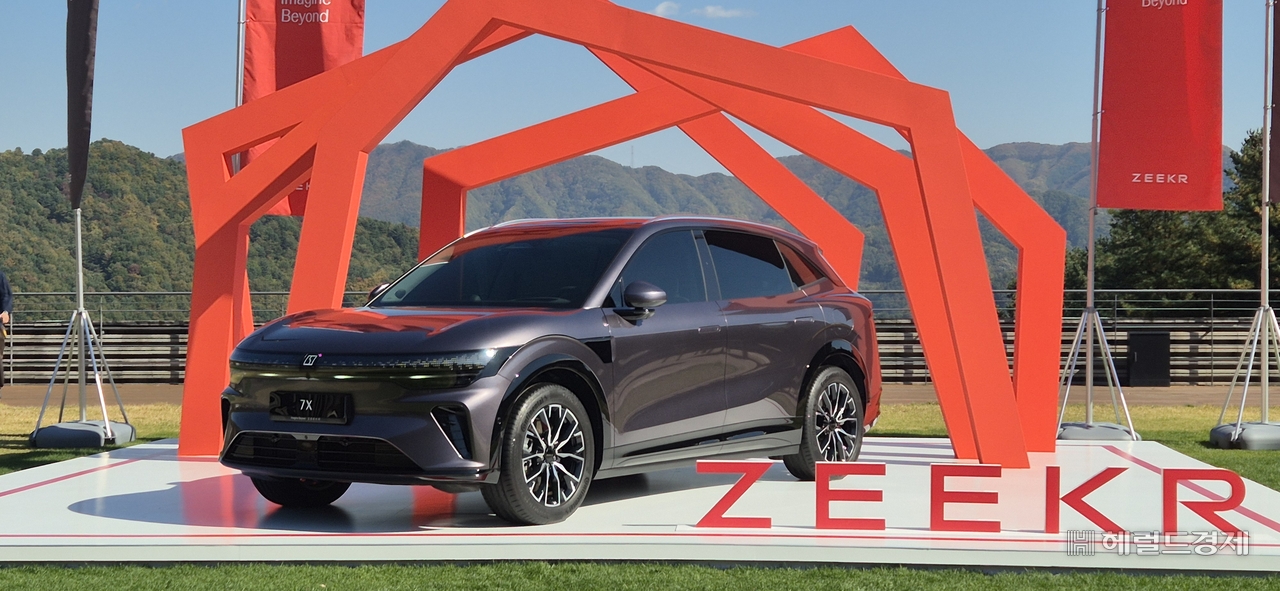
What would you get if you packed a car with smartphone-grade technology and wrapped it in the comfort of a luxury vehicle? The Zeekr 7X, a midsize SUV, offers one answer. From every button to the cabin materials to the rear storage, the attention to detail is unmistakable — and even setting aside the flashy tech features, the sense of premium quality exceeds expectations.
On Tuesday, this reporter drove the 7X over roughly 50 kilometers from Walkerhill in Gwangjin-gu, Seoul, to Ananti Code in Gapyeong, Gyeonggi Province — a route that covered city streets, a highway and winding country roads. The test vehicle was the top-of-the-line Ultra trim, a high-performance all-wheel-drive model equipped with air suspension.
Zeekr is a premium electric vehicle brand under Geely Automobile Group, launched in 2021. The 7X is the brand's first model to go on sale in South Korea.
'Premium down to every button': luxury feel permeates the cabin
As this reporter approached the vehicle, the power doors swung open smoothly. A thoughtful touch: the doors stop automatically when sensors detect a nearby obstacle.
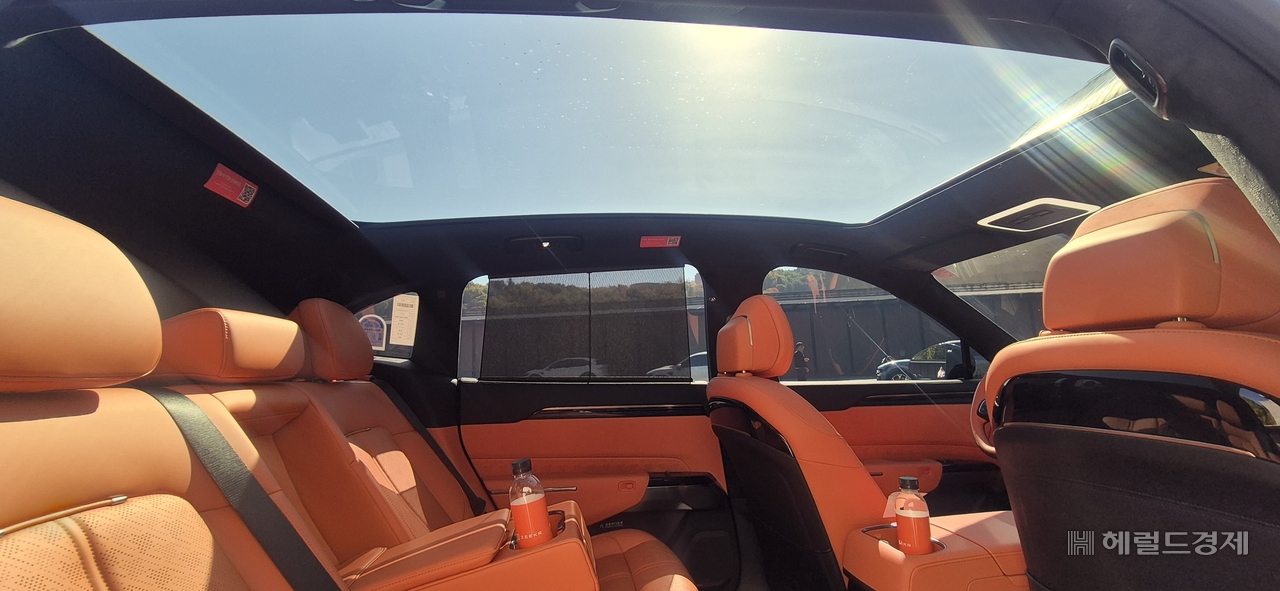
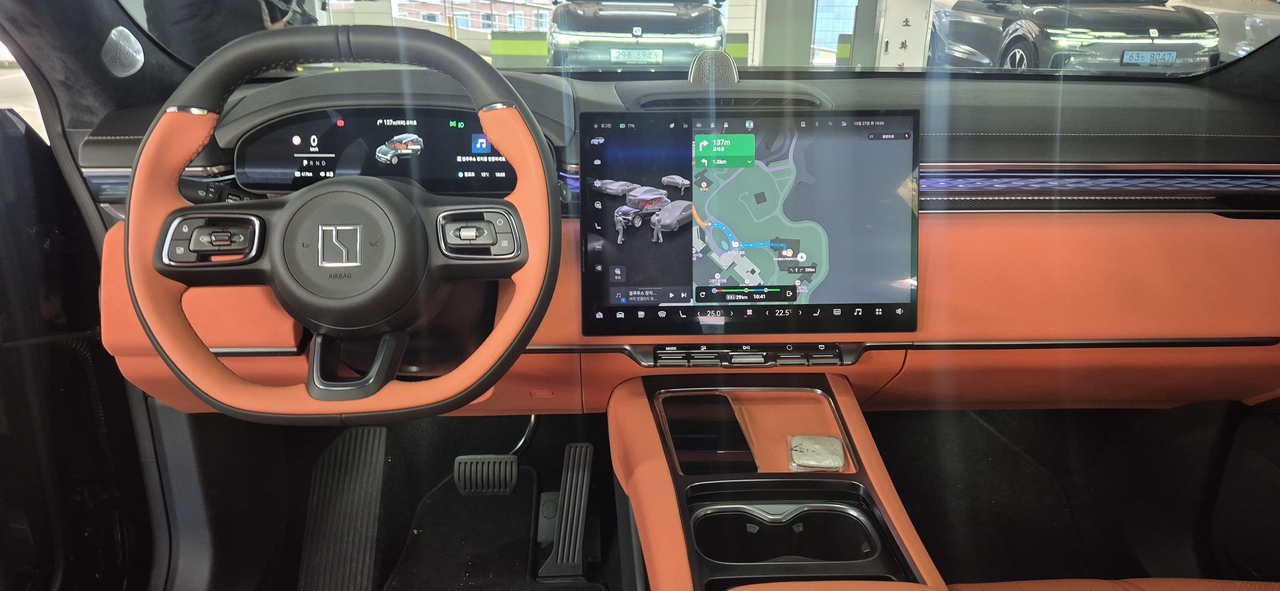
Stepping inside, the premium feel exceeded expectations. The seats and every surface within reach are finished in leather, and the tactile quality of each button suggests careful engineering. Soft materials wrap the headliner and pillars, completing an upscale atmosphere throughout.
The panoramic glass roof was a particular highlight, delivering a wide-open sense of space. Opening the electric sunshade reveals a sweeping view of the sky; closing it transforms the cabin into a cozy retreat.
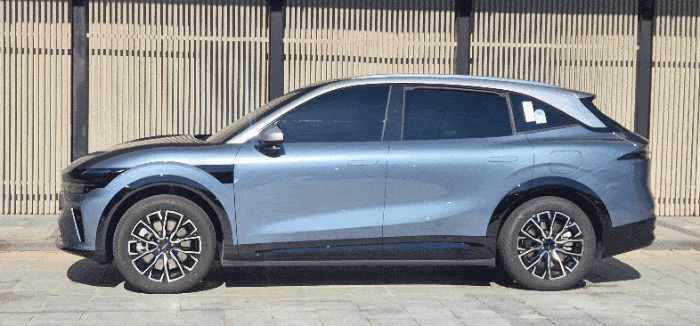
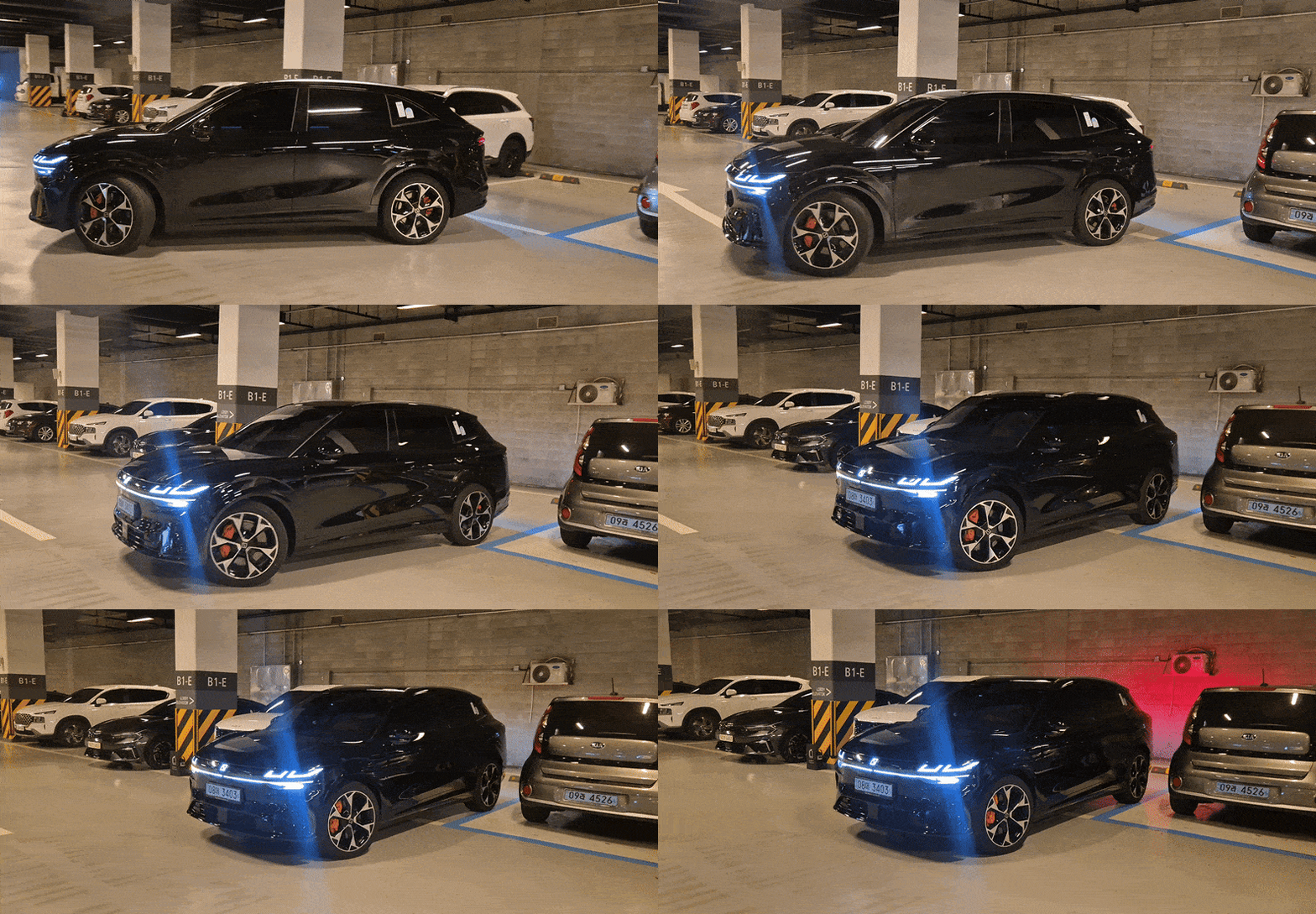
The exterior is equally refined. Horizontal lighting across the front fascia harmonizes with the smooth body lines, while the Stargate light bar — capable of producing a variety of patterns using 1,831 LEDs — reinforces the futuristic impression.
From the driver's seat, the head-up display was the standout feature. It ranks among the sharpest and most intuitive of any vehicle this reporter has tested. The 36-inch augmented-reality HUD presents driving information in large, clear graphics that are easy to read at a glance without taking eyes off the road.
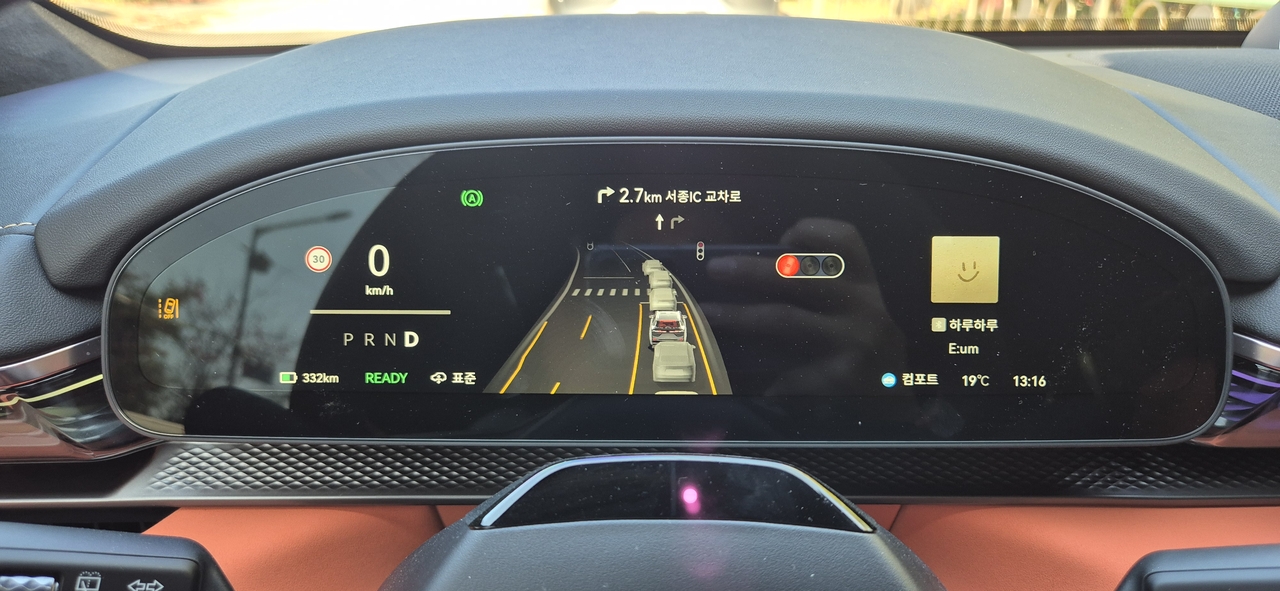
The digital instrument cluster displays surrounding vehicles and traffic signals, and the relevant camera feed appears automatically when changing lanes. The 16-inch central touchscreen responds quickly, allowing smooth control of the vehicle's many functions.
'Rear seats rival business class': amenities designed with families in mind
The 7X is classified as a midsize SUV at 4,800 millimeters long with a 2,900-millimeter wheelbase, but the rear cabin feels a class larger. The power-reclining function was particularly impressive: unlike in a typical SUV, the seatback reclines far enough to let passengers lean back in a posture reminiscent of an aircraft business-class seat.
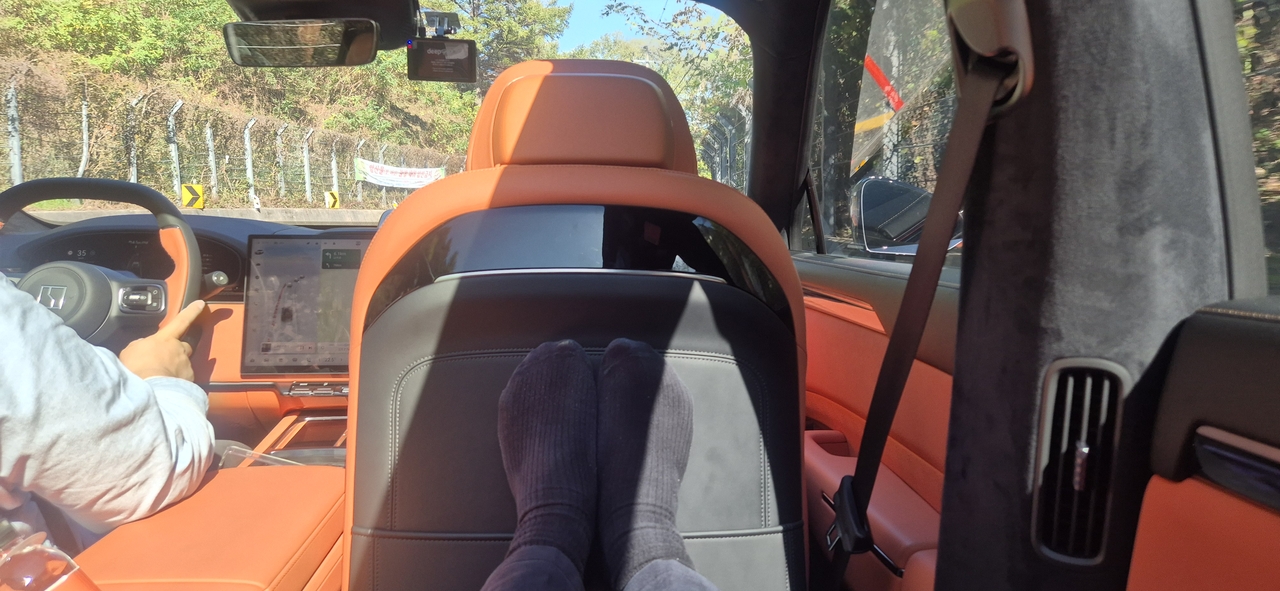
Rear passengers can also adjust the front passenger seat from the back row. Sliding it fully forward created enough room for an adult taller than 170 centimeters to stretch both legs out and rest feet on the front seatback.
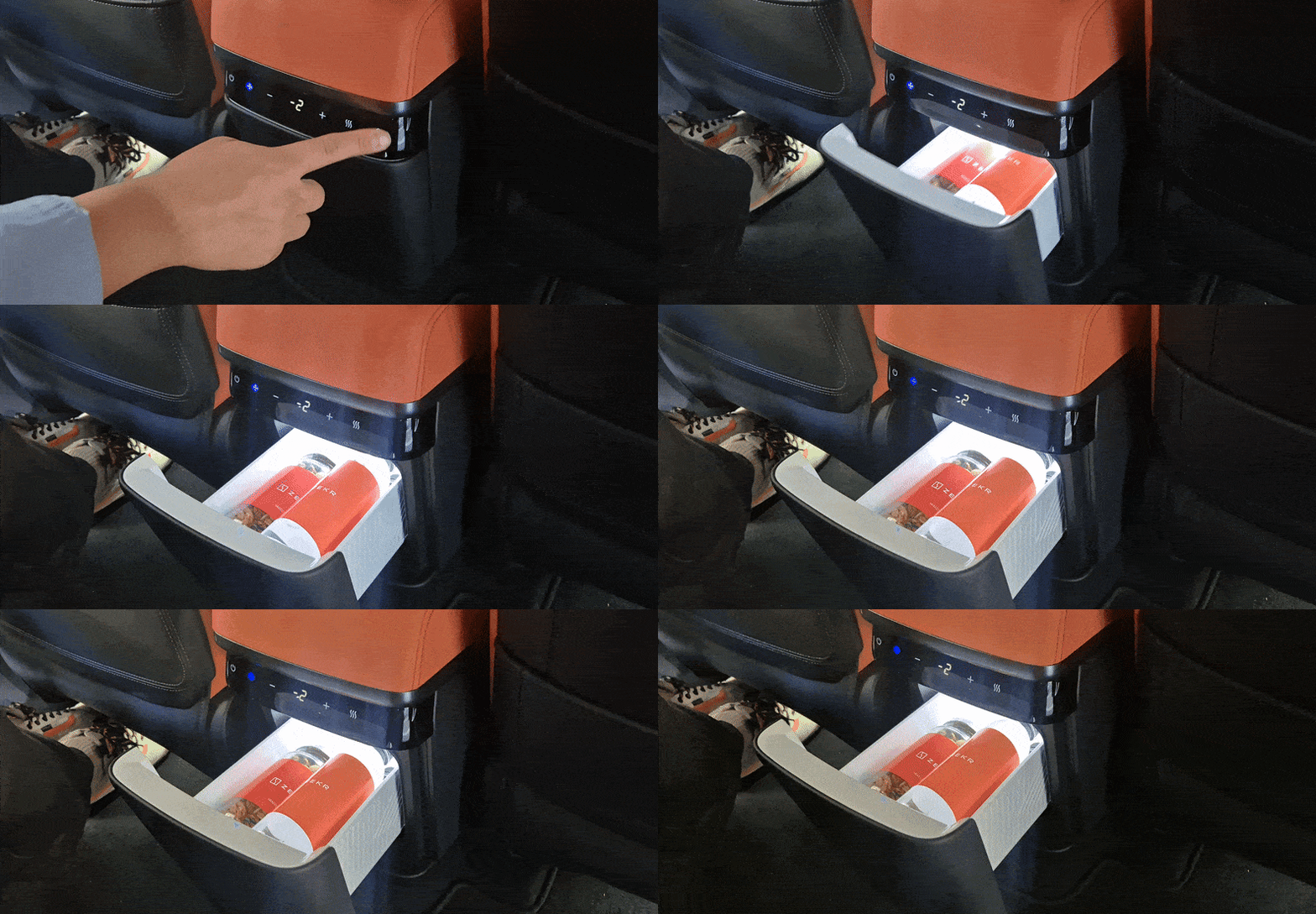
The same thoughtfulness extends to storage. Two drawer-style compartments sit beneath the rear seats — handy for small items children use or travel accessories. The cabin offers 32 storage spaces in total. A 5.3-liter cooler and warmer, adjustable from minus 6 to 50 degrees Celsius, is also fitted under the front center console.
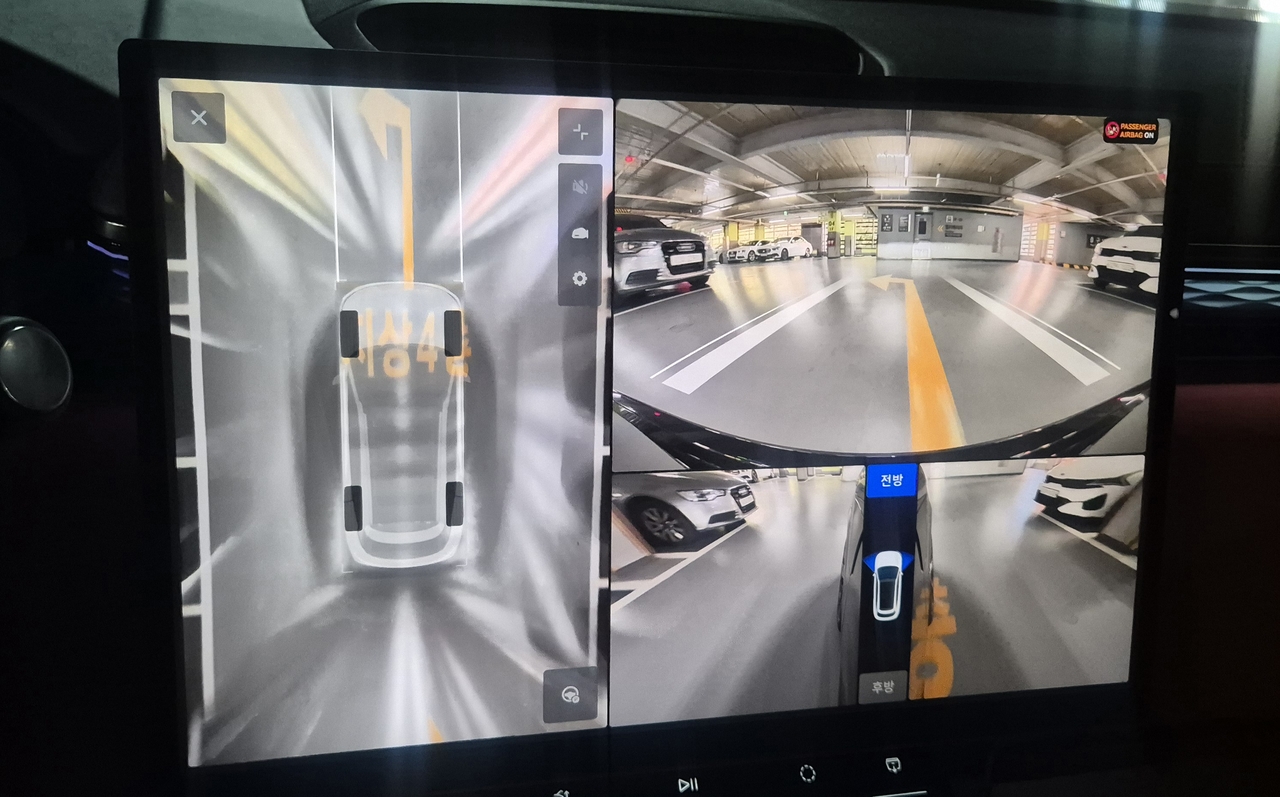
A rear-seat camera also caught this reporter's attention. As a parent of a four-year-old, the feature initially seemed quite appealing — the rear cabin appeared clearly on the central display. In practice, however, being accustomed to checking on a child via the rearview mirror meant the camera did not feel as useful as expected.
A separate speaker built into the driver's headrest was a distinctive touch. Navigation voice guidance can be directed to the driver alone, so rear passengers can enjoy music or conversation without interruption.
There were shortcomings as well. The rear windows open only about two-thirds of the way, and the rear seats offer only seat heating — lacking the ventilation and massage functions available up front.
Strong acceleration, but ride is firmer than expected
Out on the road, another dimension of the 7X emerged. The Ultra trim is an all-wheel-drive model producing 645 horsepower and 72.4 kilogram-meters of torque, with a zero-to-100-kilometer-per-hour time of just 3.9 seconds. Pressing the accelerator delivered a forceful surge — an immediate, almost startling response that is hard to reconcile with the vehicle's large SUV proportions.
The ride quality was firmer than anticipated. The Ultra trim comes standard with continuously controlled damping and air suspension, yet fine road vibrations transmitted noticeably through the cabin on the highway. On some stretches, the vibration was strong enough to be felt in the torso. The overall character is closer to a tautly tuned performance SUV than a plush luxury sedan.
Regenerative braking also contributed to the firm ride feel. Even in the standard setting — one of two options alongside a stronger mode — lifting off the accelerator produced a pronounced deceleration. Rather than coasting smoothly, the car shed speed quickly, compounding the suspension's firmness and adding to the ride's shortcomings.
Cabin quietness also fell slightly short of expectations. The interior was hushed at normal speeds, but tire and road noise crept in noticeably on the highway. Compared with the refined interior finish, the vehicle's ability to suppress noise and vibration while driving felt relatively lacking.
Auto lane changes work, but the system plays it safe
The driver-assistance features performed at a solid level on Korean roads. The 7X is equipped with a Level 2 driving-assistance system built around seven high-resolution cameras and three radars.
Activating lane-centering assist allowed the vehicle to maintain its position in the lane while adjusting the following distance to the car ahead. The automatic lane-change assist was notably conservative: it canceled the maneuver whenever another vehicle was present in the adjacent lane or the gaps fore and aft were deemed insufficient. One frustrating quirk — after a failed attempt, the system would not try again even when conditions improved.
Voice recognition, in contrast to the otherwise rich digital feature set, appeared to need further development. The "Hi Zeekr" wake word could trigger commands for windows, seat ventilation and other vehicle functions, but the system frequently failed to understand instructions correctly. Searching for external information such as weather was not supported.
Strong product appeal, but refinement remains a work in progress
The 7X is built on Geely Automobile Group's dedicated electric vehicle SEA platform. In terms of driving character, it sits closer to Polestar — firm and dynamic — than to Volvo's softer, more comfort-oriented feel.
Three trims are available in South Korea: Pro, Max and Ultra, priced at 52.99 million won ($39,700), 59.99 million won and 69.99 million won, respectively.
kwater@heraldcorp.com