Inside Hansae's TG Vietnam factory in Tien Giang province
Fabric inspection, packaging and key production steps now automated
Process-by-process optimization drives competitiveness and energy savings
Hundreds of motorcycles packed the lot outside Factory 7 of Hansae's TG Vietnam subsidiary in Tien Giang province, about an hour's drive from Ho Chi Minh City, on Sept. 29. They belong to the workers who keep Hansae's production lines running.
Hansae's Vietnam operations account for 52 percent of the company's total output, making them its core production base. Since establishing its first local manufacturing subsidiary in 2001, the company has steadily expanded capacity by drawing on the local workforce. The TG subsidiary alone employs 4,300 workers and produces about 40 million garments a year.
Inside Factory 7, which produces clothing for American brands, the air was filled with the hum of sewing machines and the clatter of equipment. Workers moved briskly through each production stage while large ceiling fans turned overhead to cut the heat. The factory employs 840 people and turns out 2.84 million garments a year — an average of 236,000 a month.
Every step of the process, from fabric intake to cutting, sewing and logistics, is connected through data. Each roll of fabric receives a barcode, and output figures and defect information are entered in real time during cutting and sewing. Hanger systems and automated transport devices handle the movement of work-in-progress between stages. Automated equipment and data management systems have taken root on a factory floor that once relied almost entirely on human hands.
The changes are designed to raise production efficiency while keeping pace with rising labor costs. Factory 7 has the highest concentration of automated equipment among all of Hansae's Vietnam facilities. From the moment fabric arrives to the point a finished garment leaves the line, automation and data management are woven into every corner of the operation.
From fabric inspection to packaging: automation across the production line
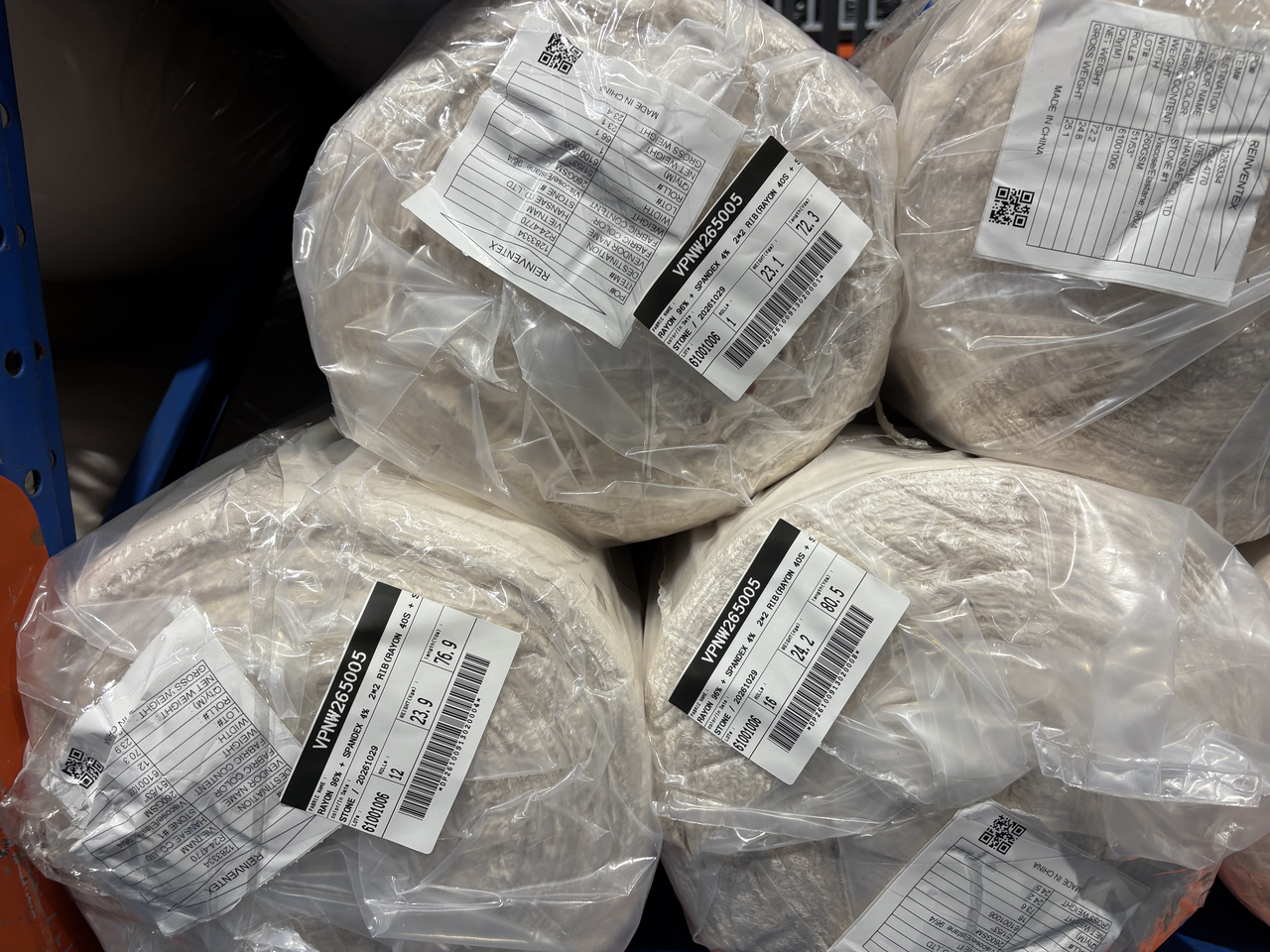
Garment production begins with fabric intake. Hansae sources fabric from multiple countries, including South Korea, China, Thailand, the United States and Vietnam. Rolls arrive by ship container and truck and are stored on four-tier shelving.
Each roll carries a barcode that serves as an identification tag, registering the fabric type, quantity and storage location in the computerized system. From the moment fabric enters the warehouse, inventory status is tracked as data — the starting point of Hansae's effort to digitize the entire production process.
Rolls pulled from the shelves are moved to an inspection zone to check for defects. Ten percent of incoming fabric, sampled by color, is inspected for flaws. Two inspection machines are in operation, each staffed by one worker who examines the fabric's condition.
Fabric that passes inspection moves to a pre-shrinking table. The step is designed to prevent shrinkage: fabric can stretch under tension during production, and cutting it without first releasing that tension can cause finished garments to shrink out of specification. To prevent this, the fabric is loosened to relieve tension. Depending on the fabric type, the process takes one to two days; stretch fabrics require about three.
Hansae uses pre-shrinking machines to shorten that time. The machines apply heat and steam to induce controlled shrinkage and stabilize dimensions in advance. The equipment is especially critical at Factory 7, which handles many printed products. Some garments feature asymmetric designs — a pattern on only one sleeve, for instance — meaning that uneven shrinkage could leave the finished garment mismatched in length or shape from one side to the other.
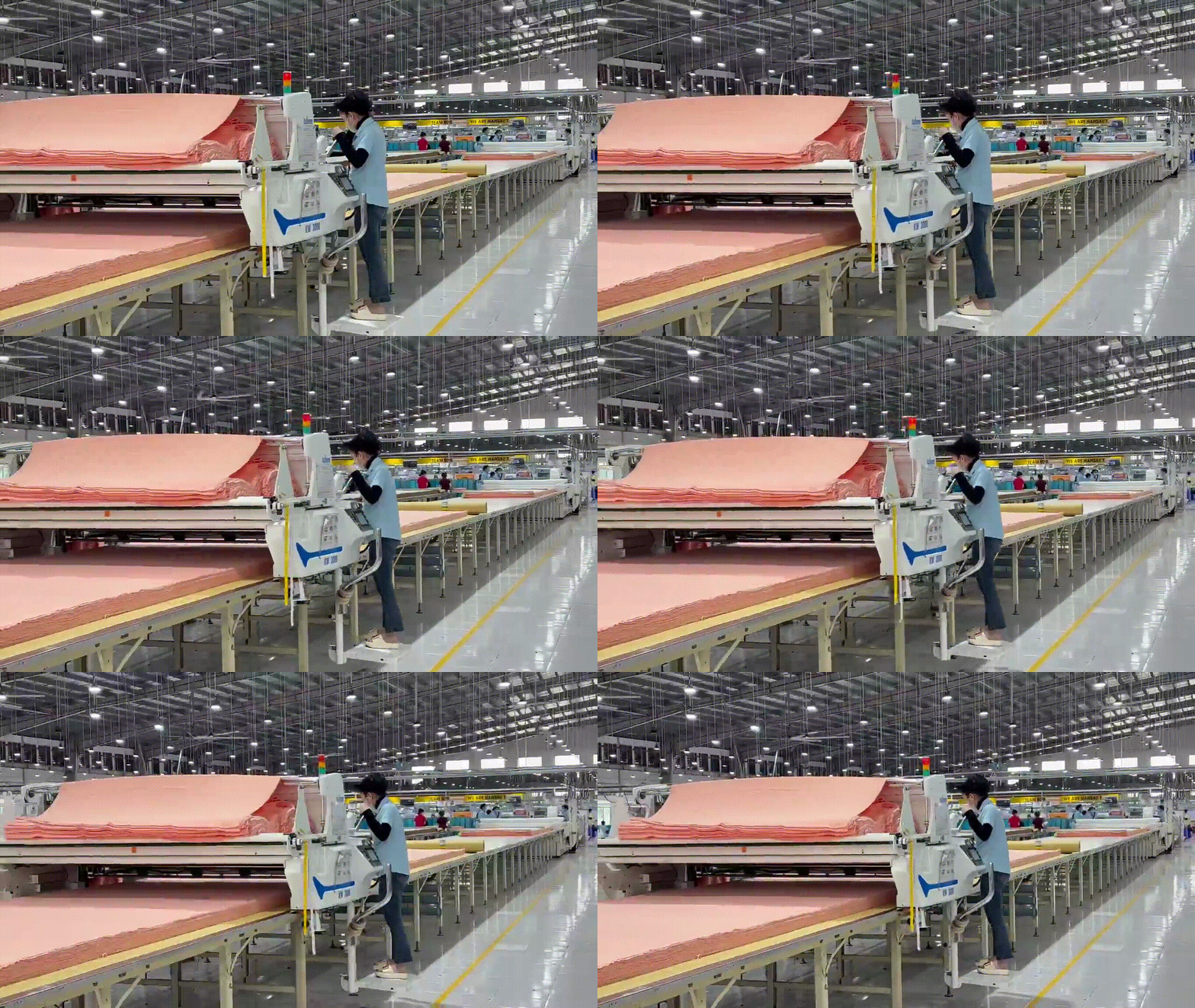
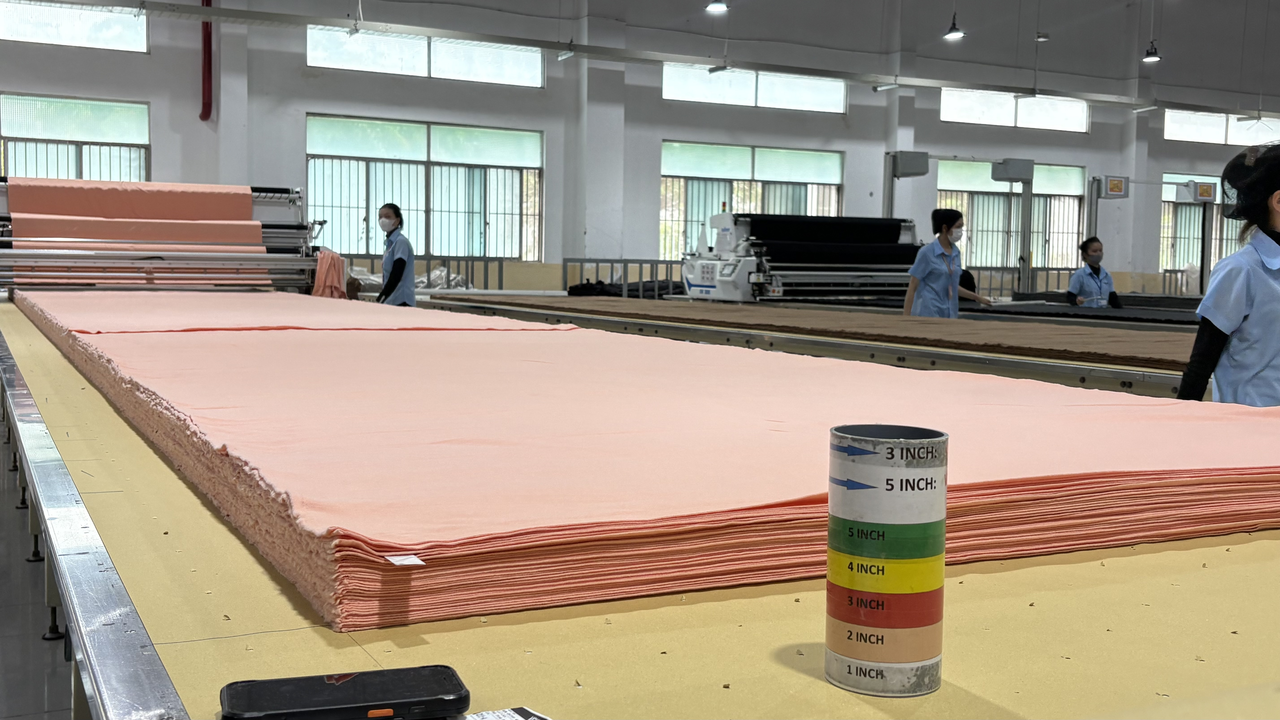
The next step is fabric spreading, where rolls are laid out in long, layered stacks. One worker rides atop an automated spreading machine — resembling a moving walkway — to monitor the process. Fabric ranging from 68 to 75 inches (about 173 to 190 centimeters) wide is layered until the stack reaches a maximum height of about five inches (roughly 12.7 centimeters), at which point it moves to cutting. Workers once spread fabric by hand, gripping both edges and pulling it out manually; the automated spreader has since replaced that labor.
Cutting is also handled by an automated system called an "auto cam." A paper pattern is placed on top of the layered fabric and fed into the machine, which rapidly cuts along the printed lines. The equipment has eliminated the need for nine workers previously assigned to cutting while improving both speed and precision.
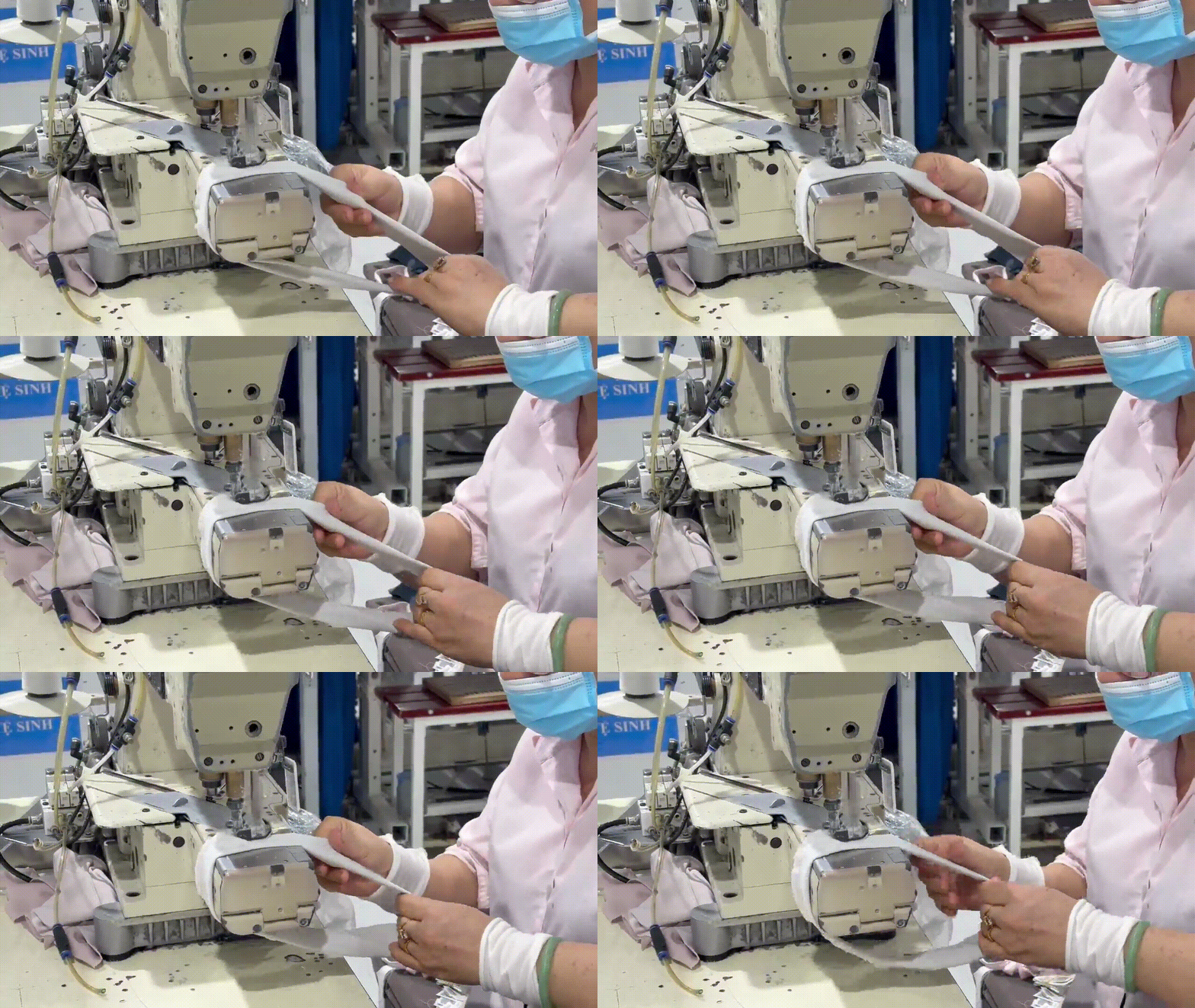
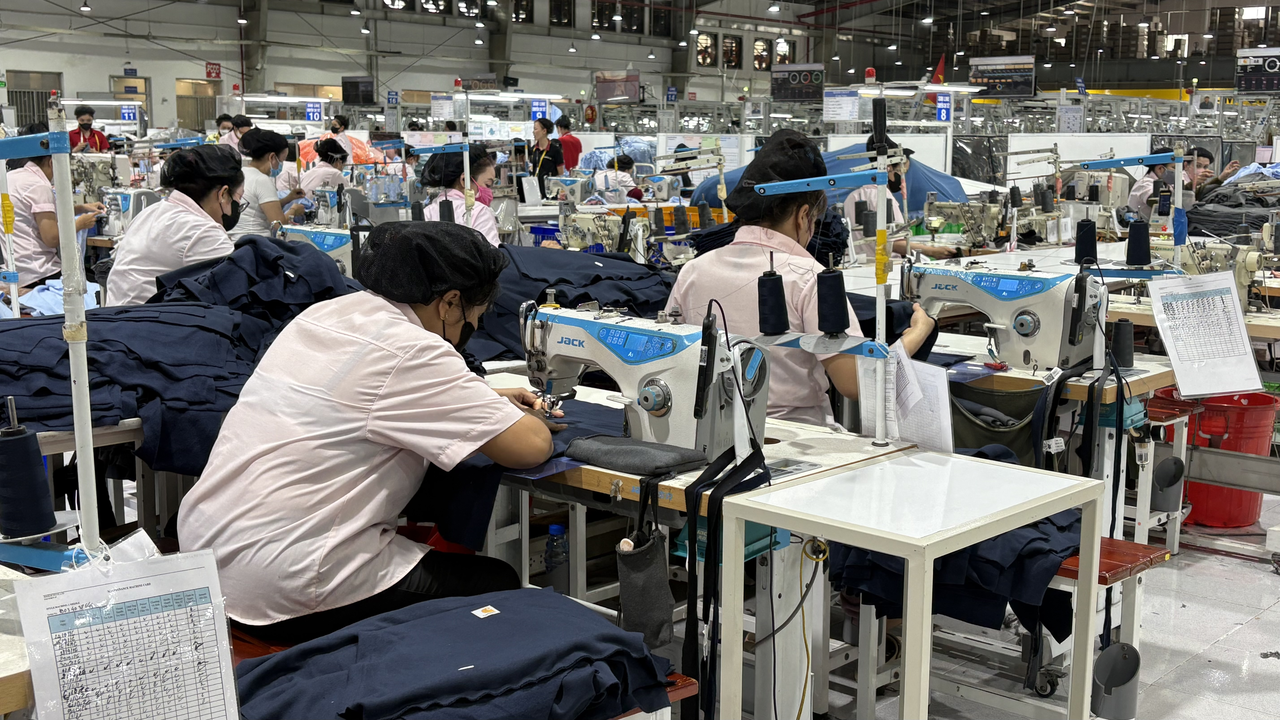
Cut fabric moves to the sewing line, the heart of garment production and the largest area on the factory floor. Rows of sewing machines stretched far enough that taking in the full scene at a glance was nearly impossible. Staffing levels vary by product: a jacket requires about 60 workers, a hoodie needs 34, and a short-sleeve T-shirt takes 26 to 28. The more complex a garment's construction and stitching details, the more workers it demands.
Data tracking is essential at this stage, both for product management and to record individual worker performance. A sewing floor control system logs each worker's output, production efficiency and incentive data. Bundles of 30 to 50 garments are tagged with QR codes, which workers scan and enter into terminals.
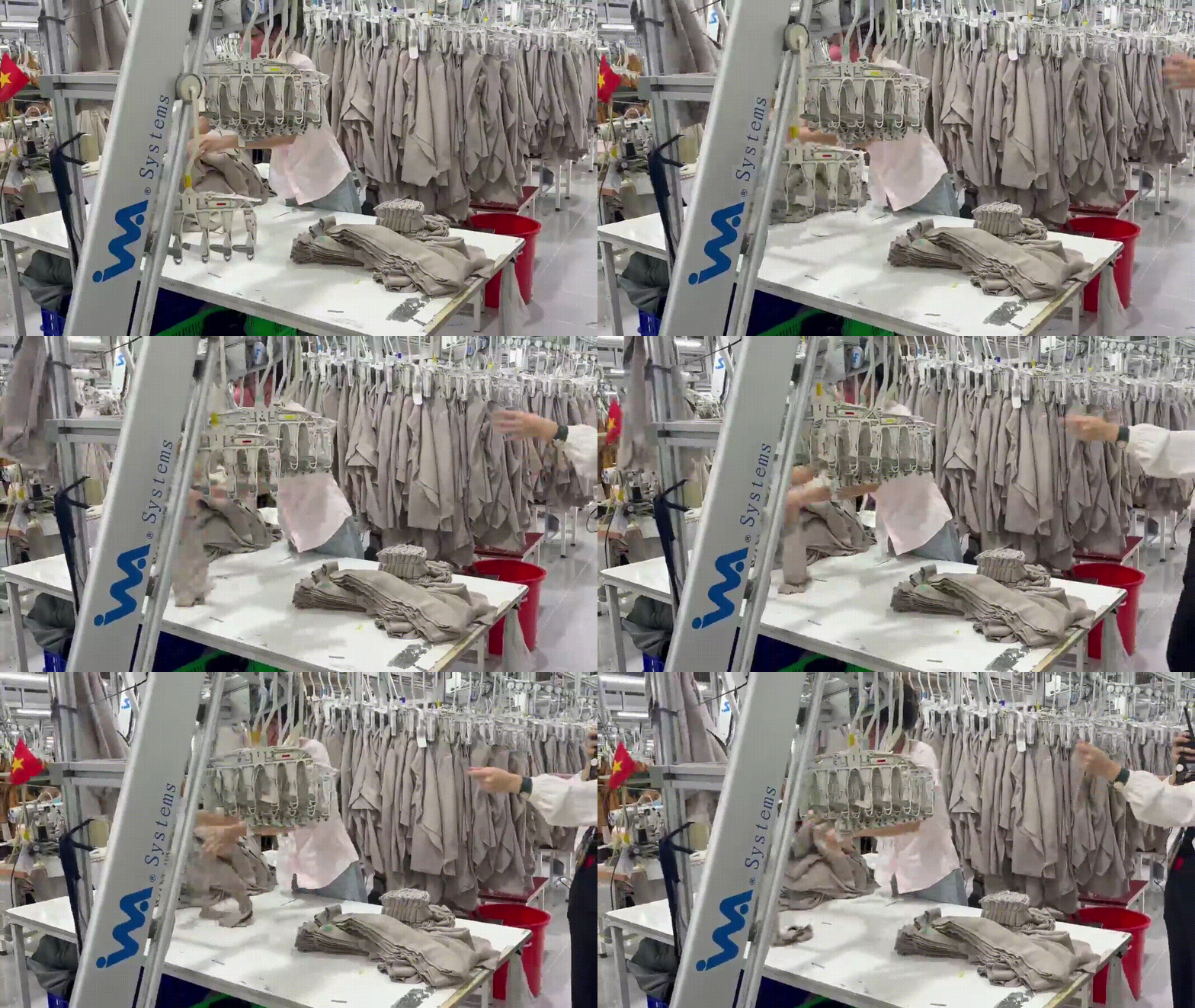
Because sewing is difficult to fully automate, the transition is being carried out in stages. The hanger system is the most prominent example. Garments hang from carriers that travel between workstations: once a worker finishes a sewing task and presses a button, the piece moves automatically to the next position. On a conventional sewing line, workers must physically pick up each semi-finished piece and hand it to the next person; the hanger system automates that transfer. It also makes the production flow visible at a glance, since the location of each piece in the process can be seen directly.
A task known as the "half-moon" stitch — long dependent on worker skill — is also being shifted to automated equipment. The step involves attaching a crescent-shaped piece of fabric to the back neckline of a T-shirt where the tag is sewn, a curved seam that requires practiced technique. Since introducing the machine, output for that step has roughly tripled.
Finished sewn products go through an end-line inspection and quality control check. Inspectors enter defect types into the system, and that data is linked to the company's enterprise resource planning platform. Tracking which defects recur most often allows the factory to pinpoint where process improvements are needed.
Digital tools have also been brought in for size measurement. When a worker measures a garment with a tape measure, the reading appears directly in a spreadsheet on a connected screen. Previously, measurements had to be written down and entered separately; a smart tape measure feeds values straight into the system, cutting inspection time and reducing the transcription errors that manual entry can introduce.
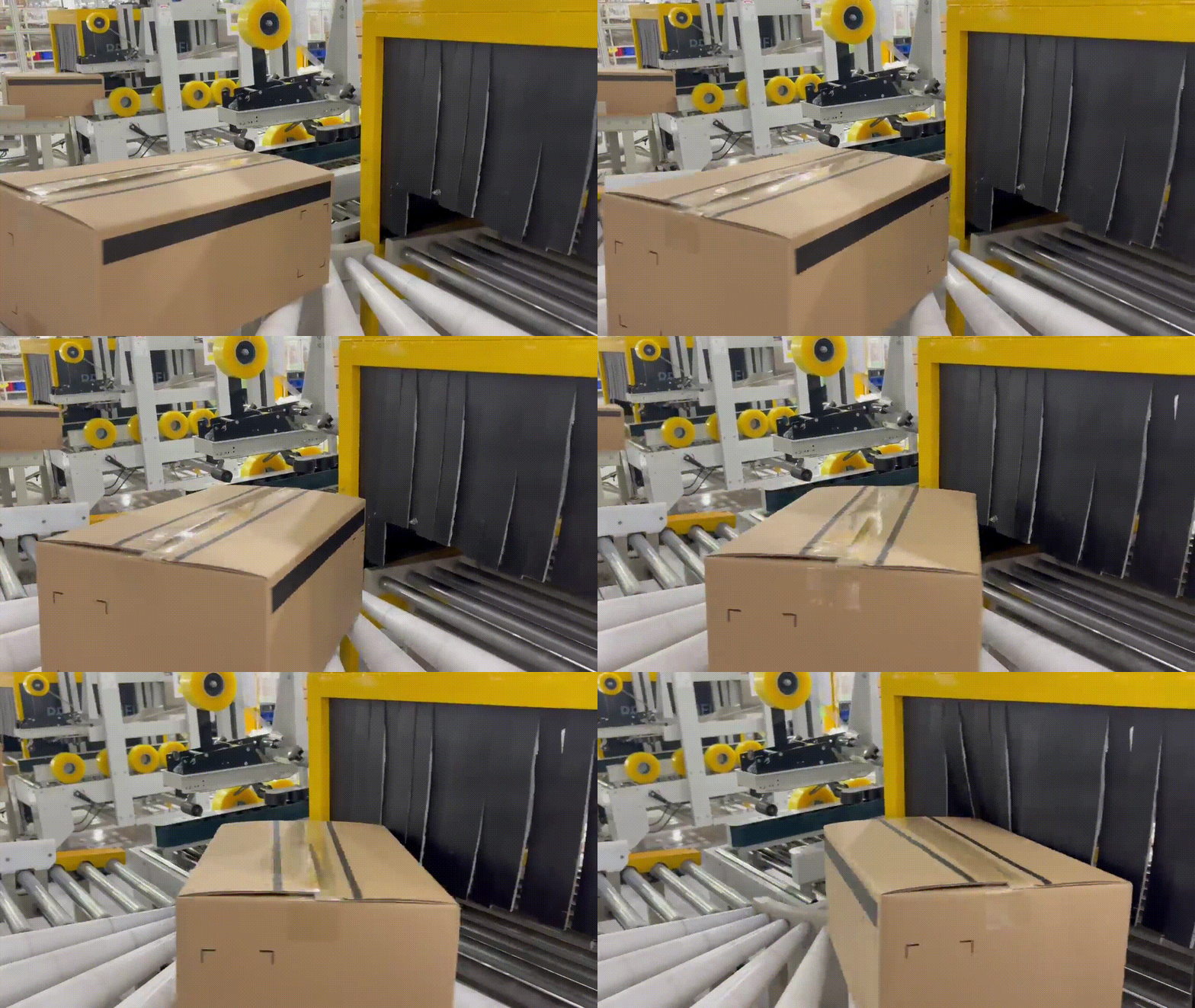
Inspected products are ironed, dried, tagged, folded and sealed in polybags. A metal-detection scanner then checks each piece for foreign objects. At Factory 7, scanned products are packed into boxes using equipment that both forms and seals the cartons, linked to a process that verifies RFID data before shipment. Because roughly 90 percent of box sizes are standardized, automated packaging equipment can be applied across most of the line.
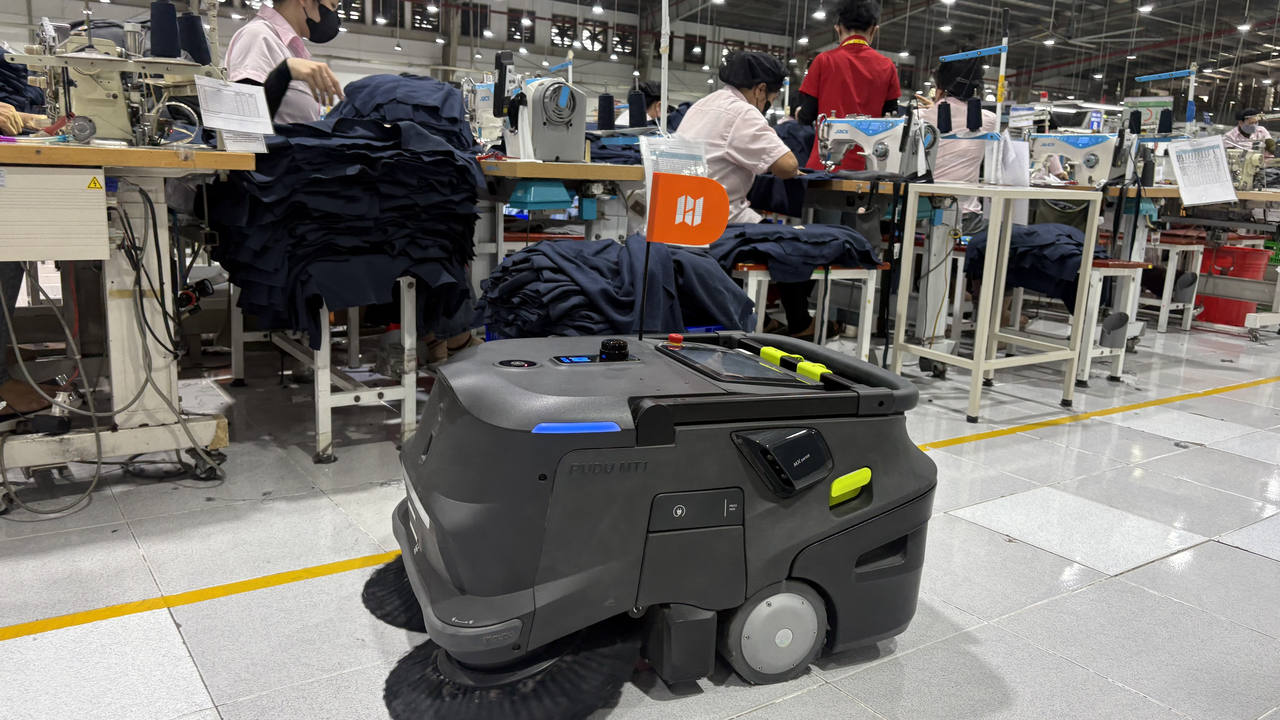
Robotic vacuum cleaners were also moving across the factory floor that day, sucking up fabric scraps. Hansae has been evaluating the machines for about two months and is running a pilot test. The factory has mapped internal traffic routes and is conducting driving tests focused on main corridors. Feedback from the tests is relayed to the manufacturer, which incorporates the improvements into updated units that are then re-evaluated on site.
Process-by-process optimization builds competitiveness — and energy savings matter too
The shift toward smart-factory operations has also changed how production staff are deployed. A standard knitwear line at the Vietnam subsidiary once ran with 55 to 66 workers; after automation and process improvements, that number has come down to about 45.
However, Hansae believes that simply cutting headcount is not enough to stay competitive. The company is focused on building a system that uses automation to ease the burden on workers and raise production efficiency while reliably meeting buyers' quality and delivery requirements. In Vietnam particularly, rising labor costs are compounding the pressure to satisfy increasingly demanding buyer specifications on both quality and scheduling.
The company also has to account for the fact that automation cannot be applied uniformly across every factory. The right equipment varies depending on the brands and products being made, buyer requirements and the physical layout of each workplace. Automated packaging equipment and hanger systems, for instance, have limits on which products and processes they can handle.
In fact, the Japanese-brand products made at Factory 1 do not use automated equipment for sewing or packaging, in keeping with that buyer's requirements. Rather than deploying equipment for its own sake, what matters is selecting the technology suited to each process and linking it with production data to improve operational efficiency.
Alongside production efficiency, the company is also working to cut energy costs — a change driven in part by the demands of European buyers. Solar panels installed on factory rooftops generate electricity that now covers about 55 percent of the facilities' power consumption.
"Having an excellent system in place is what matters in manufacturing," said Lee Jin-seop, Hansae's general director for Vietnam operations. "We are continuously looking for ways to raise productivity while reducing costs." Meanwhile, Hansae posted sales of 1.03 trillion won ($770 million) in the first half of this year, up 9.2 percent from the same period a year earlier, with operating profit reaching 46.5 billion won.
siuu@heraldcorp.com