From classrooms to PC bulletin boards, the oral-tradition humor that made Choi Bool-am a comedy icon
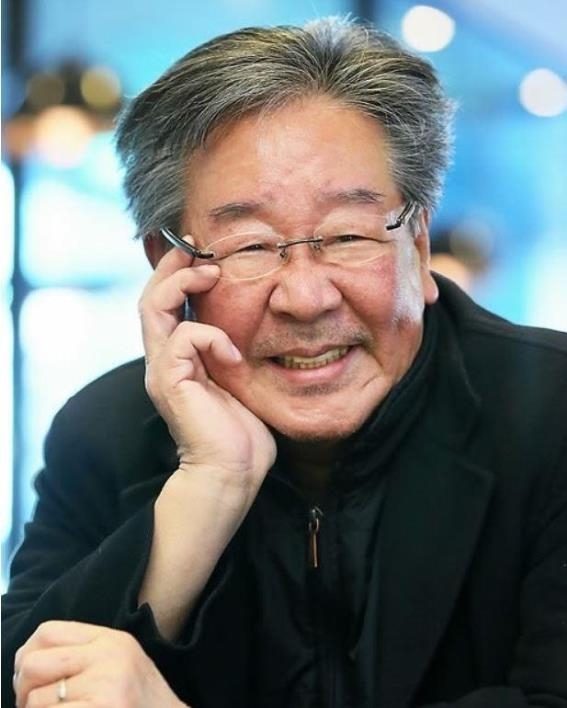
Choi Bool-am and fellow actor Choi Ju-bong were playing table tennis on the rooftop of the 63 Building when Choi Ju-bong smashed the ball clean off the edge. The elevator happened to be broken. Choi Bool-am sprinted down the stairs, retrieved the ball and huffed back up — only to announce, breathlessly: "One to zero." The exchange is one of the most beloved installments of the "Choi Bool-am Series," a genre of jokes that swept South Korea in the early-to-mid 1990s.
The story shifted a little with every retelling. Sometimes the opponent was actor Yoo In-chon instead of Choi Ju-bong; sometimes a sudden gust of wind sent the ball flying. In some versions, Choi Bool-am leaps off the building to catch it. The details changed, but the final line never did: "One to zero."
The way details mutated and new episodes accumulated as the jokes passed from mouth to mouth closely resembled oral folklore. PC bulletin-board services just beginning to spread at the time added another channel: jokes that circulated in classrooms migrated to online boards, and posts from those boards traveled back out through word of mouth. The Choi Bool-am Series was, in that sense, a story built and carried by countless people together.
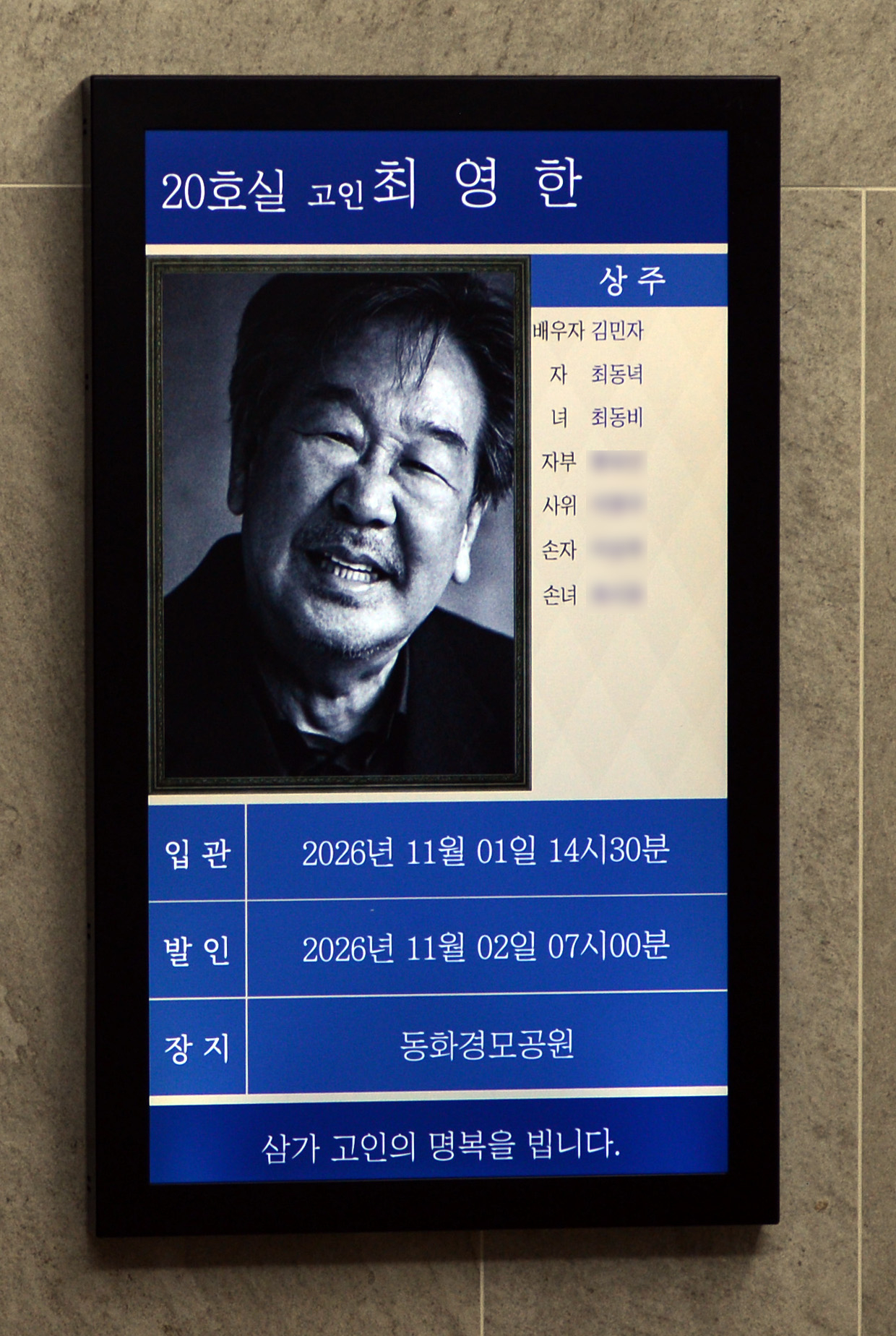
The man at the center of all that laughter has made his final exit. Choi Bool-am — whose given name was Choi Young-han and who was known to generations of viewers as "the nation's father" — died around 10 p.m. Thursday at a hospital in Gangseo-gu, Seoul, where he had been receiving inpatient treatment.
Choi made his stage debut in 1959 in a production of "Hamlet" and went on to anchor Korean living rooms for nearly half a century as Detective Park in MBC's "Susa Banjang" (1971–1989) and as Chairman Kim of Yangchon-ri in "Jeonwon Ilgi" (1980–2002). Choi was best known for weighty, authoritative roles, yet the public remembers the actor smiling rather than stern — for the booming "Pa-ha!" laugh delivered with head thrown back, and for the humor series that bore the name.
That signature laugh from Chairman Kim in "Jeonwon Ilgi" actually had a hidden origin. What sounded like uninhibited, full-throated mirth was, in fact, a laugh invented precisely to keep the noise down.
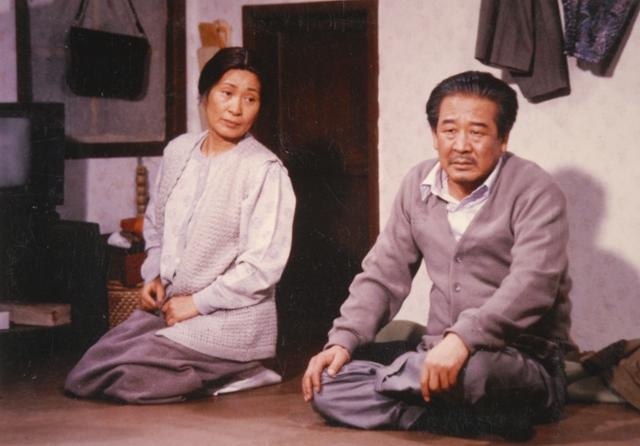
Choi explained the laugh's origins on the KBS 2TV program "Yeoyu Manman," which aired Feb. 1, 2011. Chairman Kim was a son who lived with and cared for his widowed mother, played by Jung Ae-ran, while his wife — played by Kim Hye-ja — was bright and quick to laugh. "I was worried that if I also laughed out loud, my mother would feel lonely," Choi said. "So I tried to laugh quietly, and I ended up covering my mouth — and that's how the 'pa' sound came out." The breath that escaped through pressed lips became "pa."
A laugh suppressed for a role became a habit. When Choi reunited with former castmates on MBC's "Docu Flex — Jeonwon Ilgi 2021," which aired June 18, 2021, Choi said the nickname had become simply "Pa."
In the Choi Bool-am Series, Choi is portrayed as guileless and a little bumbling — someone who interprets the obvious through a peculiar logic and caps each story with an offbeat one-liner. Not every joke was invented from scratch; some were pre-existing gags that simply had Choi inserted as the protagonist. Overlaying the dignified face of Chairman Kim onto familiar punchlines created an incongruity that doubled the laughter.
PC bulletin boards served as a warehouse, gathering the scattered jokes in one place. The posts were compiled into humor books that appeared in bookstores and then made their way back into classrooms through students' hands.
Choi learned the jokes existed through a friend, Park Dong-gyu, who was then a professor of Korean literature at Seoul National University. The message was: "Stories students made up about you are going around school — they're hilarious." When a publisher asked to release a book, Choi gave permission without asking for payment. Appearing on KBS 2TV's "1 vs. 100" in October 2017, Choi explained why.
"Students are buried in exam-focused study. I gave the publisher the rights for free so that, even for a moment, they could enjoy a laugh."
Another joke that circulates alongside the table-tennis story is the "fish-bread tale." A youngest son hands Choi — who sells the fish-shaped pastries known as bungeoppang — a school family-survey form and hesitates over what to write for his father's occupation. Choi tells him: "Fisheries, of course. We make fish, don't we."
Choi also played the butt of the jokes. In 1998, Choi appeared in comedy sketches based on the series on MBC's "Sunday Sunday Night," and in 2004 took the lead role in the comedy film "Don't Mess Around." The film was directed and produced by Oh Ji-myung, who handed the starring role to Choi at the height of the series' popularity.
Rather than trying to stop the name from becoming a punchline, Choi effectively set the stage for it. Yoon Seok-jin, a professor of Korean language and literature at Chungnam National University, said in the second episode of MBC documentary "Pa-ha, It's Choi Bool-am," which aired in May, that "Choi Bool-am was a cultural icon of an era — and he threw himself into being the material for comedy."
Even in a hospital bed, laughter remained Choi's defining expression. Culture Minister Choi Hwi-young visited the ward in June and wrote on SNS two days later that Choi had "greeted me warmly with that signature 'pa-ha' laugh, which put me very much at ease." Choi had invited the minister to share a drink once discharged; the minister said to make it makgeolli. When the conversation turned to "Eunseong," the bar Choi's mother had run that became a gathering place for struggling artists, Choi broke into a broad smile, the minister added.
A month before that visit, MBC had broadcast a documentary tracing Choi's career as a performer — titled, fittingly, "Pa-ha, It's Choi Bool-am." Focused on rehabilitation, Choi was ultimately unable to appear on camera. Instead, MBC released a greeting recorded during the documentary's preparation, alongside news of the April 20 broadcast date. It was the words of an actor who had long said that "a performer is a jester."
"I want to convey my gratitude to the viewers who have loved me for so long. That is the heart of a jester."
shee@heraldcorp.com