Premium interior touches impress
Highway fuel economy delivers satisfaction
V2L external power supply earns practical marks
Power output clearly improved over gasoline model
Regenerative braking feel remains jarring at times
Horizontal wireless charging pad falls short of expectations
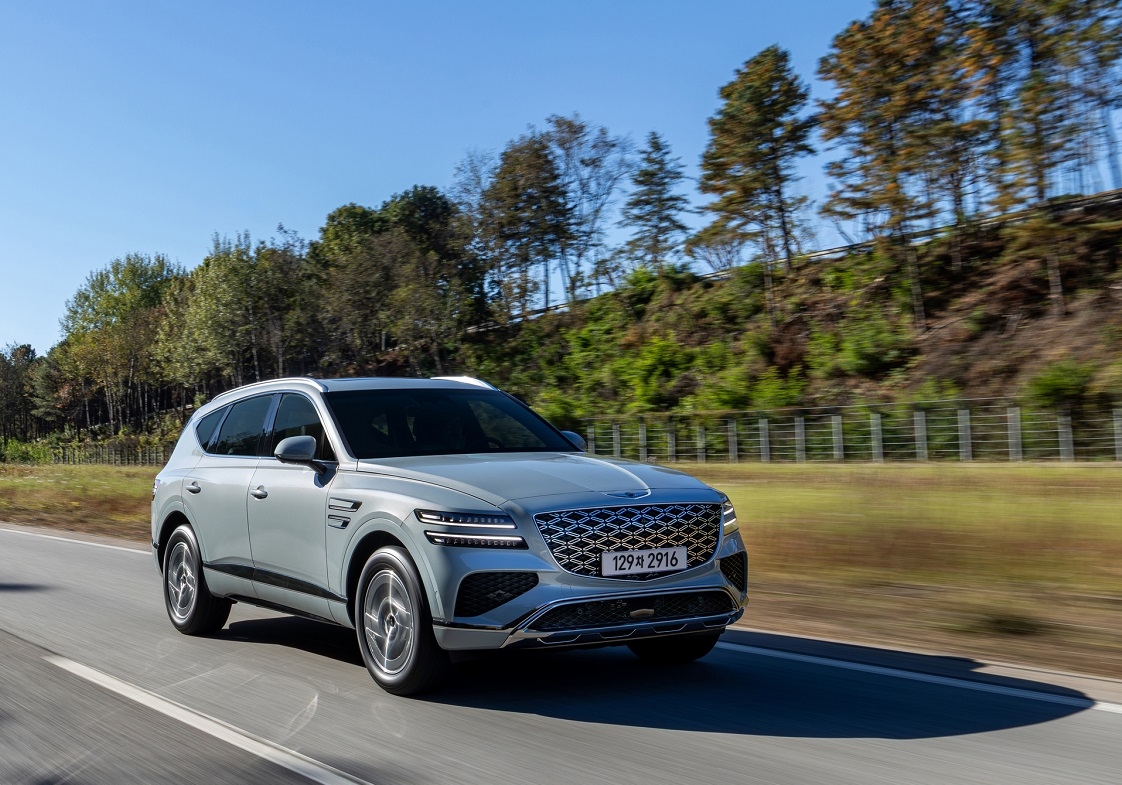
Genesis has launched its first-ever hybrid model — the GV80 Hybrid, the brand's flagship SUV.
Given that the existing combustion-engine GV80 returned only about 7 kilometers per liter in real-world driving, many buyers had long been waiting for a hybrid variant. The question is whether the GV80 Hybrid can meet their expectations.
This reviewer recently drove the GV80 Hybrid for about 280 kilometers around Gyeonggi Province. The bottom line: anyone who has been holding off on a purchase thinking "I'd buy it without hesitation if the fuel economy were just a little better" should head to the nearest showroom now. That said, if the benchmark for "better fuel economy" is something like the Palisade or Carnival Hybrid, or if the expectation is for the latest convenience features found in recently launched rivals, there may be some disappointment.
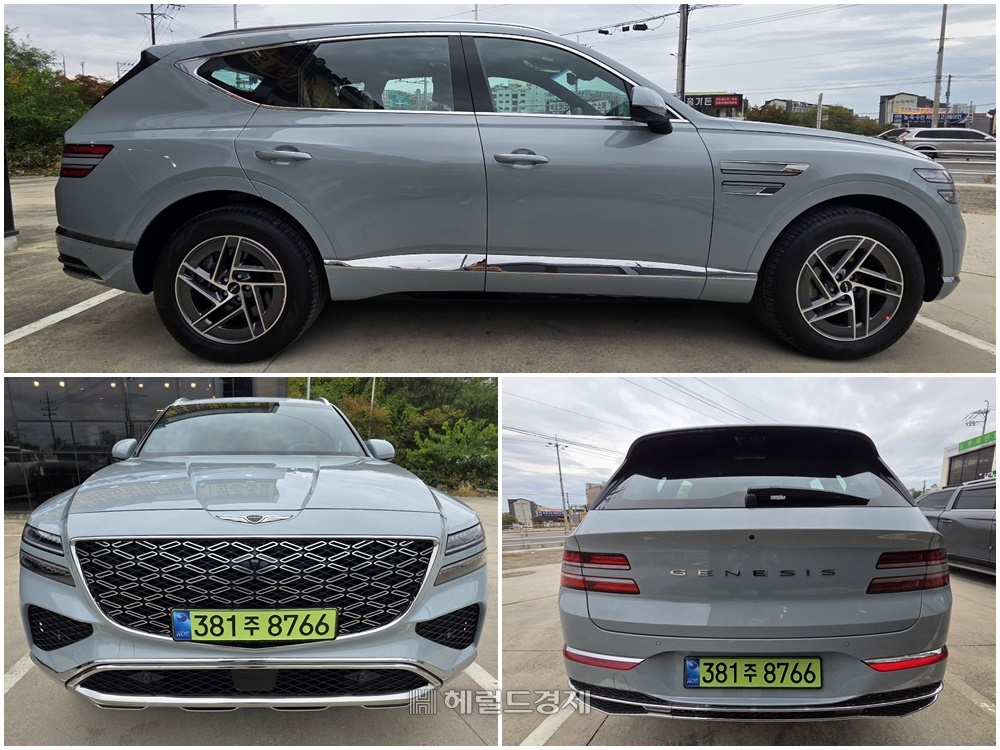
Starting with the exterior, the GV80 Hybrid looks virtually identical to the combustion-engine model, with the only notable change being a slightly larger front radiator grille. The interior, however, is where the premium feel stands out. The square-patterned seat stitching and two-tone color combination — reminiscent of the upcoming GV90, the brand's first flagship electric SUV due out later this year — make a strong impression.
Fuel economy is what most buyers will want to know about first. Genesis rates the GV80 Hybrid at 12 kilometers per liter on a combined cycle for the two-wheel-drive five-seat model fitted with 19-inch wheels. In urban driving, the car averaged around 10 kilometers per liter, though results will vary depending on driving style and conditions.
That is a clear improvement over the lower-tier GV70 gasoline 2.5 Turbo AWD, which averages around 8 kilometers per liter in city driving. More impressive is the highway figure. On a roughly 120-kilometer round trip between Suwon and Yangpyeong, the instrument cluster showed an average of 15.9 kilometers per liter when using smart cruise control and highway driving assist — and 14.5 kilometers per liter on the return leg driven in the reviewer's normal style.
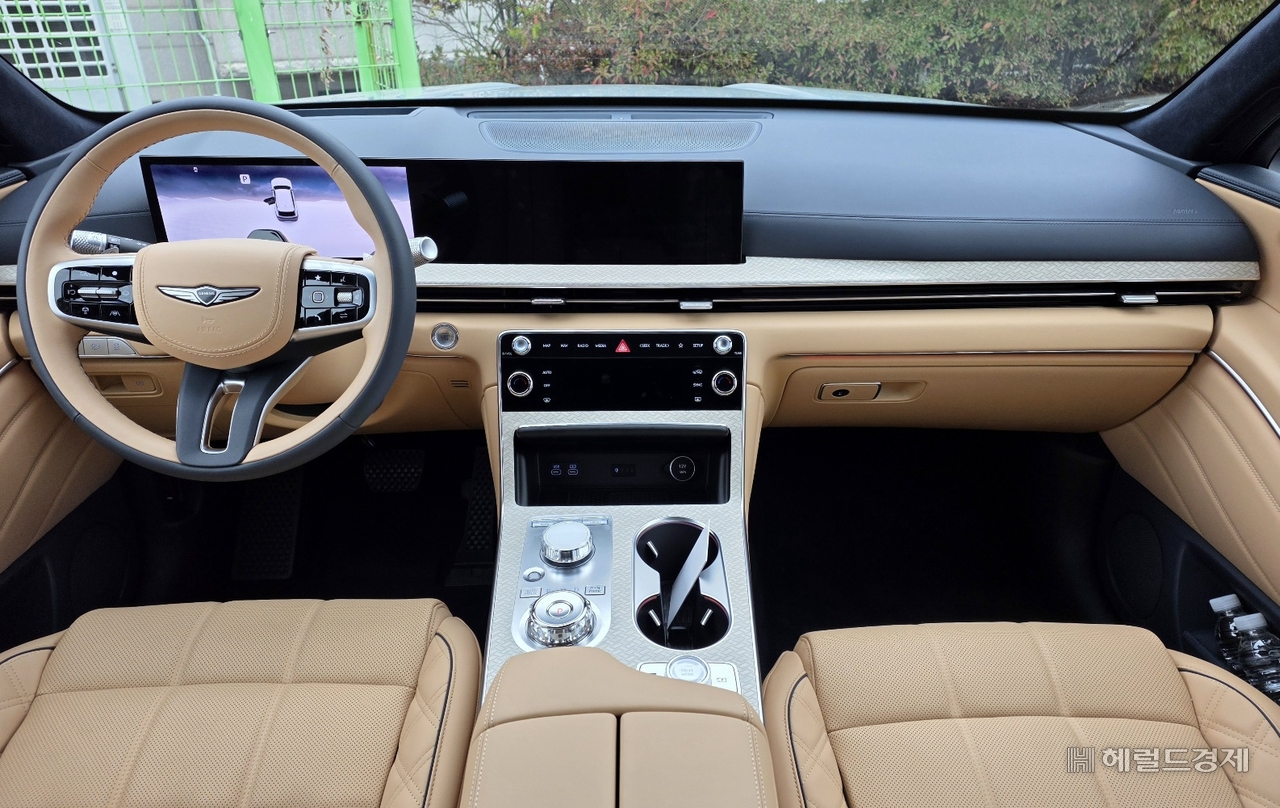
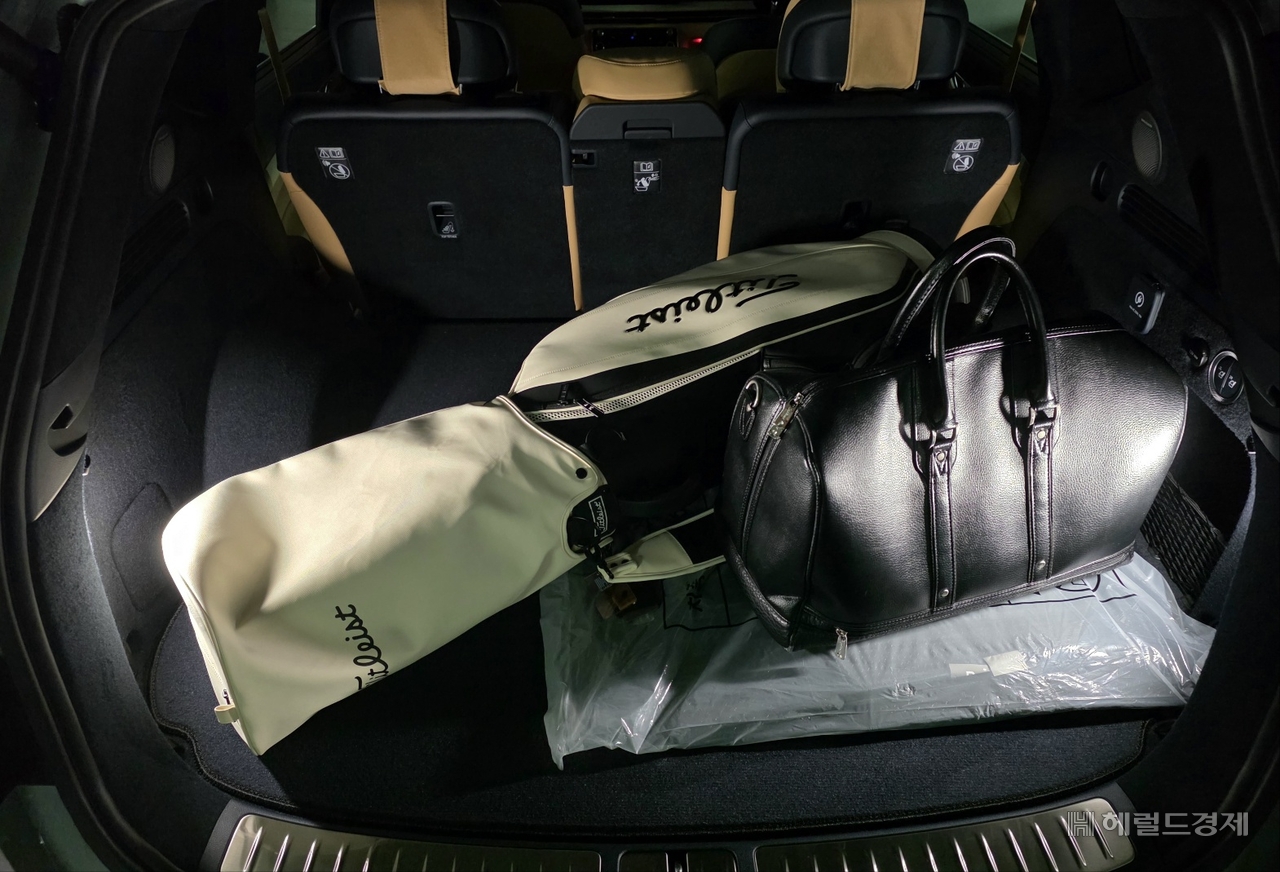
Weekend golfers heading out in the early morning hours, when roads are relatively clear, could realistically see fuel efficiency approaching 16 kilometers per liter — a figure the GV80 has never offered before. Another welcome note for golfers and outdoor enthusiasts: trunk capacity is identical to that of the combustion-engine model.
Hyundai Motor's flagship sedan, the Grandeur, had a smaller hybrid trunk through its sixth generation due to the placement of the high-voltage battery, but the seventh generation resolved that by repositioning the battery entirely. The GV80 Hybrid follows the same approach — trunk structure and cargo volume are unchanged from the gasoline model (735 liters for the five-seat version), and four golf bags fit comfortably without folding the second row.
Driving performance is also quite satisfying. The GV80 Hybrid pairs a 2.5-liter turbocharged engine with a starter-generator motor and a traction electric motor rated at 59.1 kilowatts that also handles regenerative braking.
Combined system output reaches 352 horsepower — about 16 percent more than the 304 horsepower of the existing GV80 2.5 gasoline turbo. The automaker's own testing puts the 0-to-100 kilometers-per-hour sprint at approximately 7.1 seconds. On the highway, pressing the accelerator produces a noticeably sharper, more agile surge than the combustion model delivers.
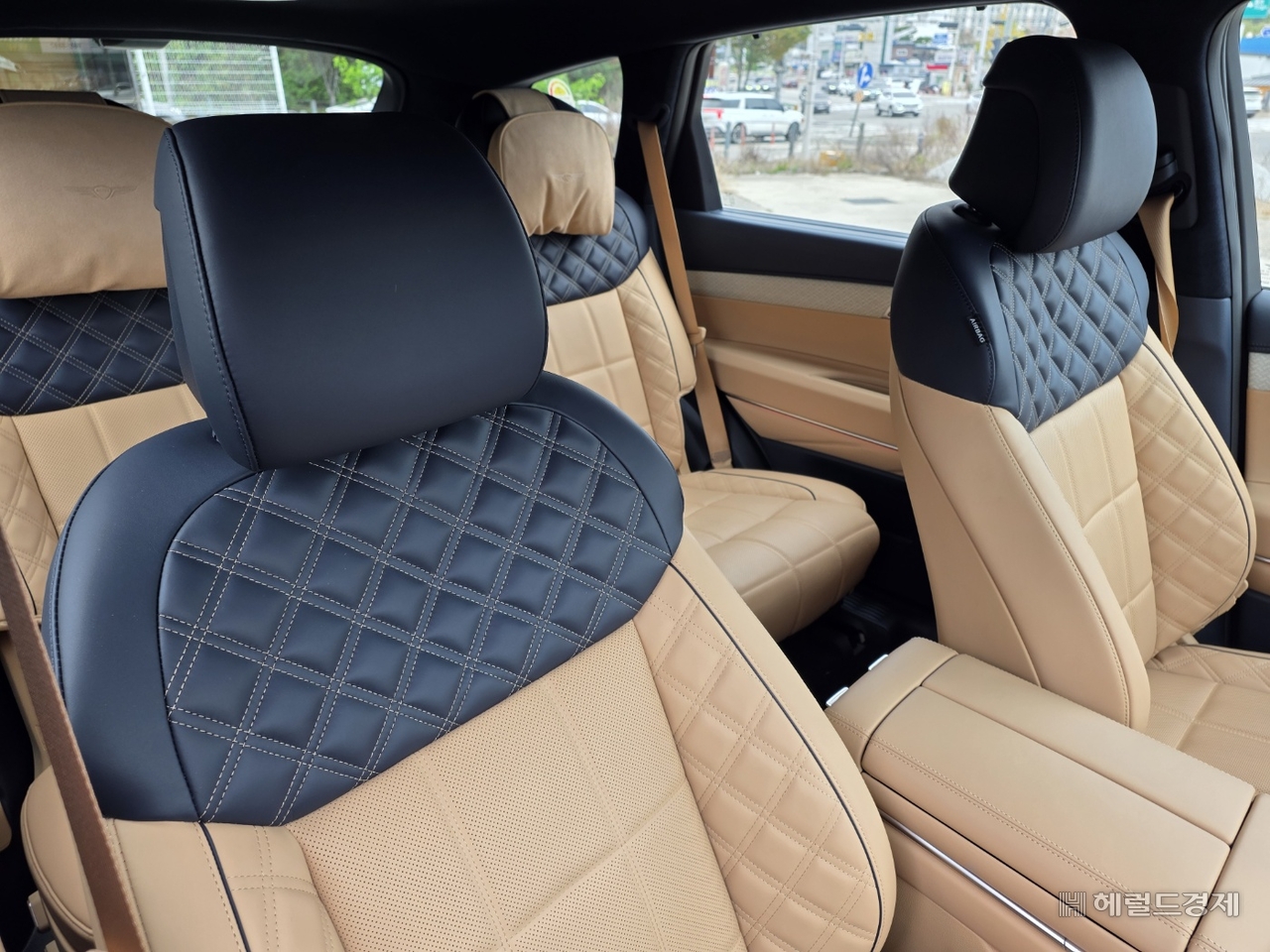
Ride comfort also passes muster. Speed bumps and unpaved surfaces produced little body roll or impact transmitted through the seats.
The addition of V2L — vehicle-to-load external power supply — is another welcome feature. Buyers of a vehicle at this price point may not be frequent campers, but the function should prove handy on occasional outdoor outings.
There are drawbacks, however. The regenerative braking system introduces a noticeable jerkiness at low speeds. The GV80 Hybrid comes with a smart regenerative braking system that automatically adjusts braking intensity based on the distance to the vehicle ahead and speed-camera data, reducing the need to press the brake pedal while simultaneously charging the battery through regeneration. The braking occasionally feels abrupt and unnatural at low speeds — drivers who already experience motion sickness from strong regenerative braking in electric vehicles may find this particularly bothersome.
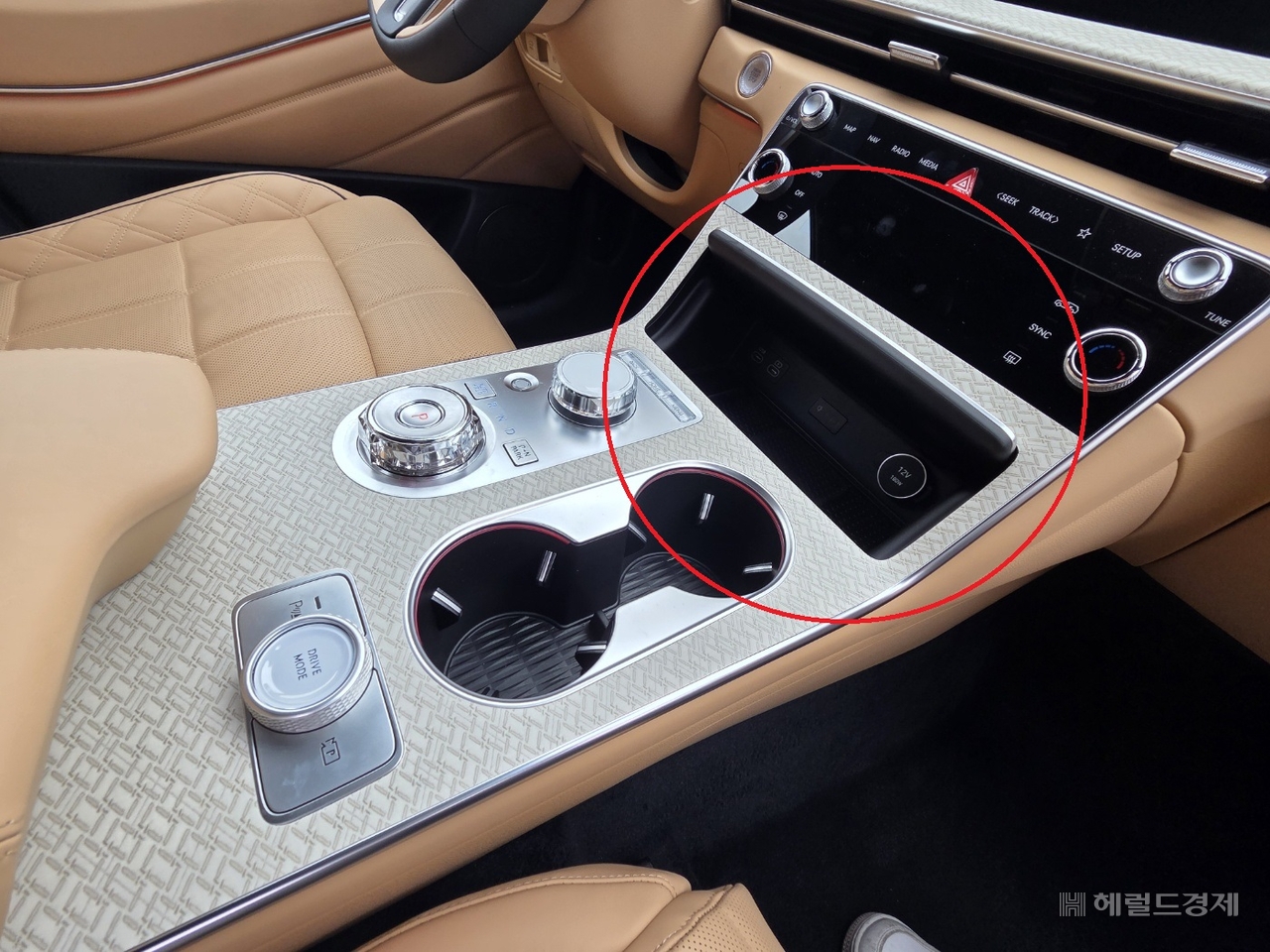
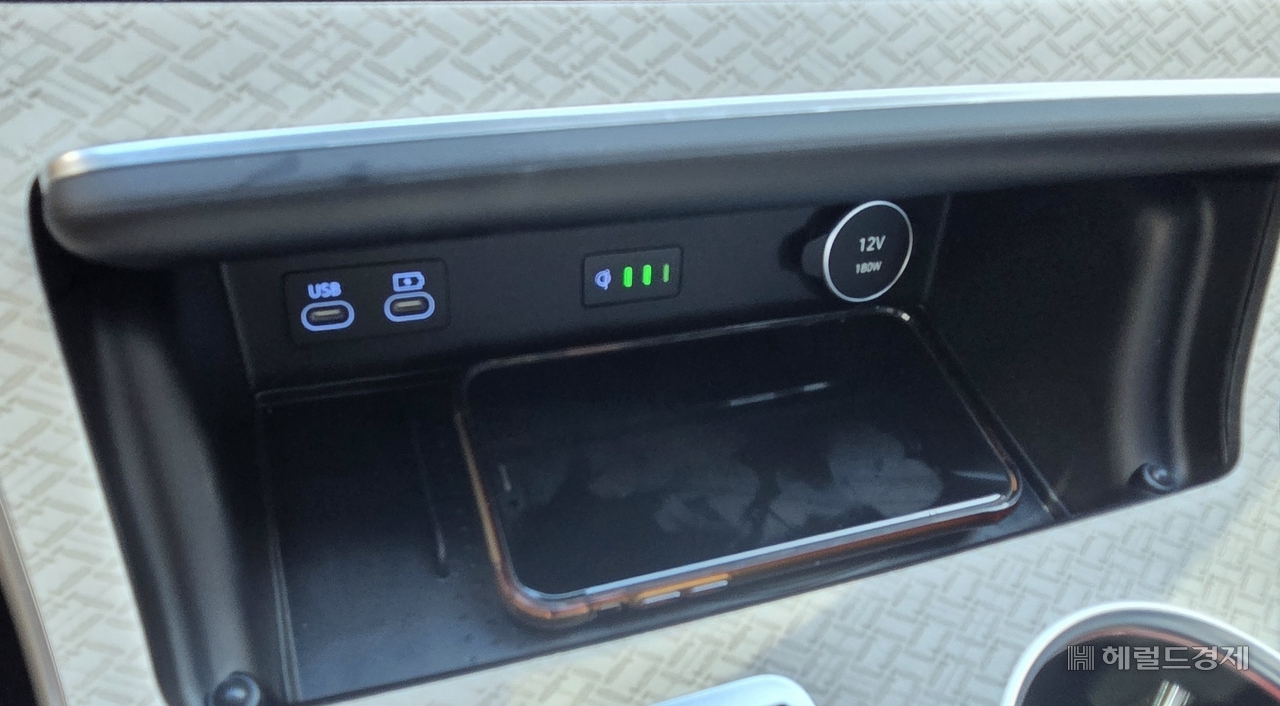
The wireless charging setup is another minor letdown. The GV80 Hybrid is a new model, but its interior design carries over from the existing version — including the horizontal single-phone wireless charging pad at the base of the center fascia. Placing a phone on the pad while stationary is awkward to view, and the pad runs noticeably hot, limiting its practical usefulness.
The frustration is compounded by the fact that even the new Tucson — a mainstream mid-size SUV from Hyundai Motor — now comes with a dual wireless charging system capable of charging two phones simultaneously.
The GV80 has been on sale for seven years, and it has been three years since the facelifted model arrived. It remains one of the brand's best-selling nameplates, but compared with rivals in the segment that have undergone full model changes or equivalent generational leaps, the GV80's pace of evolution feels slow.
Had Genesis brought this hybrid — with its 16 percent improvement in fuel efficiency — to market before a wave of new entrants armed with EV-grade convenience features and rapidly advancing driver-assistance systems began knocking on Korea's door, the excitement surrounding its launch would likely have been considerably greater.
likehyo85@heraldcorp.com