A lifelong Geumcheon resident since 1965, Choi Ki-chan says the starting point of every district policy is the people — not personal achievement. The district mayor speaks on traffic gaps, the future of G Valley and his vision for a livable Geumcheon.
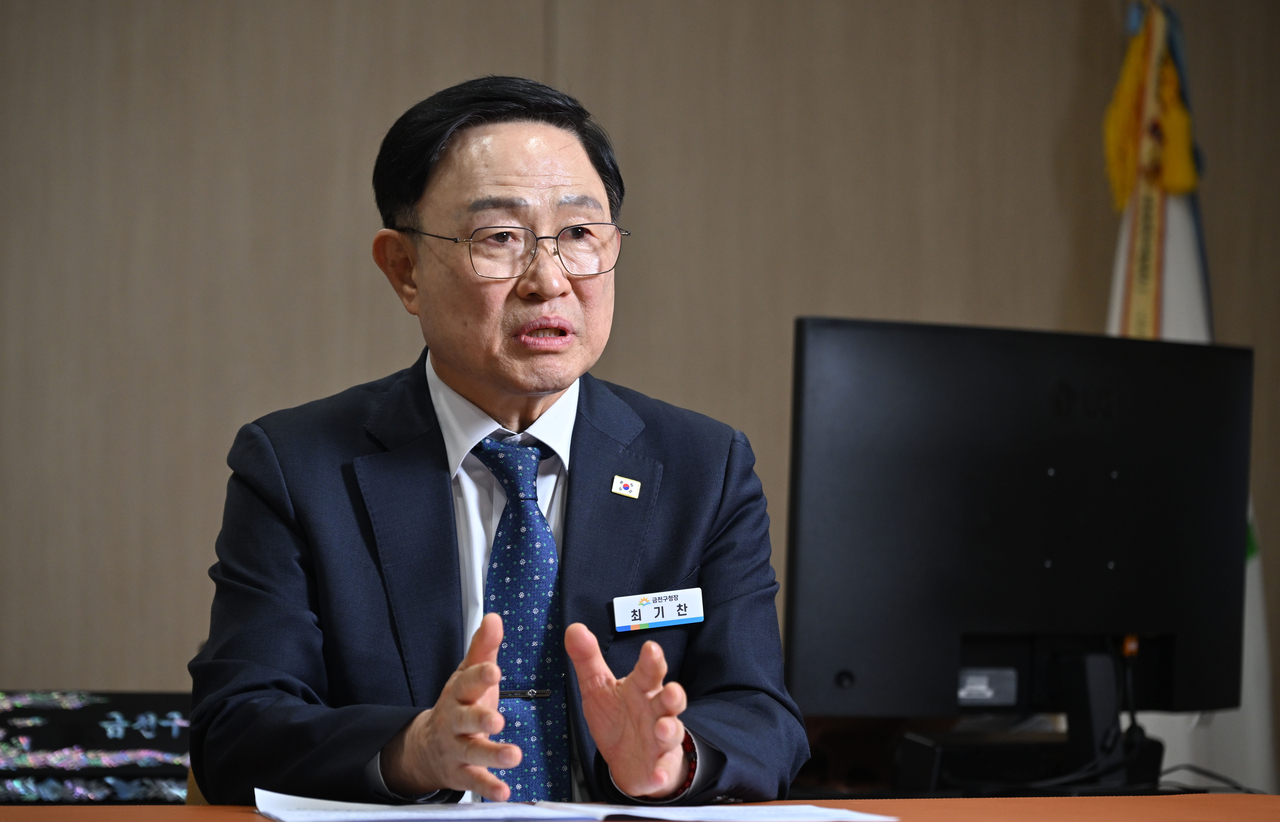
For Choi Ki-chan, the district mayor leading Geumcheon-gu through the ninth elected term, every policy decision begins with one question: what do residents think? "Personal achievement and accolades come last," Choi said. That conviction is rooted in lived experience — born in Buyeo, South Chungcheong Province, Choi has called Geumcheon home since 1965, never once leaving. No one, Choi says, understands the district's challenges — or how to solve them — better. With Geumcheon lagging behind other districts in development, Choi argues it must prepare for the future faster than anyone else. The following is an edited transcript of an interview conducted at the district office on Sept. 27.
— How has Geumcheon changed from the past to today?
▶ Comparing the Geumcheon of my childhood to the Geumcheon of today, so much has changed. Back then, the district was a mix of factories, markets and working-class housing — a front-line scene of Korea's industrialization, yet widely seen as one of Seoul's more underdeveloped areas with a harsh living environment. I worked as a young factory hand and witnessed firsthand how hard life was for residents here. Today, Geumcheon has been transformed into a hub for IT, advanced industries and innovative companies centered on G Valley, the Seoul Digital Industrial Complex. Where people once felt they had to leave Geumcheon to get ahead, the foundations now exist to work, live and build a future right here. That said, the pace at which residents feel improvements in their daily environment has not kept up with the speed of urban change. Of all the challenges, I consider transportation the most pressing.
— What specific steps are being taken to improve transportation?
▶ Geumcheon-gu sits at the outermost edge of Seoul from City Hall. Residents spend enormous amounts of time commuting, which inevitably drags down their quality of life. It takes 20 to 30 minutes just to ride a community bus from home to the nearest subway station, and then you wait for the train. Getting into central Seoul takes over an hour. The district's transport network runs north to south, but there are no east-west roads. The most urgent project for closing Geumcheon's transportation gap is extending the Nangok light rail line to Geumcheon-gu Office Station. This is not simply a matter of adding track — it is about correcting the east-west transport imbalance and improving mobility for residents cut off from rail access. The Nangok line was shelved over economic viability concerns but has recently been reincorporated into the third Seoul Metropolitan Urban Railway Master Plan and is moving forward. When I served as a Seoul Metropolitan Council member, I urged the city to pursue it. Given the enormous budget involved, economic feasibility remains the central issue. I will continue working closely with the Seoul Metropolitan Government and, where necessary, jointly with relevant agencies to secure that viability.
— How is the data center construction project in Geumcheon progressing?
▶ Some residents are opposed, and some of their demands are difficult to meet in practice. Even so, I have no choice but to speak from the residents' perspective. Framing the data center question simply as "build it or don't" will make it hard to find a solution. Data centers are critical infrastructure supporting AI and the digital industry, but when sited near residential areas, residents have every right to worry about noise, vibration, electromagnetic waves, fire risk, traffic and the environment. Resident safety and a comfortable living environment must come first, and the path forward must run through gathering resident input and independent expert verification so that data centers can grow alongside the community. Right after taking office, I designated the data center issue as my first official order of business, shifting away from the old reactive approach of handling complaints after the fact. I established a resident-participatory review framework in which community voices are heard and experts conduct objective assessments before any building permit is issued. I also believe data center operators need to show they are making a genuine effort to open channels of dialogue with residents.
— What direction do you see for G Valley's development?
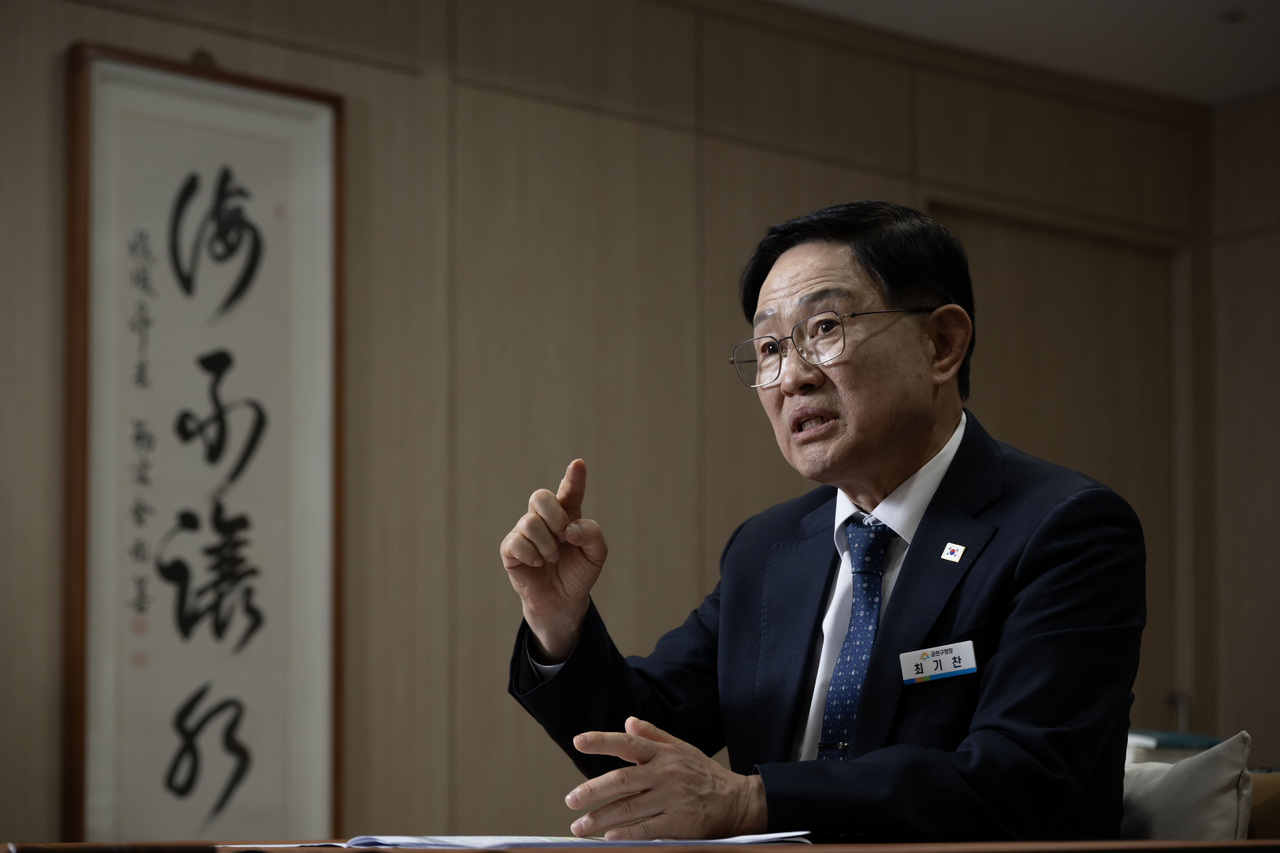
▶ G Valley, where roughly 160,000 people work, is one of Seoul's most prominent industrial and employment hubs and one of Geumcheon-gu's greatest assets. The key is transforming it from a place people come to work into a place where they work, spend, rest and live. Particularly given the concentration of advanced-industry companies and young workers, G Valley's growth is inseparable from Geumcheon's future. Policy is therefore focused on developing G Valley and Geumcheon into a single integrated living zone where jobs, consumption, leisure and daily life are organically connected. The first step is making it a place where people want to stay and be active even after working hours. G Valley has long been criticized for a shortage of cultural and recreational space. To address that, the district is pursuing the G-Line Project — a working title — which aims to link G Valley's key nodes and pedestrian corridors, connecting stations, plazas and surrounding commercial areas to create spaces where people linger and enjoy themselves. The ultimate goal is a "work-live-play G Valley" — a virtuous cycle in which companies and workers in G Valley work, stay, spend and live in Geumcheon, lifting business growth, workers' quality of life and the vitality of the local economy all at once.
— What goals are guiding your leadership of the district in the ninth elected term?
▶ Having lived in Geumcheon for more than 60 years, I have developed a deep love for this place and its people — and with that comes a sense of mission to deliver what residents actually need. Geumcheon is severely short of everyday community facilities. Some neighborhoods have no cultural and sports center, no wedding hall, no public bathhouse. I am determined to build those facilities for residents. The district also lacks parks, which makes the urban heat island effect severe in summer. I want to plant trees throughout the area and make Geumcheon a more pleasant city. Above all, I want to prepare Geumcheon for the future. This year marks the district's 31st anniversary — we were among the last of Seoul's 25 districts to be established. But starting late means we can move the fastest. I will work to put in place the infrastructure for future growth, including AI, and build a roadmap to make Geumcheon a vibrant place — realizing that vision one step at a time.
ikson@heraldcorp.com