68% of finfluencer followers say they invest based on recommendations
Financial literacy test score hits 41% — lower than non-followers

Nearly seven in 10 followers of financial influencers — known as finfluencers — active on social media platforms such as YouTube and Instagram say they rely on those influencers' recommendations when making investment decisions, a new report shows. Yet those same followers scored only 41% on a multiple-choice financial literacy test, below the 47% recorded by non-followers, pointing to a significant gap between how investors perceive their own financial knowledge and their actual understanding.
The findings come from a report titled "Overseas Regulatory Frameworks for Finfluencers and Implications for Korea," published Saturday by the Korea Institute of Finance. Citing a survey by the US Financial Industry Regulatory Authority (FINRA), the report found that 29.4 percent of respondents said they use social media when making investment decisions. Among those who follow finfluencers, 68 percent said they tend to base investment decisions on the influencers' recommendations.
YouTube was the most widely used platform among finfluencer followers, with a usage rate of 77 percent. Young retail investors followed finfluencers at a rate of 61 percent, more than double the 30 percent recorded among middle-aged and older investors.
Confidence in financial knowledge diverged sharply from actual test performance. While 66 percent of finfluencer followers rated their own financial knowledge as high — compared with 52 percent of non-followers — their actual multiple-choice test score of 41 percent fell below the 47 percent posted by non-followers. The Korea Institute of Finance said the data suggest finfluencer followers tend to overestimate their own financial knowledge.
As finfluencer influence grows, so do investor protection concerns. Complaints filed with the International Organization of Securities Commissions' alert network on unauthorized financial investment activities and fraud reached 9,248 cases on a cumulative basis through the third quarter of this year, up more than 70 percent from the same period a year earlier. Of those, reports of unregistered or unlicensed activity accounted for the largest share at 4,117 cases.
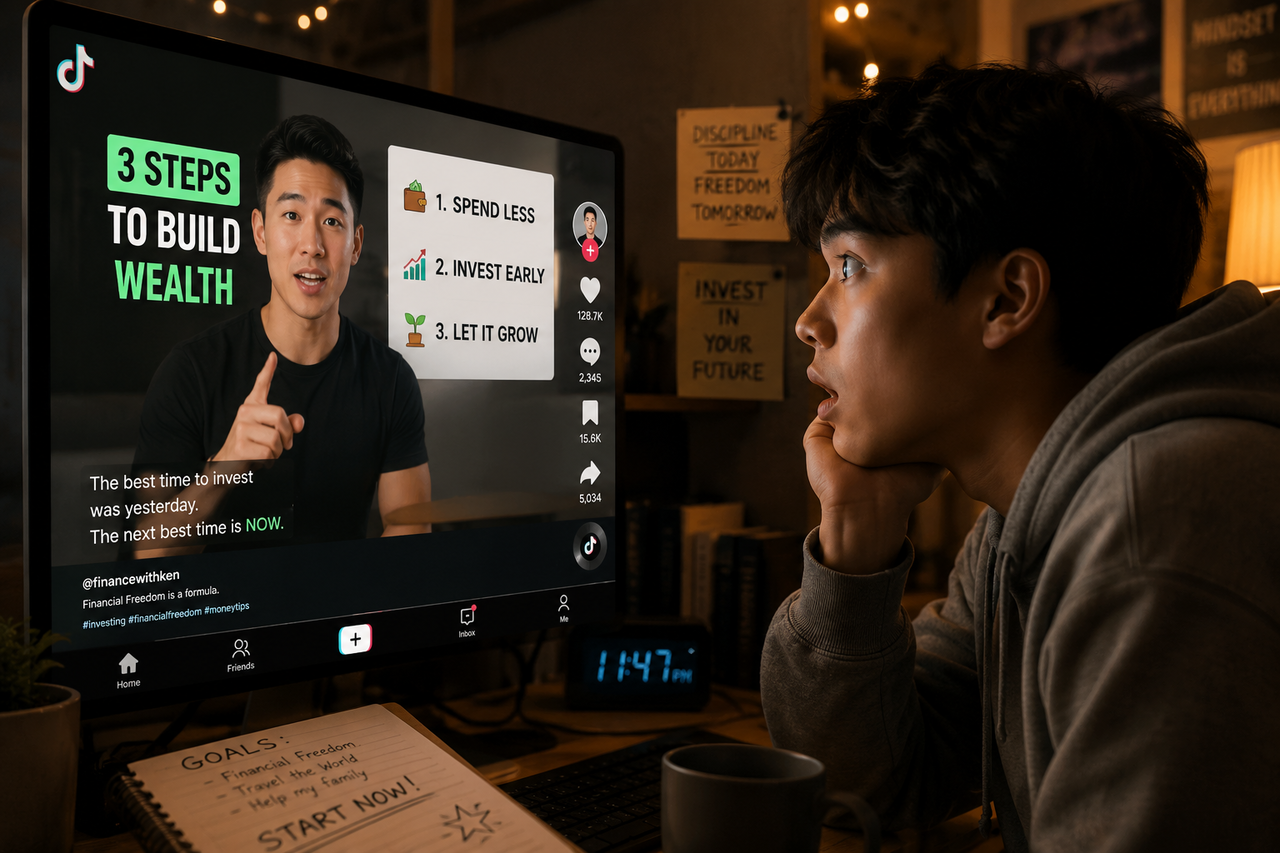
In South Korea, the current Capital Markets Act regulates investment advisory and quasi-investment advisory businesses, but finfluencers who operate independently and do not receive direct compensation from investors can fall outside its scope. The growing diversity of revenue streams — including advertising deals, sponsorships and platform ad revenue — has made it harder to address the issue through existing regulations alone.
Overseas regulators are tightening rules by drawing clearer lines between investment recommendations and the mere provision of information, and by requiring disclosure of conflicts of interest. Australia requires a financial services license for advice on financial products, while the EU mandates that anyone recommending specific products or investment strategies disclose their identity and any conflicts of interest.
The Korea Institute of Finance recommended that South Korea consider providing clearer guidance on the scope of permissible finfluencer activity and introducing requirements to disclose conflicts of interest — such as advertising arrangements and sponsorships — when making investment recommendations or offering advice.
rim@heraldcorp.com