Year-on-year figures show accommodation, food and wholesale sectors also struggling; duty-free shops and financial services buck the trend
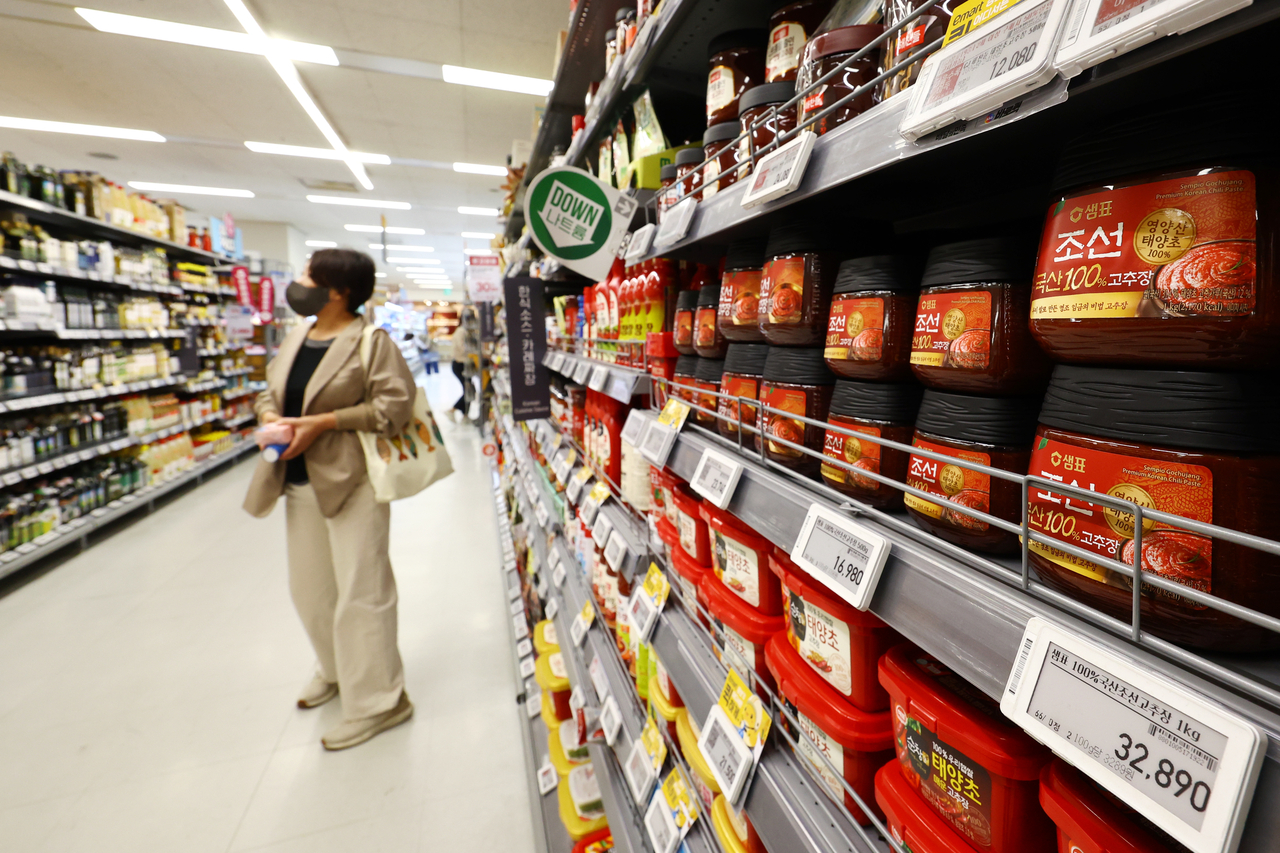
South Korea's economy has maintained solid growth momentum driven by the semiconductor sector, but the warmth has yet to reach domestic consumption — hypermarket retail sales are now in their longest recorded decline since tracking began.
Financial and insurance output posted strong gains, and duty-free shop sales rose on the back of tourist demand, highlighting a widening divide across industries and retail formats.
The retail sales volume index for the third quarter fell 0.5 percent from a year earlier, according to the Korean Statistical Information Service (KOSIS) and the Ministry of Statistics' industrial activity report released Sunday.
It was the first quarterly decline in five quarters, following a 0.1 percent drop in the second quarter of last year, and the steepest fall since the first quarter of last year, when the index slid 0.8 percent.
The government attributed the decline partly to a base effect from the consumer coupon program rolled out last year, noting that passenger car sales fell due to summer shutdowns and strikes in the auto industry, and that durable goods consumption was pulled forward by a home appliance rebate program in the first half of the year.
Durable goods retail sales in the third quarter fell 7.0 percent from a year earlier, with passenger car sales down 11.3 percent.
Even excluding passenger cars, the retail sales index rose only 0.9 percent year-on-year — a sharp slowdown from the 2.5 percent gain in the first quarter and 2.4 percent in the second quarter.
Semi-durable goods such as clothing fell 0.8 percent from a year earlier, while non-durable goods — led by food and cosmetics — rose 2.7 percent, the only category to post meaningful growth.
By retail format, hypermarket sales fell 1.9 percent, extending a losing streak that began in the second quarter of 2024 to 10 consecutive quarters — the longest decline since the data series began in 2010.
The structural retreat of the hypermarket industry amid the expansion of online shopping, compounded by store closures following the Homeplus crisis, has left the sector with little room to recover.
The pace of decline did ease, however, from the record 9.4 percent drop recorded in the second quarter.
Duty-free shop sales, which cater primarily to tourists, rose 3.0 percent — the strongest gain in nine quarters since the second quarter of 2024, when they climbed 7.9 percent. Department store sales rose 4.3 percent, marking five consecutive quarters of growth.
The services sector also showed a mixed picture. Overall service industry output rose 3.4 percent from a year earlier in the third quarter.
Accommodation and food services, which are closely tied to domestic demand, fell 2.2 percent — the first decline in five quarters since the second quarter of last year, when the sector contracted 1.9 percent. The drop was the steepest since the first quarter of last year, when output fell 3.3 percent.
Wholesale and retail trade output fell 0.2 percent, reversing course after seven quarters of growth since the fourth quarter of 2024, when it contracted 1.5 percent.
Financial and insurance output, by contrast, surged 9.2 percent year-on-year — the highest growth rate in 13 quarters since the second quarter of 2023, when it rose 9.5 percent.
Analysts attributed the gains to a buoyant stock market and a sharp rise in trading volume compared with last year.
The widening gap in domestic demand reflects the failure of semiconductor-led growth to filter through sufficiently to households via employment and income channels, analysts said.
The government acknowledged that despite the broader growth momentum, cost-of-living pressures persist and structural problems — including deepening polarization across sectors — remain unresolved.
The government added that it would redouble efforts to stabilize livelihoods and ease polarization so that the benefits of growth can reach all citizens.
oskymoon@heraldcorp.com