'AI and tech demand driving global trade growth'
Asia-Pacific, European tech capabilities could narrow gap if combined, speakers say
Minilateral task force proposed to address maritime and supply chain vulnerabilities
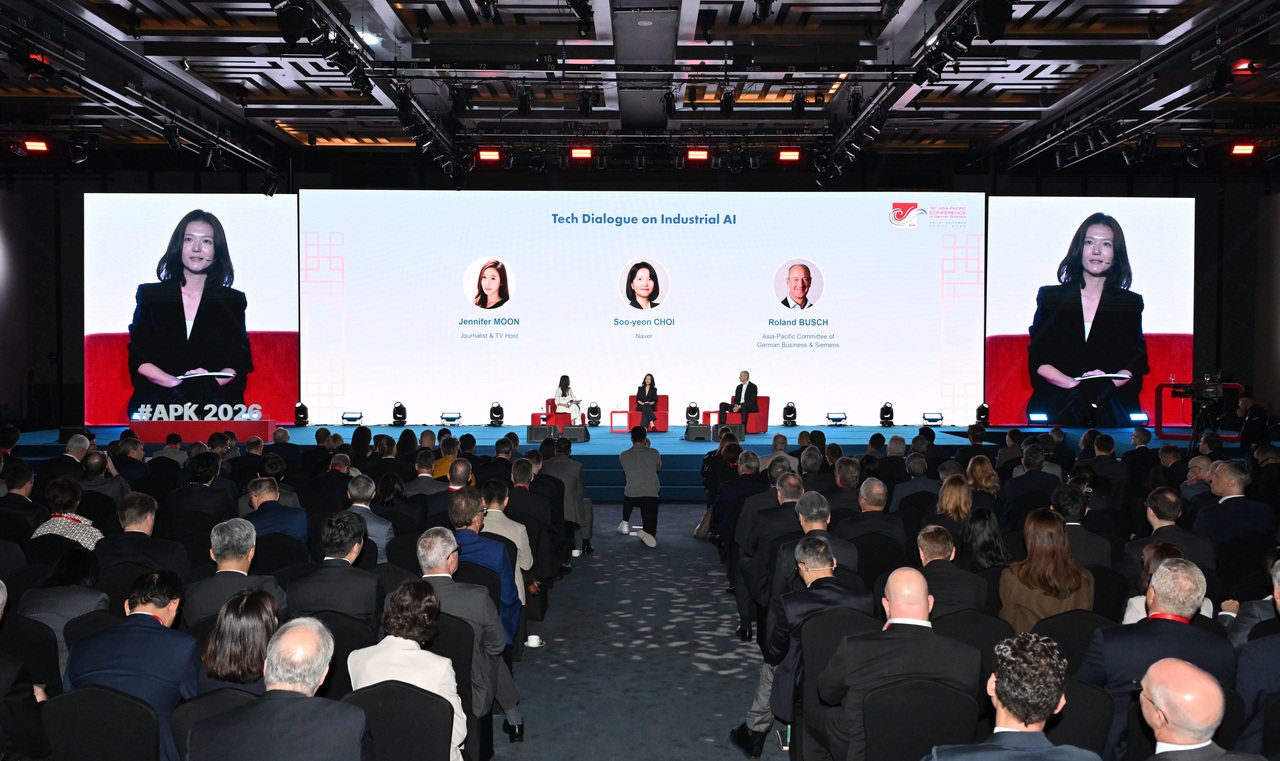
Business leaders from Germany and South Korea offered technology, speed and cooperation as their prescription for navigating a global trade environment made increasingly uncertain by tariffs and geopolitical tensions. CEOs gathered at the event agreed that demand for AI is underpinning global trade even amid the US-China rivalry and a broader turn toward protectionism, and called for stronger industrial and security cooperation between the Asia-Pacific region and Europe.
Siemens chief, Naver CEO: 'Cooperate even on GPU and CPU development tools'
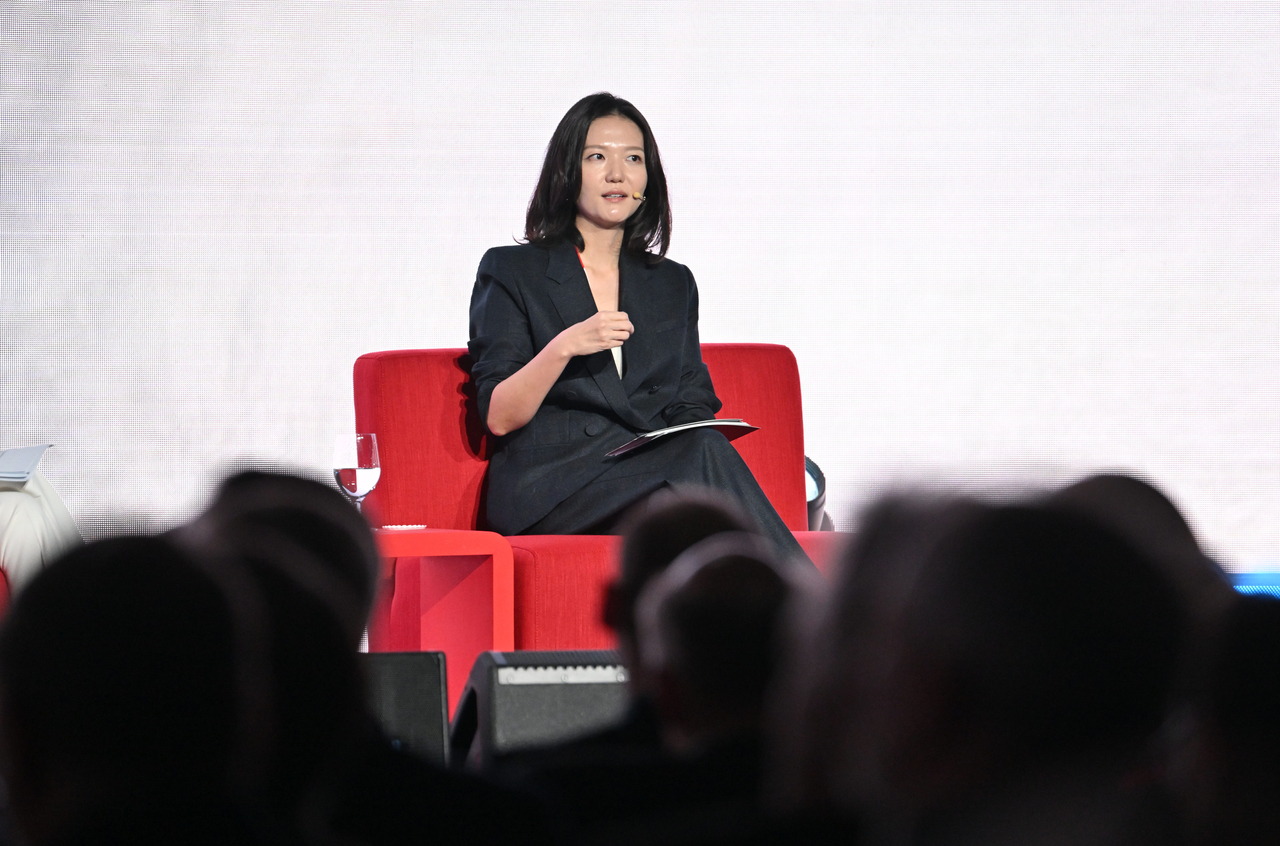
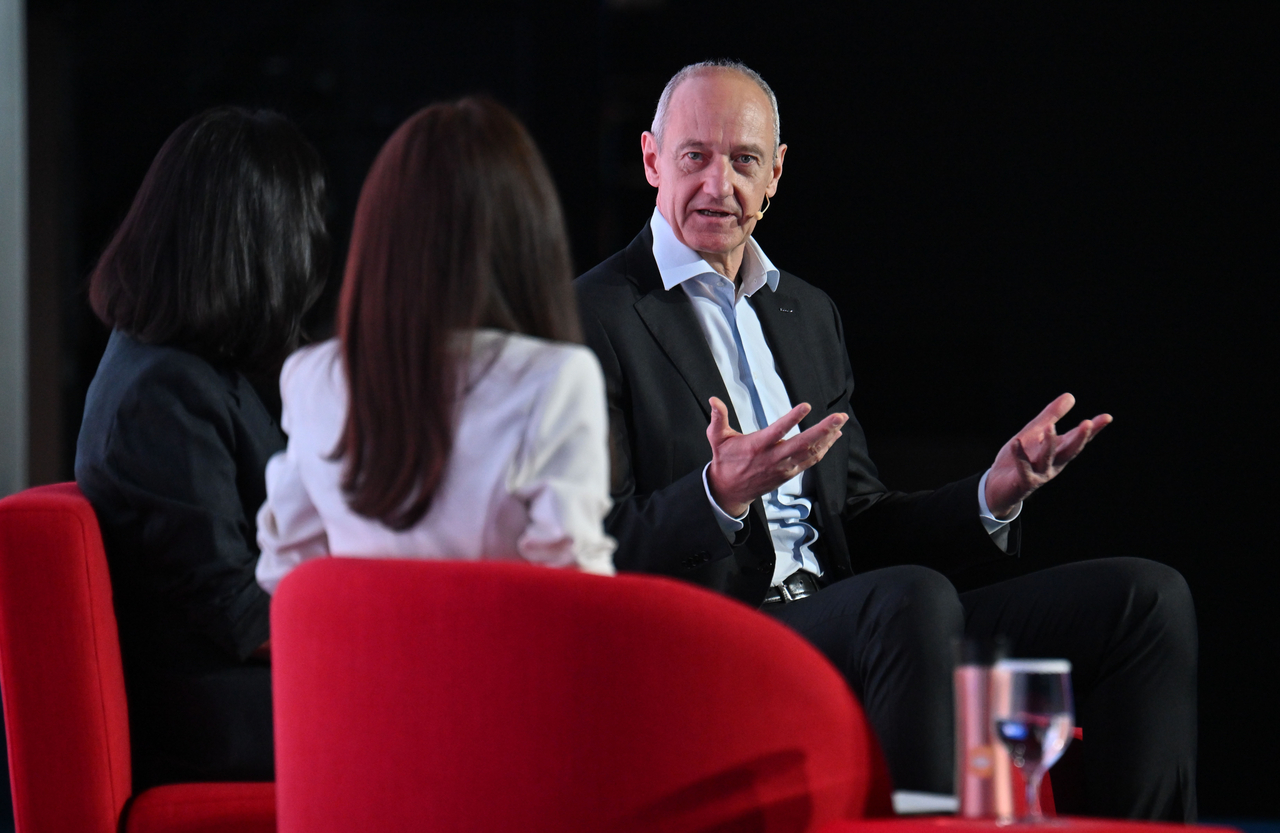
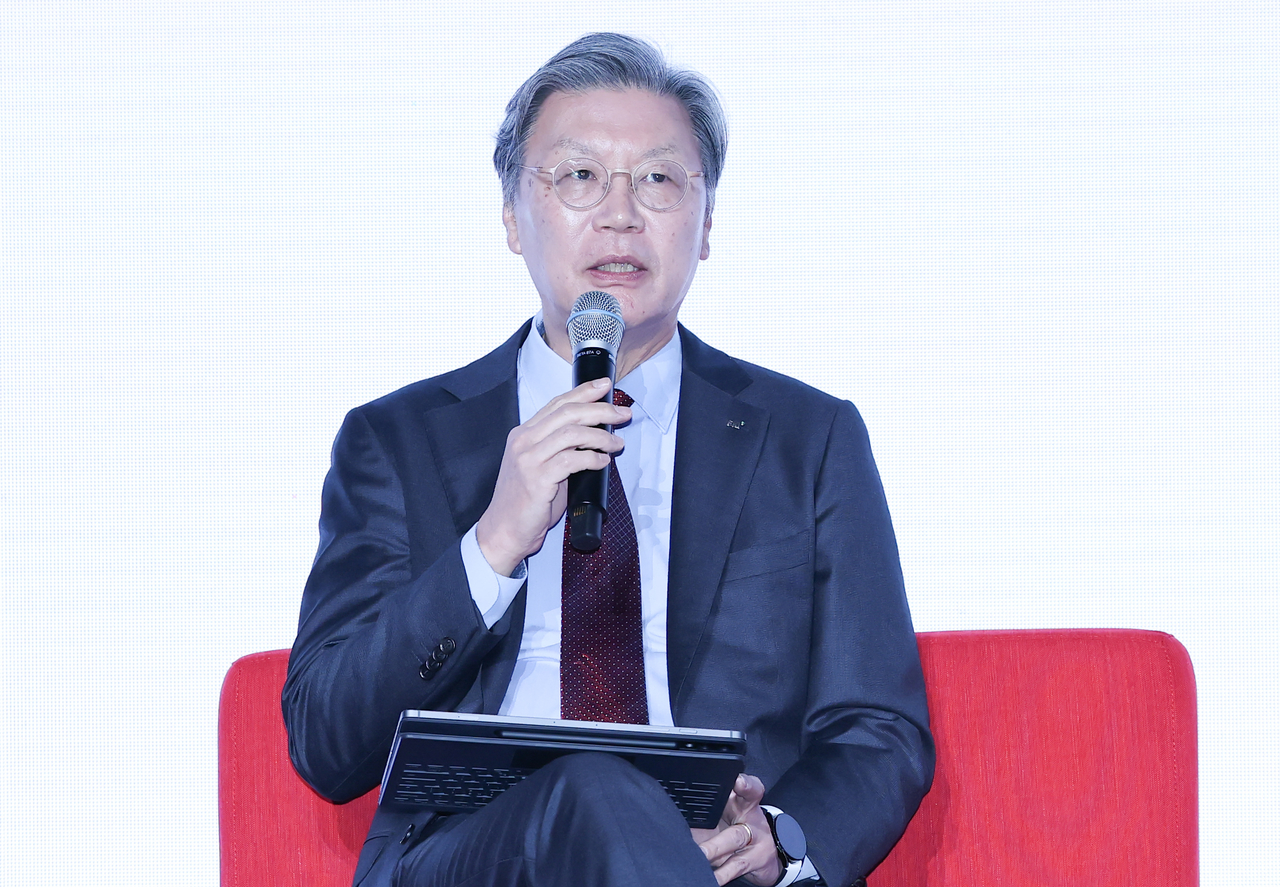
On the second day of the 19th Asia-Pacific Conference Germany (APK 2026), held Saturday at the Grand InterContinental Seoul Parnas, Roland Busch — chairman of the German Asia-Pacific Committee and chairman and CEO of Siemens Group — sat down with Naver CEO Choi Soo-yeon for a dialogue on the current state, growth potential and challenges of industrial AI technology.
Busch drew a parallel between AI and earlier transformative technologies. "What AI has in common with electricity and the internet is that all of them require infrastructure," Busch said. "The difference is that this one requires trillions of dollars in investment." Busch added that it remains unclear when that massive investment will begin generating real returns or when its full impact will materialize, but said AI will ultimately transform human capabilities just as electricity once changed the world.
Choi said AI must become infrastructure in its own right. "For AI to take root as social infrastructure, it needs to blend naturally into people's daily lives," Choi said, pointing to robot experiments under way at Naver's "1784" office building in Seongnam, Gyeonggi Province. "Ultimately, what matters is making AI and robots a natural part of everyday life without changing the way people work," Choi added.
On areas where Asia-Pacific and European countries could cooperate, Busch said the technology stack should come first. "If we combine the capabilities that Asia-Pacific countries and European countries each bring to the table, we can make significant progress — narrowing the technology gap and developing a range of alternatives," Busch said. Busch added that the vision extends beyond simply using technology to encompass core capabilities such as the tools needed to develop next-generation GPUs and CPUs.
Choi said AI is still only in its early stages, and predicted that integrating knowledge of equipment and manufacturing processes into AI systems will be transformative. "Once that knowledge is embedded, AI will be able to identify why a machine stops or why production slows at a certain point in the process — and that will change everything," Choi said.
Rising regional tensions spur security cooperation talks — 'Technology beats tariffs'
The conference also featured a discussion on the need for security cooperation between the Asia-Pacific region and Europe. Participants agreed that regional instability has intensified, citing the Russia-Ukraine war, now in its fifth year, and cross-strait tensions. Necset Tükenmez, CEO of German firm Aerodata, warned of growing hybrid threats targeting undersea cables and energy infrastructure — including power grids — in the Baltic and North Seas. "Financial markets, data transmission and communications, and even military communications all depend on this critical infrastructure," Tükenmez said.
Kim Chang-beom, vice chairman of the Korea Federation of Enterprises, proposed forming a task force that includes both government and private-sector participants to run simulations targeting key nodes in maritime routes and supply chains. "It does not have to include all 27 EU member states," Kim said. "For semiconductor-related issues, we could take a minilateral approach involving only the relevant countries or actors."
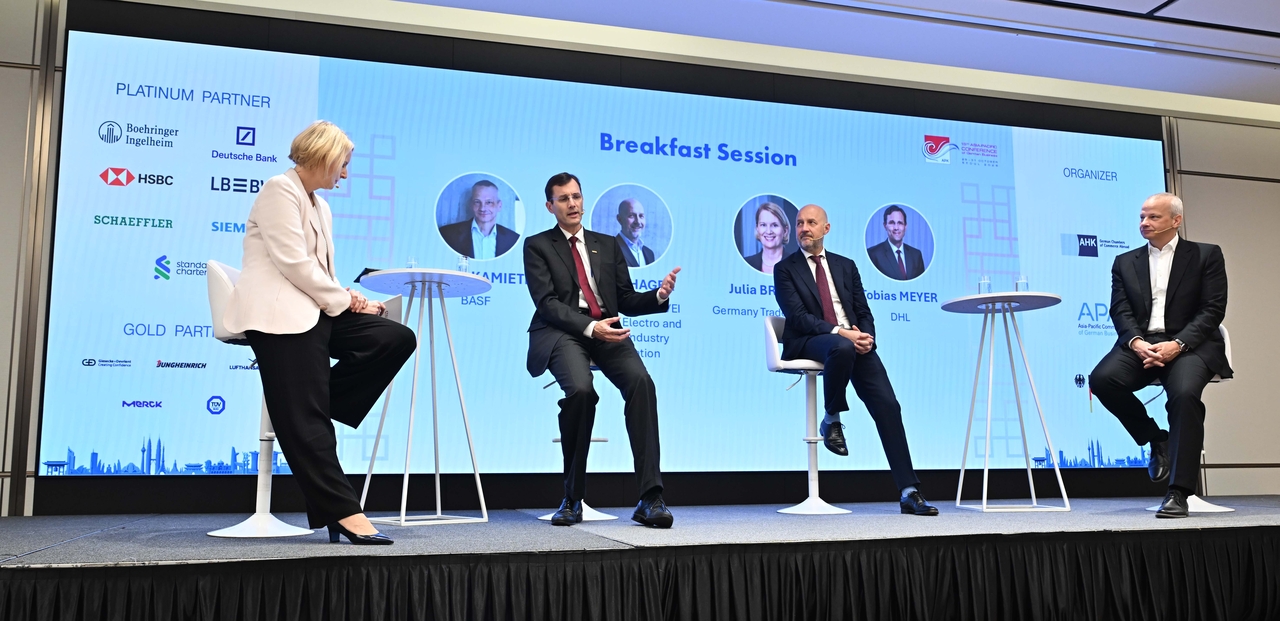
A breakfast session on navigating uncertainty produced analysis suggesting that demand for AI and other technologies is driving global trade growth despite tariffs and geopolitical instability. DHL CEO Tobias Meyer summed up the state of global trade in 2026 in a single phrase: "Technology beats tariffs." Meyer said AI and technology accounted for 80 percent of global trade growth in the first half of the year, and noted that US import volumes hit a record high in September despite ongoing tariff volatility.
On Europe's weakening competitiveness, speakers called for cutting regulation and picking up the pace. Daniel Hager, chairman of the German Electrical and Digital Manufacturers' Association, criticized Europe for becoming "obsessed with regulation," saying that environmental legislation, licensing procedures and labor flexibility make it impossible to produce semiconductors on the continent. BASF Chairman Markus Kamieth said he had taken a liking to a Korean expression he picked up during the visit. "'Ppalli-ppalli' — I really like it," Kamieth said. "Today, many companies and people still underestimate the value of speed."
eyre@heraldcorp.com
soho0902@heraldcorp.com