Both major union federations urge Democratic Party to restart special committee, submit bill in early November
Kim Young-hoon says legislation must pass this year; timing and transitional measures are key
Labor groups are intensifying pressure on the National Assembly to pass legislation raising the mandatory retirement age to 65 before the end of this year. The government has also signaled support for enacting the bill in 2026, but even if it clears the Assembly this year, it remains unclear whether the measure would eliminate the income gap between retirement and pension eligibility for workers nearing the end of their careers. Depending on when the law takes effect and who it covers, workers born in 1967 — who turn 60 next year — could be left out entirely.
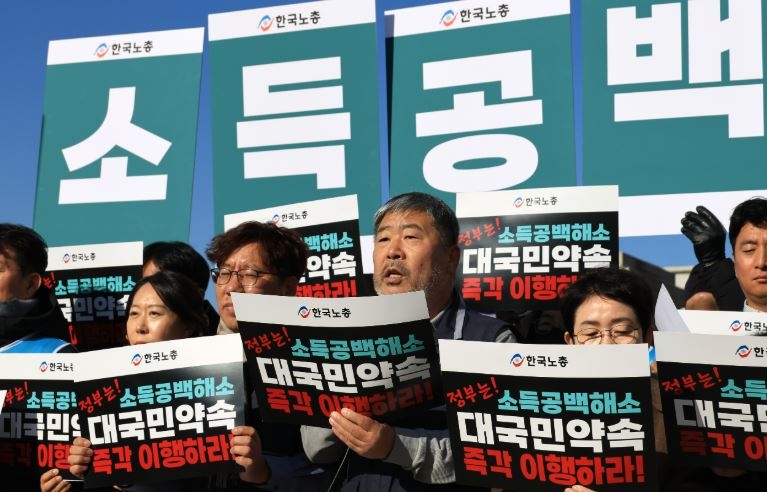
According to labor circles Monday, the Federation of Korean Trade Unions and the Korean Confederation of Trade Unions met Thursday with Rep. Kim Ju-young, who leads the Democratic Party's side on the special committee on retirement age extension, at the National Assembly. The two federations delivered a joint demand calling for the committee to resume and for legislation to be enacted this year. They urged the special committee to convene in early November, submit a bill to raise the retirement age to 65 and begin formal legislative proceedings. The federations also noted that extending the retirement age was a presidential campaign pledge and a core commitment under the policy agreement with the Federation of Korean Trade Unions.
The government shares the view that legislation must be enacted this year. Employment and Labor Minister Kim Young-hoon told the national audit last month that the bill "must be passed before the year is out." On the question of a government proposal, Kim said the administration would "announce its own plan promptly once discussions have matured and only a decision remains, without further delay." The statement set out the government's intention to release its proposal contingent on progress in the ruling party's deliberations.
The urgency labor groups feel stems from the gap between retirement and pension eligibility. Those born in 1967 turn 60 next year; those born in 1968 do so in 2028. Both cohorts become eligible for full national pension benefits at 64. Retiring at 60 would leave a four-year window with no pension income. For those born in 1969 or later, the eligibility age rises to 65, stretching that gap to five years.
Even if a retirement age extension bill passes this year, the income gap would not close immediately. If a grace period is built in to give companies time to prepare, workers who reach the current retirement age during that window could be excluded from coverage. Even a phased increase in the retirement age could leave a gap before pension eligibility kicks in, depending on which birth year is covered first and how quickly the age rises.
For instance, workers who have already retired by the time the law takes effect would not have their employment extended simply because the retirement age was raised, unless separate provisions are made for them. That is why any legislation setting the final retirement age at 65 must also include transitional measures for those who reach retirement age before the law applies. Whether to extend employment for workers nearing retirement through temporary rehiring arrangements is another question that must be addressed alongside the main bill.
The income protection effect also varies depending on how continued employment is structured. A statutory retirement age extension prolongs an existing employment relationship, whereas rehiring involves entering into a new contract after retirement. Even if rehiring extends the period of work, how much of a worker's pre-retirement income can be maintained depends on the selection criteria and the terms — including pay — attached to the new contract.
How the government's existing review will translate into a concrete implementation plan is also drawing attention. According to materials the Ministry of Employment and Labor submitted for this year's national audit, the ministry responded in February this year with a "medium-to-long-term review" to a recommendation issued by the National Human Rights Commission of Korea in February last year calling for improvements to the statutory retirement age system. With Kim Young-hoon having since emphasized the need to pass the bill this year, the implementation schedule and transitional measures to be included in the government's proposal have taken on added importance.
fact0514@heraldcorp.com