Training to use actual devices; hours vary by region
Situation room to verify via photos, video if on-site judgment is difficult
Checks scheduled after each exam period to protect test-takers
Staffing rate undisclosed; training to be completed before exam day
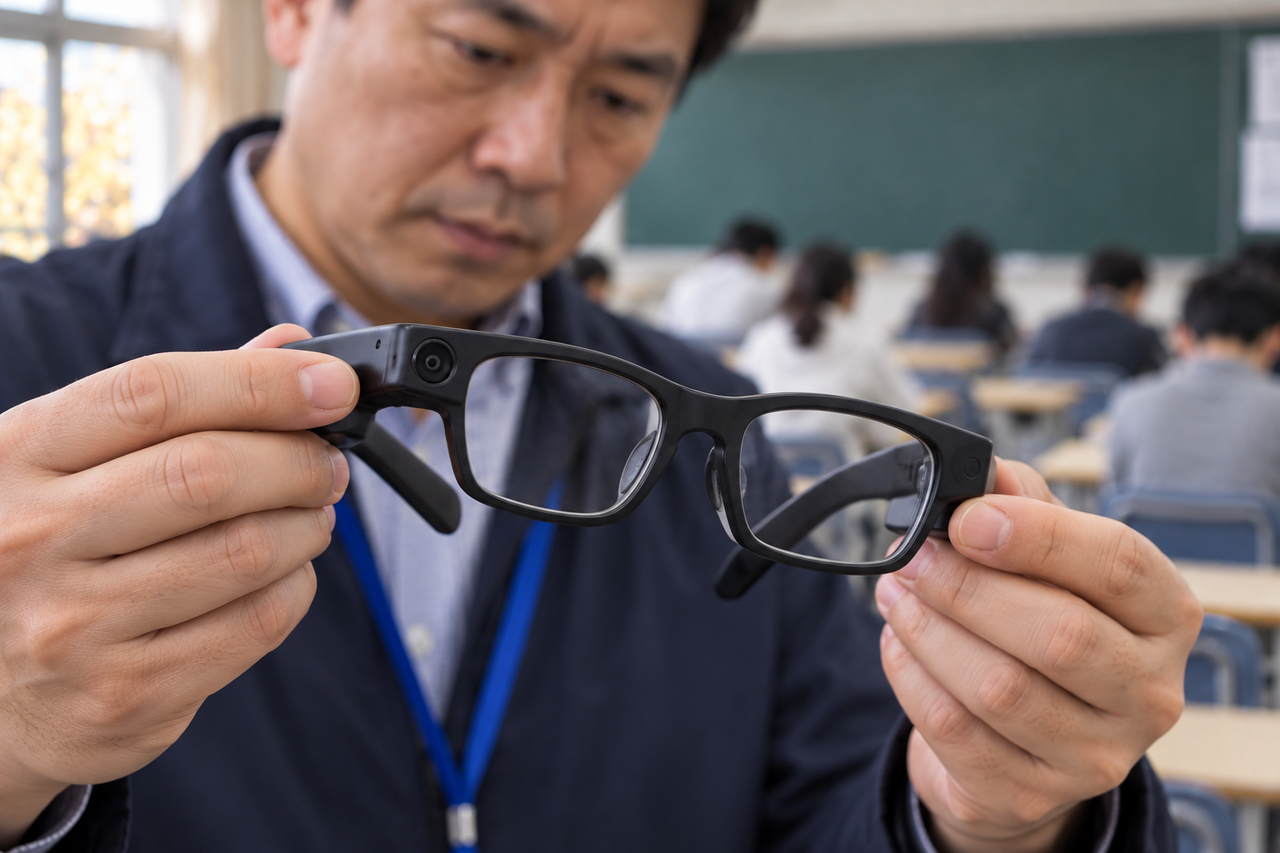
The Ministry of Education said Monday that short-term training would be sufficient to equip dedicated smart glasses inspectors with the skills needed for this year's College Scholastic Ability Test, or CSAT, pushing back against concerns about the brevity of the program. Devices that are difficult to assess on-site will be reviewed by a central situation room using photos and video, and inspections will be conducted after each exam period ends so as not to disrupt other test-takers.
"Training will be conducted through a variety of methods, including hands-on use of actual smart glasses," the ministry said Monday. "We believe this will be sufficient to build the necessary competency."
Earlier, the ministry announced it would assign one dedicated smart glasses inspector to each of the 1,312 CSAT venues nationwide this year. Under the plan, when a proctor spots a suspicious device, the dedicated inspector steps in to assess it and, if needed, consults the situation rooms operated by the regional education office, the ministry and the Korea Institute for Curriculum and Evaluation.
The plan drew pushback after some regional education offices began recruiting teachers as dedicated inspectors — a move critics said simply shifted the burden from existing proctors to other educators. The Seoul Metropolitan Office of Education is recruiting middle school teachers with at least two CSAT proctoring sessions in the past five years and plans to hold a preliminary training session on Nov. 11. Field educators have raised doubts about whether a brief training session is enough to accurately identify the wide variety of smart glasses on the market.
On questions about common standards for training hours, practice device models and competency verification, the ministry said training hours would be determined by the conditions of each regional office and that instructional videos on how to identify smart glasses had already been produced and distributed. However, the ministry did not provide a minimum training duration to be applied nationwide, specify which device models would be used in practice sessions, or outline any post-training competency assessment criteria.
When even dedicated inspectors cannot make a determination, the situation room will step in. "Dedicated personnel capable of making reliable judgments about smart glasses will be stationed in the situation room as well," the ministry said, adding that verification would be carried out "through photos, video and other means."
Addressing concerns that test-takers could be harmed if ordinary glasses were mistakenly flagged as smart glasses or if verification took too long, the ministry said it would adjust the timing of checks. "We have a manual in place to ensure no harm comes to regular test-takers, including conducting checks after the relevant exam period ends," a ministry official said.
Asked about the rate at which dedicated smart glasses inspectors had been secured by region, the ministry declined to provide figures, saying assignments were being made "according to conditions in each region" and that training would be completed before exam day. This year's CSAT is scheduled for Nov. 19.
The results of a comprehensive investigation into whether smart glasses were used for cheating in school-based internal exams will also be made public this month.
Meanwhile, the ministry said it was reviewing whether to file a further appeal after a court upheld the continued tenure of Park Ji-hyang as chairperson of the Northeast Asian History Foundation. The ministry's immediate appeal had been dismissed. "We respect the court's decision and will carefully review the content and intent of the ruling before deciding whether to file a further appeal," it said.
brunch@heraldcorp.com