Q3 operating profit hits 945 billion won, up 47.9% on-year
'EV slowdown, mine restarts drove price fall'
Argentina Plant 2 targets 70% utilization rate next year
Gwangyang No. 2 blast furnace overhaul to cut Q4 sales by 570,000 tons
Posco Holdings acknowledged Monday that it had failed to anticipate the sharp decline in lithium prices, while assessing that current prices are near a floor. The company plans to raise output at its Argentina Plant 1 to around 22,000 tons next year to restore profitability. Its steel business drove third-quarter earnings, and the company expects domestic steel demand to stage a gradual recovery next year.
Lee Jae-young, head of Posco Holdings' energy materials business management division, said at the company's third-quarter earnings conference call Monday that "at the last IR, we said prices would rise, but they have fallen quite significantly." In fact, at its first-quarter conference call in April, Posco Holdings had projected lithium prices would reach $23 to $25 per kilogram by year-end. The current price stands at around $13 per kilogram.
Posco Holdings posted consolidated sales of 19.14 trillion won ($14.3 billion) in the third quarter, up 10.9 percent from the same period last year. Operating profit rose 47.9 percent to 945 billion won. Compared with the previous quarter, sales edged down 0.6 percent while operating profit climbed 15.4 percent. Net profit came in at 380 billion won, down 1.8 percent year-on-year and 50.1 percent quarter-on-quarter, reflecting 272 billion won in impairment charges related to high-purity nickel and a hotel in Myanmar.
'$13 is near Chinese spodumene cost floor' — Argentina Plant 1 to boost output to 22,000 tons next year
The company cited four factors behind the lithium price decline: slowing growth in Chinese electric vehicle sales, the restart of China's Jiangxia mine, increased spodumene supply from Zimbabwe and Australia, and China's reduction of the value-added tax rebate rate on EV exports.
Still, the company views the recent drop as excessive. Lee said "the recent decline has been overdone," adding that the current level of $13 represents a fall to around the production cost of Chinese spodumene lithium. Lee noted that battery capacity per EV has grown about 20 percent compared with last year and that growth in energy storage systems is also accelerating. "It may be premature to say so, but we believe the current level may be the lowest point, and we expect a gradual rise," Lee said.
The secondary battery materials segment posted an operating loss of 17 billion won in the third quarter. Posco Argentina, which recorded its first-ever quarterly operating profit in the second quarter, swung back to a loss of 18 billion won in the third quarter. Cold winter temperatures and strong winds reduced brine evaporation, and a major equipment overhaul compounded the problem, pushing output below 3,000 tons. Posco Pilbara Lithium Solution saw its operating loss widen to 67 billion won amid continued raw material cost pressure. The three lithium subsidiaries' results also reflected 29 billion won in inventory valuation losses.
Output at Argentina Plant 1 is expected to recover to around 5,500 tons in the fourth quarter, with full-year production projected at 14,000 to 15,000 tons this year before rising to 21,000 to 22,000 tons next year. The company said the fourth-quarter utilization rate would be in the 85 to 87 percent range, which it expects to keep the unit near breakeven at current prices.
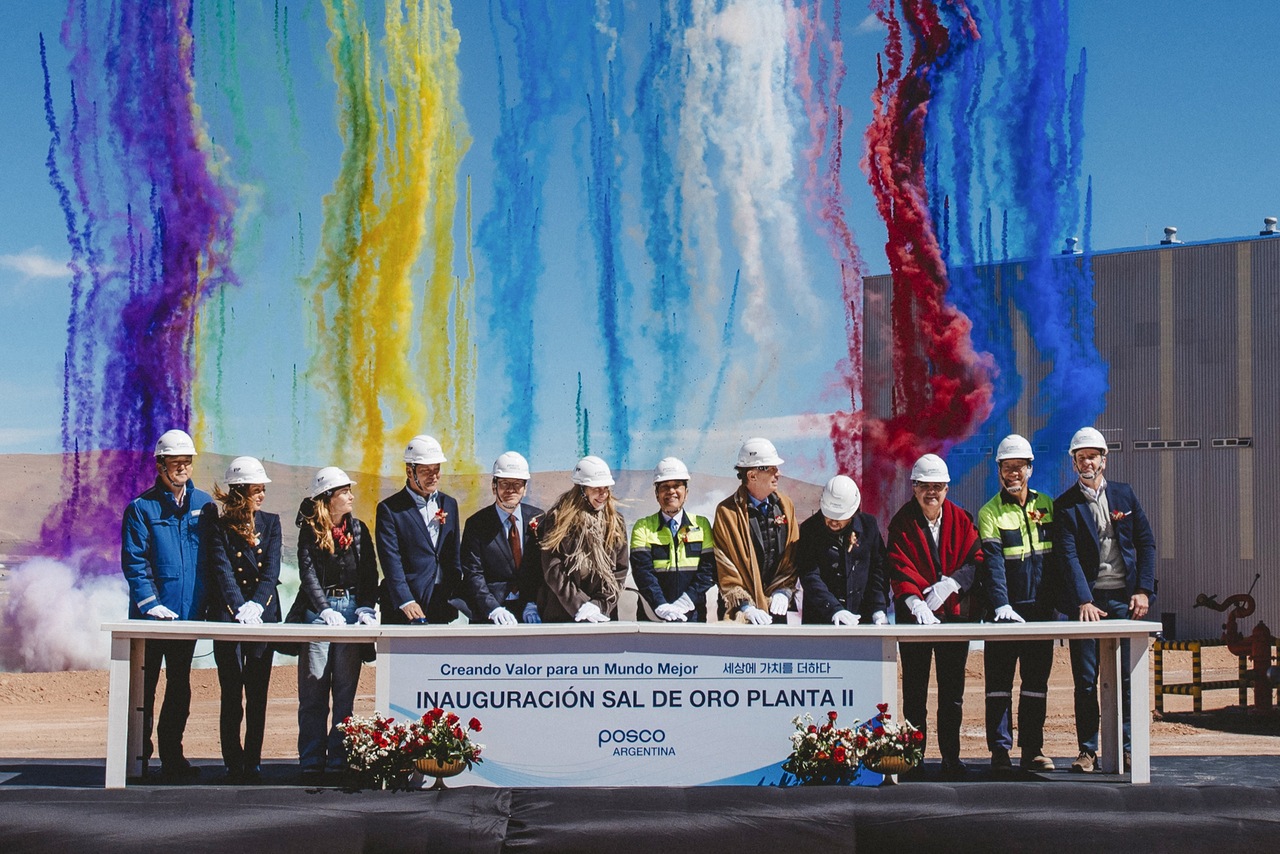
The lithium carbonate Plant 2, completed Oct. 6, is on track to finish its ramp-up by June next year, targeting a utilization rate of 70 percent in July and 90 percent in December. Lee said Plant 2 "will find it difficult to generate operating profit during the first half, which is the ramp-up period, but should turn a profit from the third quarter." Lee added that at current spreads, generating operating profit is challenging, so the near-term target is EBITDA breakeven.
Posco's operating profit returns to 400 billion won range for first time in four quarters; talks with Cleveland-Cliffs remain unresolved
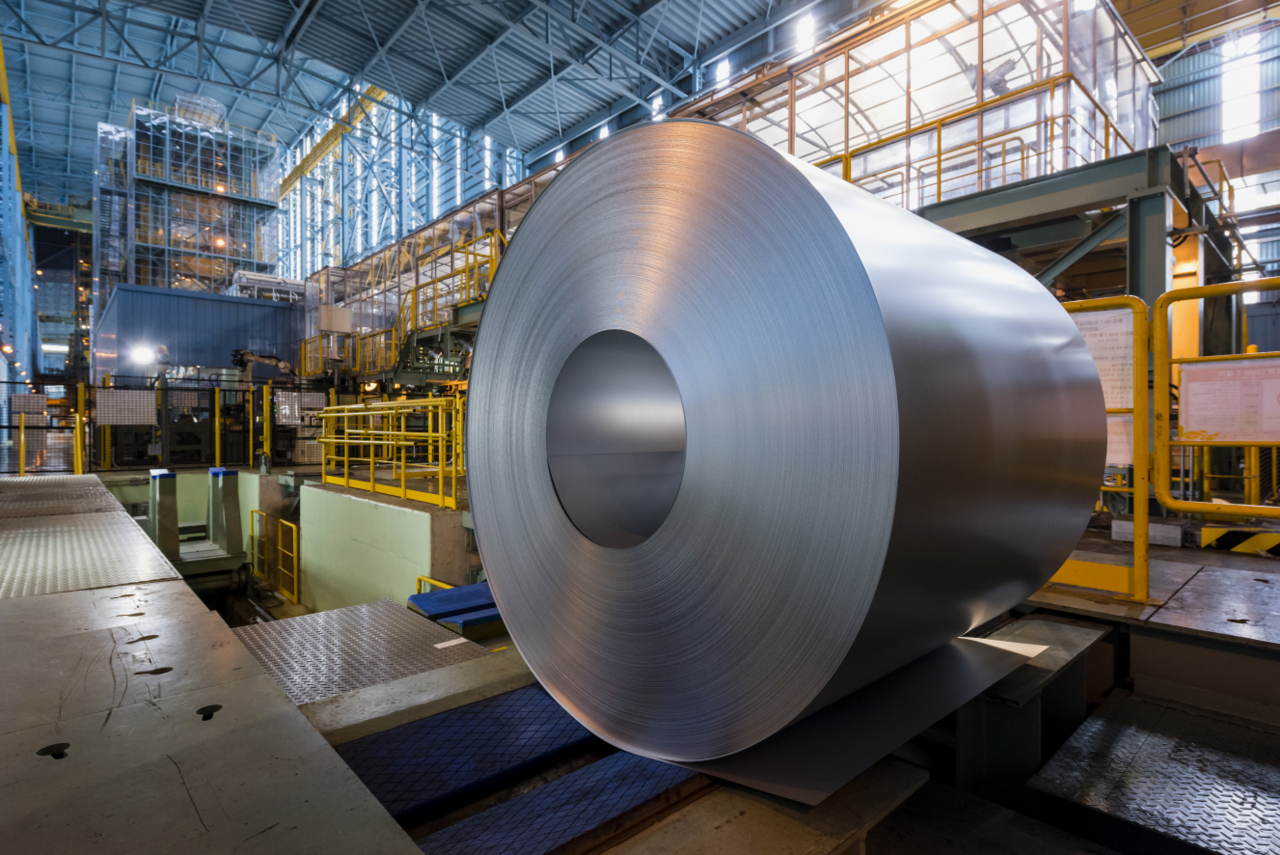
The steel business recovered its profitability. Posco's third-quarter operating profit reached 455 billion won, returning to the 400 billion won range for the first time in four quarters. The selling price of carbon steel rose from 962,000 won per ton to 982,000 won per ton, while energy, labor and maintenance costs all declined. Heo Jong-yeol, head of Posco's finance division, said energy and maintenance cost reductions "will be consistently maintained in the fourth quarter as well."
No Seong-rae, head of Posco's marketing strategy division, said domestic steel demand "is expected to show a gradual recovery next year, but differentiation across industries will become more pronounced." The company projected that automotive demand would return to growth, shipbuilding output would increase significantly, and investment in energy infrastructure — including power, data centers and semiconductor factories — would expand. Construction, however, is expected to recover more slowly.
In the fourth quarter, the overhaul of Gwangyang's No. 2 blast furnace is a key variable. The work is a large-scale operation that also covers hot-rolling and continuous casting equipment. Heo said the blast furnace overhaul and downstream repairs "will reduce product output by 920,000 tons and sales by 570,000 tons compared with the third quarter," adding that the impact will carry into the first quarter of next year, when sales are expected to fall a further 430,000 tons below fourth-quarter levels. Posco plans to build up inventory in advance to minimize supply disruptions for domestic customers.
Cooperation talks with US steelmaker Cleveland-Cliffs have yet to reach a conclusion. Posco has been pursuing a joint electric arc furnace steelworks investment in Louisiana with Hyundai Motor Group while also negotiating with Cliffs as one option for entering the North American market. The two companies signed a strategic partnership MOU in September last year.
Kim Sil-min, head of Posco's investment planning division, said "differences over the business cooperation structure and transaction pricing mean nothing has been finalized," adding that "a specific partnership is not a prerequisite for our North American business strategy, and we will proceed only if it meets our investment principles."
eyre@heraldcorp.com