Bank of Korea news sentiment index at 7-month low
Index fell below 100 in September, dropped further to 95 in October
Kospi's 16% decline and rising loan rates weigh on mood
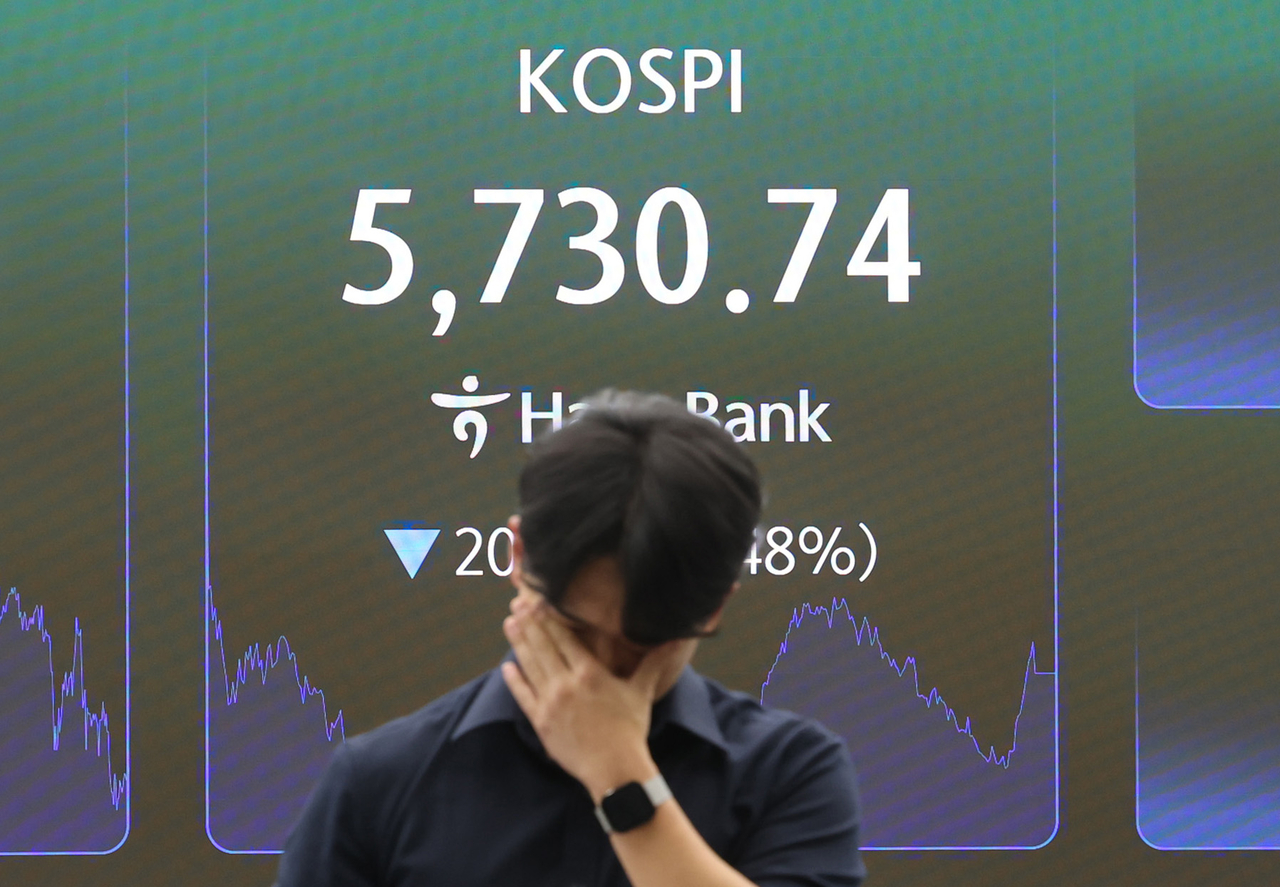
A Bank of Korea index measuring economic sentiment in news coverage fell below 100 for a second consecutive month, hitting its lowest level in seven months. Analysts say a sharp drop in share prices and the burden of high interest rates have weighed on economic sentiment despite an upward revision to the growth rate and strong exports.
The Bank of Korea said Tuesday that its monthly News Sentiment Index came in at 95.34 in October, down 4.05 points from the previous month's reading of 99.39.
The News Sentiment Index is a gauge the Bank of Korea compiles by quantifying the economic mood reflected in news articles closely tied to domestic economic activity. A reading above 100 indicates that economic sentiment is more optimistic than the long-term historical average. The index generally leads the Consumer Sentiment Index by about one month and the manufacturing Business Survey Index by about two months.
The October reading was the lowest since March, when the won-dollar exchange rate surged past 1,500 won and international oil prices spiked in the wake of the Middle East war. After climbing to 110.64 in April, the index hovered in the 100–110 range through August before slipping to 99.39 in September and falling further in October.
The October decline is attributed mainly to a drop in share prices led by semiconductor stocks, along with increased repayment burdens on borrowers following interest rate hikes.
Growing concerns about the profitability of AI investment pushed the Kospi down 16.2% last month — the seventh-largest monthly decline on record. The Bank of Korea also said the average mortgage rate at commercial banks stood at 4.88 percent per annum in September, the highest since April 2012 (4.94 percent), a gap of 14 years and five months.
The News Sentiment Index has continued to deteriorate despite a string of strong economic data releases, including robust GDP growth and a healthy current account surplus.
In mid-October, the IMF raised its growth forecast for the South Korean economy this year by 0.7 percentage points to 3.3 percent. The Bank of Korea's advance estimate of third-quarter real GDP growth, released last month, came in at 1 percent — more than three times the earlier projection of 0.3 percent.
Even in July, when the Kospi posted its worst-ever monthly decline of 22.2 percent, the News Sentiment Index still held above 100, at 101.83.
"The news sentiment in the industrial sector, which reflects the upward growth revision and strong exports, continues to exceed the long-term average," a Bank of Korea official said. "But the overall index fell below 100, reflecting the drop in share prices, doubts about AI growth prospects and the burden of high interest rates."
kimstar@heraldcorp.com