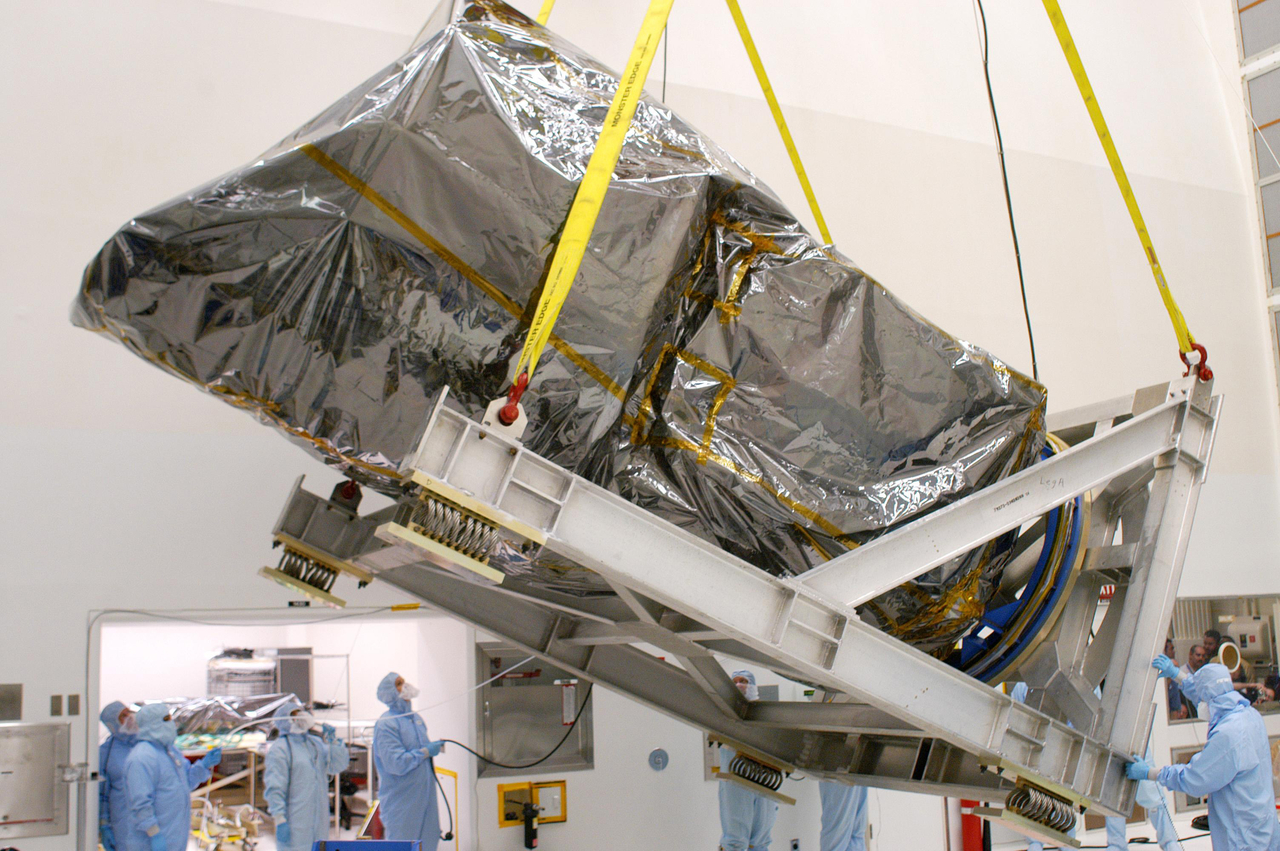
The Neil Gehrels Swift Observatory, a NASA space telescope that the agency failed to rescue, is expected to fall to Earth soon.
CBS News reported Monday that the 1.5-metric-ton telescope is expected to re-enter the atmosphere Wednesday (local time).
Most of the spacecraft's body is expected to burn up during re-entry, though some tungsten components are likely to survive and fall into the ocean. The debris could land across a wide swath of the globe, including parts of Africa, Australia, India, Southeast Asia and Latin America.
NASA said the probability of anyone on Earth being harmed is "very low," putting the risk at 1-in-2,100.
Swift was deployed to detect ultra-high-energy phenomena and has observed more than 2,000 gamma-ray bursts and roughly 1,400 stellar explosions since its launch in 2004.
After more than two decades in operation, the telescope's orbit gradually decayed, raising the risk of an uncontrolled re-entry and prompting a rescue mission.
NASA contracted with startup Catalyst Space Technologies to launch a rescue spacecraft called Link. The plan was for Link to approach Swift, latch onto it and tow it back to a stable orbit.
But Link, launched earlier this summer, lost control and was unable to reach Swift, leaving the rescue mission a failure.
"Since Swift was launched, we knew this day would come," said John Nousek, an astronomer at Pennsylvania State University. "Anything that goes into low Earth orbit has to come down, and the end is destructive."
husn7@heraldcorp.com