Trump says Iran talks 'going well,' no need to rush
Iran offers revised proposal to reopen Strait of Hormuz
US military strikes Qeshm Island in 'defensive' operation
35 ships attacked in October alone; fears of full-scale war persist
With US midterm elections just one day away, Washington and Tehran have signaled possible progress in negotiations — even as US airstrikes and ship attacks continue to raise tensions in the Strait of Hormuz. President Donald Trump said talks with Iran are going well, while the US military struck Qeshm Island, a strategically important Iranian outpost. The simultaneous push for a diplomatic breakthrough and ongoing military clashes are fueling growing fears that full-scale war could resume after the midterms.
The US military struck Iran's Qeshm Island in the Strait of Hormuz on Monday (local time), the Wall Street Journal reported. American officials said the strike was a defensive measure aimed at preventing Iran from attacking commercial vessels.
Iran's state-run IRNA news agency had earlier reported multiple explosions near Qeshm Island. The cause was not immediately confirmed at the time, but the US airstrike was later disclosed.
The Wall Street Journal, citing American officials, said the military kept the operation largely out of the public eye to avoid escalating the situation into a full-scale war. Iran has not issued an official response.
The strike came as the two countries were engaged in indirect negotiations brokered by Qatar, with both sides signaling openness to dialogue.
Trump, in an interview with the online outlet Axios published Monday, said there was "no need to rush" on resuming strikes against Iran, adding that talks were "going well."
Trump had previously warned that military operations against Iran could resume after the midterm elections. But with voting just a day away, he struck a more measured tone, emphasizing progress in negotiations.
Iran also showed some flexibility. The Iranian Foreign Ministry said it could implement its seven-step proposal to reopen the Strait of Hormuz within two days if the United States accepted a set of conditions.
Iran's supreme leader was also said to have granted the administration some negotiating latitude to ease tensions with the US through dialogue.
However, the two sides remain far apart. Iran is demanding the release of frozen assets, a concession Washington is unlikely to accept outright. The US, for its part, is said to be reluctant to lift the Strait of Hormuz blockade until clear progress on the nuclear issue is confirmed.
Military tensions in the strait are also clouding the outlook for negotiations.
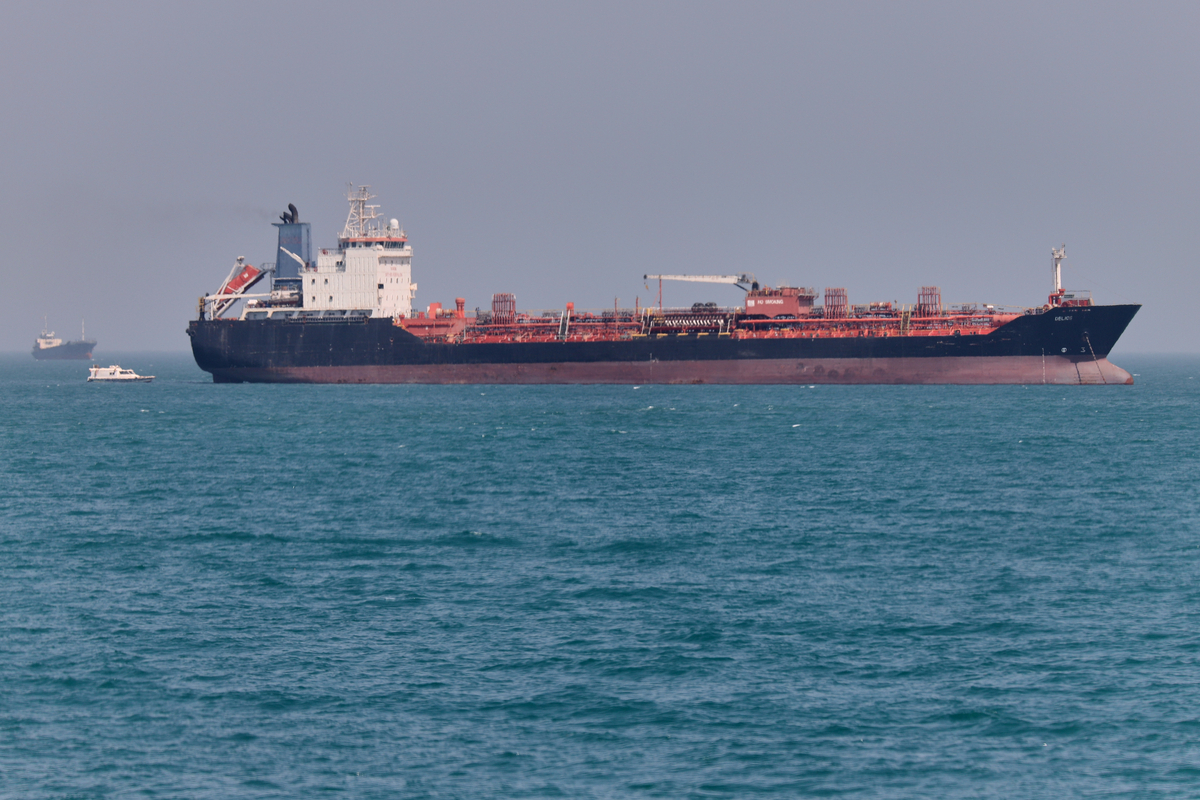
According to The New York Times, 35 ships were attacked in the Strait of Hormuz in October alone — the highest monthly toll since the war began.
The United Kingdom Maritime Trade Operations also reported Monday that a vessel near the strait was struck by an unidentified projectile, leaving a hole in its starboard side. All crew members were safely rescued, but the agency urged ships in the area to exercise caution.
Israel is another variable that could shape the US military response to Iran. Prime Minister Benjamin Netanyahu, navigating an uncertain political landscape following a recent general election, has continued to press senior American officials to resume a full-scale military campaign against Iran.
That has led some to suggest that Trump's emphasis on diplomatic progress may be a temporary posture ahead of the midterms, calibrated to reflect public opposition to war.
Iran, meanwhile, appears far from fully trusting Washington's stated willingness to negotiate.
Iranian Foreign Ministry spokesperson Esmail Baghaei, at a press conference Monday, raised the fact that the United States and Israel had carried out large-scale airstrikes against Iran in June last year even while negotiations were under way — underscoring that the possibility of military action cannot be ruled out even when dialogue is being emphasized.
US allies in the Middle East are also said to be preparing for the possibility of large-scale strikes after the midterms. There are particular concerns that if armed conflict resumes, Iran's retaliatory response could be more intense than before.
Anwar Gargash, diplomatic adviser to the UAE president, warned at a security conference last weekend that "the positions of the United States and Iran are sharply divergent, and if that gap is not narrowed, we should fear the worst."
Iran is also maintaining contact with Russia. Mohsen Rezaei, secretary of Iran's Supreme National Security Council and a leading hardliner, spoke by phone with Russian President Vladimir Putin on Monday to discuss the situation in the Middle East and avenues for strategic cooperation between the two countries.
Even as the United States and Iran keep the door open to negotiations, military clashes in the Strait of Hormuz continue. Whether the two sides can narrow the terms for a deal after the US midterm elections — or slide back into large-scale armed conflict — has emerged as the defining question for the future of the Middle East.
sjy@heraldcorp.com