Report on growth opportunities in Korea's low-carbon industrial transition
Analysis covers 7 key low-carbon sectors including power grids, batteries and wind energy
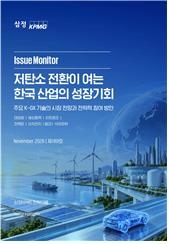
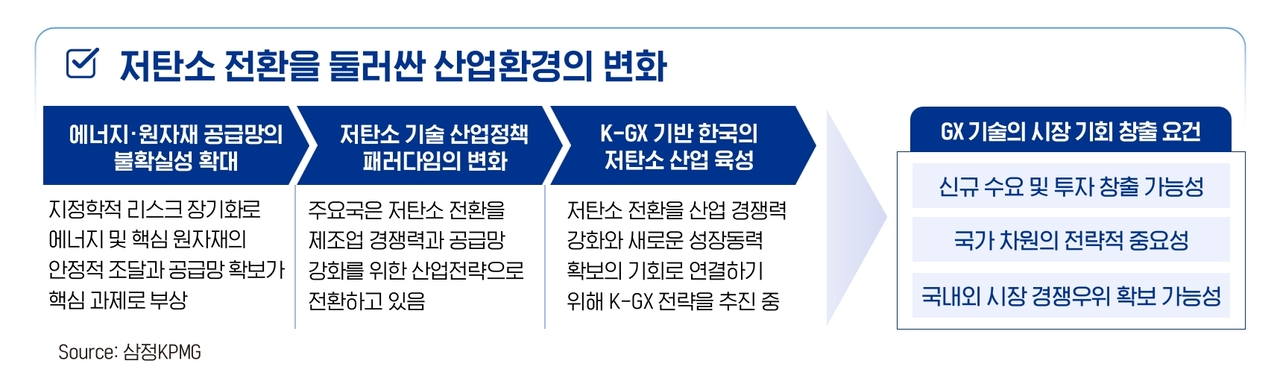
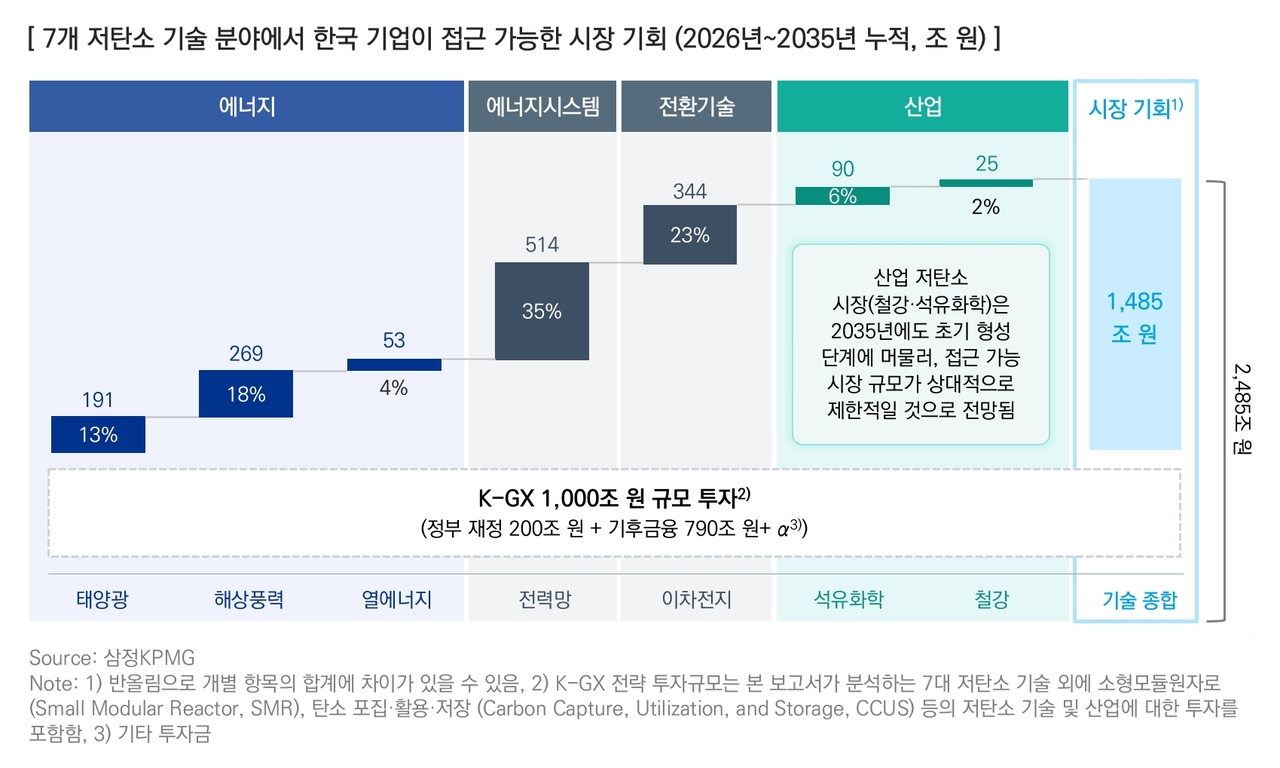
Amid expectations that domestic and overseas investment in low-carbon industries will accelerate under Korea's Green Transformation strategy, known as K-GX, South Korean companies could tap a cumulative market opportunity of around 1,485 trillion won ($1.11 trillion) across seven key low-carbon sectors over the next decade, according to a new report.
Samjong KPMG published the report Tuesday, titled "Growth Opportunities for Korean Industry Through the Low-Carbon Transition: Market Outlooks and Strategic Participation in Key K-GX Technologies." The report argues that a new growth market is emerging as rising power demand, an expanding concept of energy security and major economies' push to nurture low-carbon technology converge.
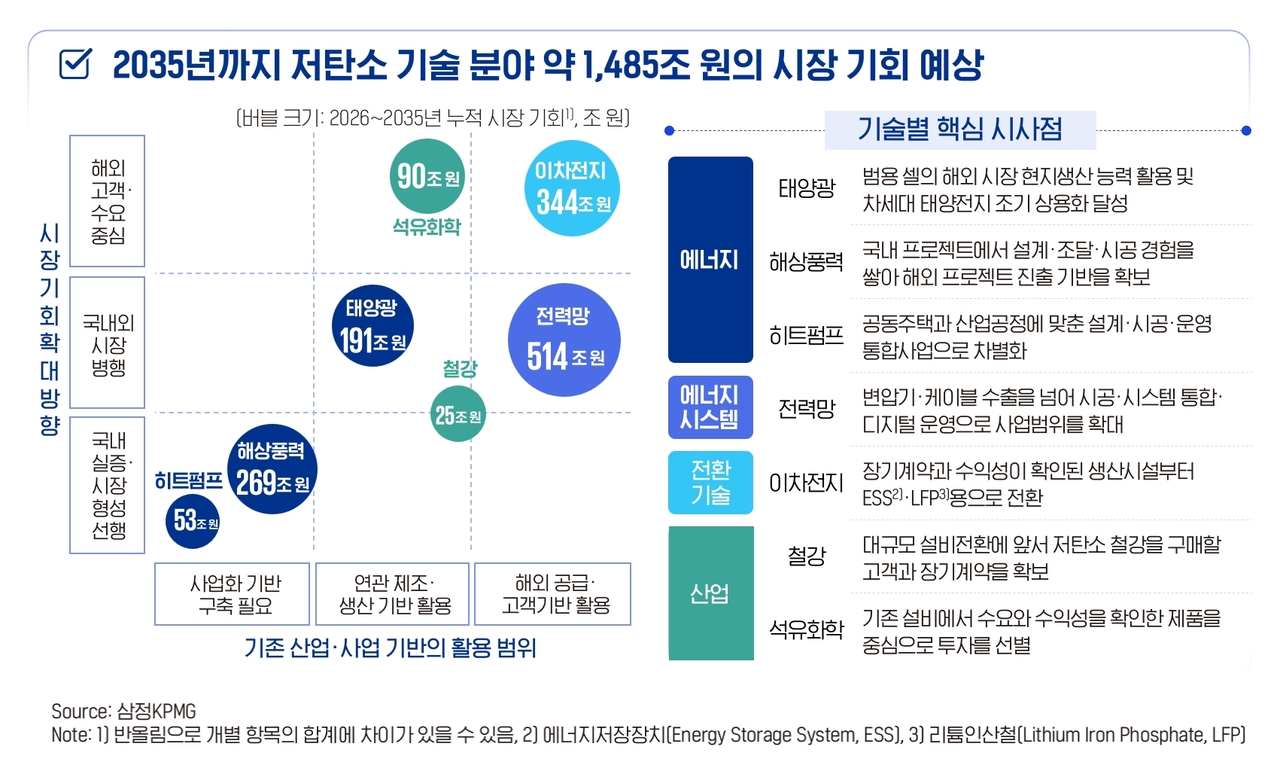
Taking into account market expansion potential, energy security and supply chain considerations, and the applicability of domestic technology and manufacturing capabilities, the report identified seven core K-GX sectors: solar power, offshore wind energy, heat pumps, power grids, secondary batteries, steel and petrochemicals. It then systematically assessed global market conditions and the commercialization prospects for Korean companies in each area.
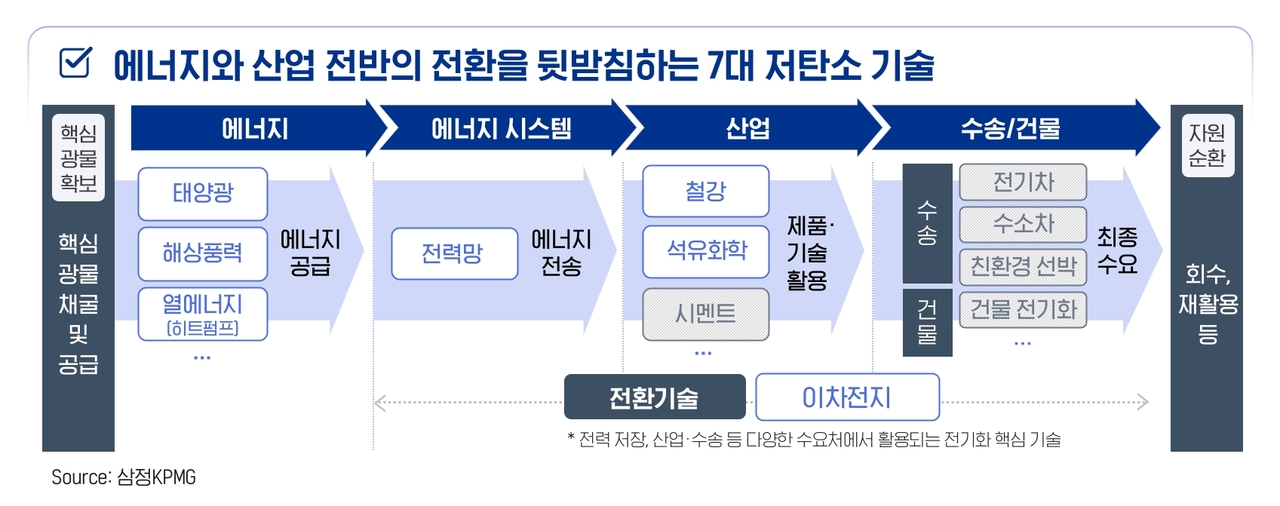
On sector-by-sector entry strategies, the report identified the energy sector — covering solar power, offshore wind energy and heat pumps — as offering major opportunities through the commercialization of next-generation technologies combined with domestic equipment and construction capabilities applied to buildings and industrial processes.
For power grids, which fall under the energy systems sector, the report said companies must move beyond simply supplying equipment and expand into engineering, procurement and construction as well as systems projects. For secondary batteries in the transition technology sector, the report emphasized restructuring portfolios in line with the growing ESS market and commercializing next-generation technologies.
For traditional industrial sectors such as steel and petrochemicals, the report said a phased transition centered on decarbonizing existing processes and utilizing bio-based feedstocks is needed.
The report estimated that Korean companies could secure a cumulative global market opportunity of around 1,485 trillion won between 2026 and 2035. The figure reflects a comprehensive assessment of policy directions across countries, market outlooks and the export competitiveness of domestic firms.
To translate these opportunities into tangible corporate growth, the report outlined four key tasks: securing a track record through domestic deployment and demonstration projects; shifting from single-component equipment supply to systems and project-based business; restructuring production assets based on actual demand and profitability; and linking policy and financial support to the appropriate stage of industrialization.
On domestic deployment and demonstration, the report advised companies to treat such projects not merely as performance verification but as opportunities to build expertise in installation, construction and operations. It called for establishing permitting, grid connection and certification frameworks that improve business predictability, and for linking performance and operational data to customer certification and overseas contract wins. Companies should also look to expand their scope to cover system integration, performance guarantees and maintenance, the report said.
When transforming production infrastructure, the report said companies should carefully weigh actual customer demand and the recoverability of investment rather than aggressively expanding capacity based on market growth projections alone. It said long-term offtake agreements, facility utilization prospects, raw material and energy procurement conditions, and an assessment of transition costs and profitability must all come first. Next-generation technologies, too, must move beyond pure research and development into demonstration and early-stage mass production systems to deliver real results, the report said.
Lee Dong-seok, Samjong KPMG's sustainability services leader and deputy chief, said K-GX represents "a turning point at which the low-carbon transition can be connected to structural improvements in our industries and the creation of new growth engines." He added that Korean companies "must precisely target the value chain zones where they can gain a competitive edge and execute strategic investment."
Samjong KPMG plans to publish follow-up in-depth reports on three sectors — offshore wind energy, heat pumps and power grids — in sequence before the end of the year. An offline seminar on the topics is also scheduled in Seoul in mid-December.
Meanwhile, Samjong KPMG, which closes its fiscal year in March, posted operating revenue of 905.6 billion won for the current fiscal year running from April 2025 through March 2026, up about 3.4 percent from the previous year, crossing the 900 billion won threshold for the first time.
an@heraldcorp.com