Health minister, acting police chief meet
Officers to consult hospital staff before entering on 112 calls
Police have agreed to limit the scope of search-and-seizure warrants in essential medical fields to the minimum necessary, following the fallout from a raid on the pediatric emergency center at Ajou University Hospital.
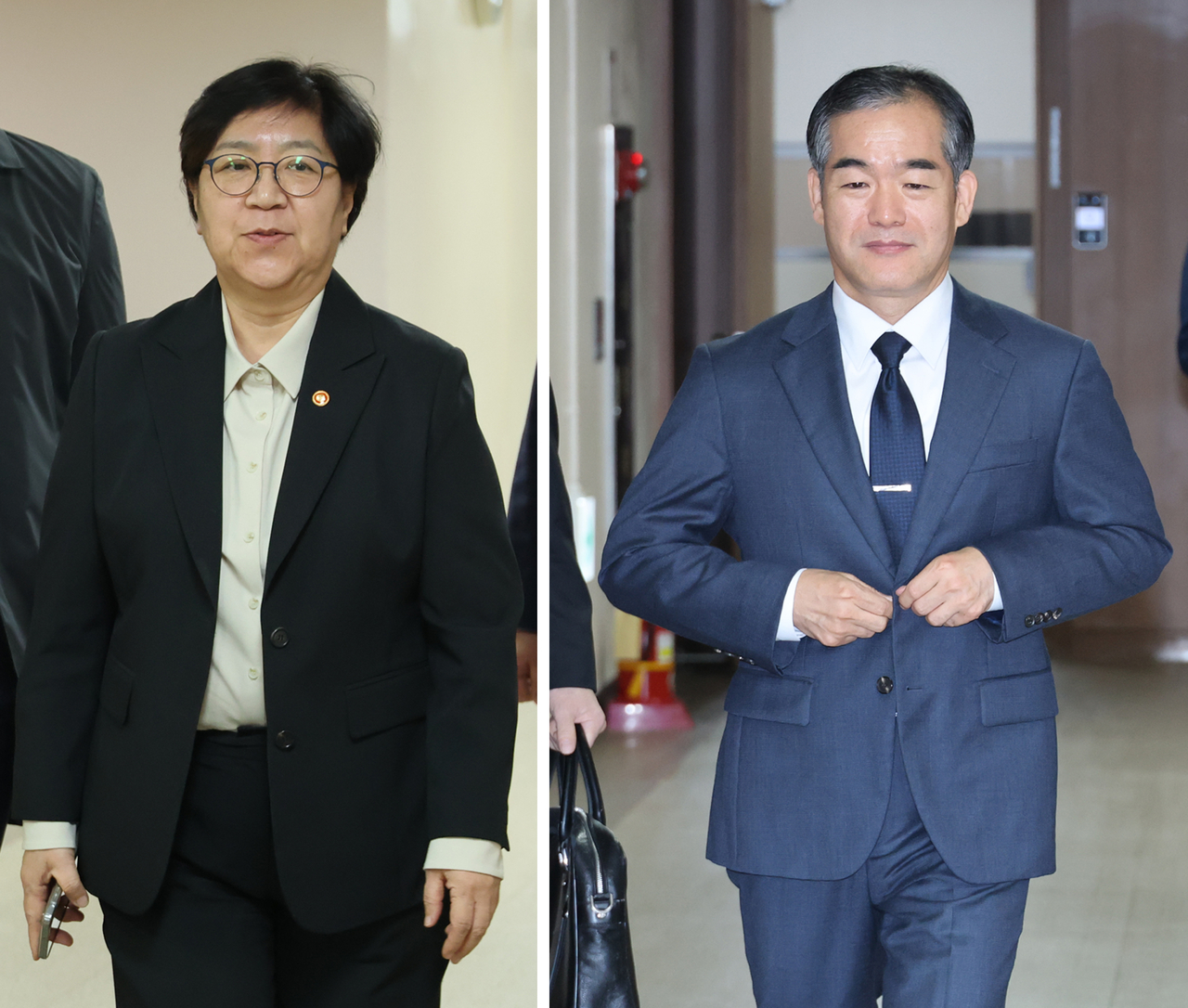
The Ministry of Health and Welfare said Minister Jeong Eun-kyeong and Korean National Police Agency Acting Commissioner General Kim Jong-cheol met Tuesday afternoon at Government Complex Seoul to discuss the search-and-seizure incident at Ajou University Hospital's pediatric emergency center.
The Korean National Police Agency agreed on the need to establish investigation guidelines for medical accidents in essential medical fields and plans to roll out the guidelines at investigation sites nationwide as soon as possible.
Under the new guidelines, when a 112 emergency call related to a death is received at an emergency room or other essential medical facility, officers will consult with the facility's administrator before entering the premises. They will also conduct their work in areas away from active emergency care whenever possible.
When investigating medical accidents in essential medical fields, officers will systematically consider patient safety and continuity of care — including accommodating urgent treatment needs and minimizing disruption to medical equipment and systems — while securing evidence.
Search-and-seizure operations will be limited to cases where there are reasonable grounds for suspicion or a clear connection to the case, in accordance with the Code of Criminal Procedure.
When executing search-and-seizure warrants, officers will prioritize non-clinical spaces and consult first with administrative and IT staff, carrying out the warrant within the minimum scope necessary to achieve investigative objectives.
Throughout the process, police plan to strictly observe due process — including guaranteeing the right to be present — and the conditions for execution specified in the warrant.
"This investigation guideline for medical accidents in essential medical fields is being developed on the basic principles of patient safety, minimizing the impact on continuity of care, and securing complete evidence," the Ministry of Health and Welfare said.
"I hope that by establishing these investigation guidelines, an environment can be created where frontline medical staff can work without anxiety," Minister Jeong said. "We will continue to discuss and cooperate with the medical community and the Korean National Police Agency going forward."
"I have deep respect for the medical professionals who dedicate themselves to protecting the lives of the people," Acting Commissioner General Kim said. "Police have conducted investigations carefully, respecting the expertise and unique nature of medical settings, and these guidelines will make that principle even clearer."
20ki@heraldcorp.com