Rate model adjusted downward at 4th TF meeting
Individual firms to give input for first time this month
FSC expected to take policy role in final adjustments
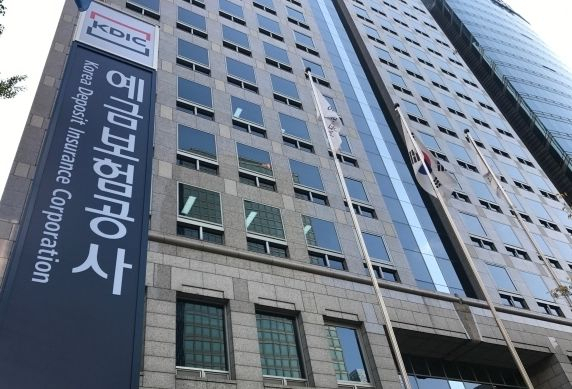
A prolonged dispute between the insurance industry and the Korea Deposit Insurance Corporation over proposed hikes to deposit insurance premium rates appears to be nearing resolution, after a revised proposal with a smaller increase emerged from the fourth task force meeting held last month, sources said. The development signals a shift in the broader financial sector reform debate — away from a technical battle over rate formulas and toward a phase of policy-level negotiation.
According to financial industry sources, the KDIC presented a revised premium rate proposal at the fourth TF meeting held Friday, adjusting its rate calculation model to produce figures lower than those in the original research report.
The research findings unveiled at the first TF meeting in July had called for steep increases across all sectors. Under that proposal, banks would see their rate rise from 0.08 percent to 0.13 percent, and securities firms from 0.15 percent to 0.22 percent. Life insurers faced an increase from 0.15 percent to 0.40 percent, non-life insurers from 0.15 percent to 0.50 percent, and savings banks from 0.40 percent to 0.54 percent. The insurance sector, which was looking at rates roughly 2.5 to three times the current level, pushed back hard, arguing that the methodology behind the proposed figures lacked transparency.
The mood in the industry shifted after the fourth TF meeting. "The downward adjustment that came out of the fourth TF through model recalibration was quite significant," an insurance industry official said. "If the discussion so far has centered on the structure of the rate formula itself, going forward it will likely move toward sector-by-sector adjustments." The official added that "the specific adjusted rates for each sector are still under discussion."
Future talks are expected to involve fine-tuning the model-derived rates through consultations among industry associations, the KDIC and regulators, with sector-specific adjustments made along the way. Observers expect the Financial Services Commission, which has not been directly involved in the rate-setting discussions until now, to take on a role in that process.
The KDIC has decided to begin collecting opinions from individual financial firms this month, in addition to the industry associations it has consulted so far. Until now, the Korea Federation of Banks, the Korea Financial Investment Association, the Korea Life Insurance Association, the General Insurance Association of Korea and the Korea Federation of Savings Banks have each represented their respective sectors at the TF. This will be the first time individual firms are consulted directly as part of the reform discussions. The specific firms to be included and the schedule have yet to be finalized. "We plan to gather input from individual financial companies in November, covering a range of firms from large to small across each sector," an FSC official said.
The push to raise premium rates stems from an increase in the deposit protection ceiling. When the limit was raised from 50 million won ($37,300) to 100 million won in September last year, concerns grew about potential fund shortfalls, making it urgent to secure additional reserves. "Discussions have continued to persuade the industry of the need to build up the fund," a KDIC official said.
With the National Assembly also raising concerns about the scale of the proposed increases, the final rates are widely expected to be set through a policy judgment rather than a purely technical process. KDIC President Kim Seong-sik said at a national audit on Oct. 19 that he would "try to gather as much input from the industry as possible and find common ground."
Meanwhile, the savings bank sector — which faces the highest rates among all financial sectors — is uneasy about further increases but is waiting to see how regulators decide. "The premium rate will likely come in lower than what the research report suggested," a Korea Federation of Savings Banks official said. "We expect it to land somewhere between 0.4 and 0.54 percent."
The burden varies by company size. Because deposit insurance premiums are calculated in proportion to average deposit balances, larger institutions face steeper additional costs from the same rate increase. "Even a small rise in the premium rate is a significant burden for large firms," an industry official said. "They may be more sensitive to increases than smaller ones."
Smaller firms are also worried about a hit to profitability. "If deposit-related costs rise, it will inevitably affect our bottom line," an official at a small savings bank said. At the same time, the lingering burden on the fund from the savings bank crisis of the past makes it difficult for the sector to mount an aggressive opposition. "Not raising the rate would be ideal, but if it is unavoidable, the increase should at least be kept to a minimum — especially given how difficult the current business environment is," another industry official said.
won@heraldcorp.com
snsd@heraldcorp.com