New integrated complex spans about 60,000 square meters along Gonghang-daero
Magok Open Library to hold 30,000 volumes, open to all
Multipurpose hall to double as public wedding venue; Seoul-style kids cafe coming next month
History and culture gallery traces Gangseo-gu's journey from founding to present
Former Hwagok-dong office to be redeveloped as cultural complex, not sold
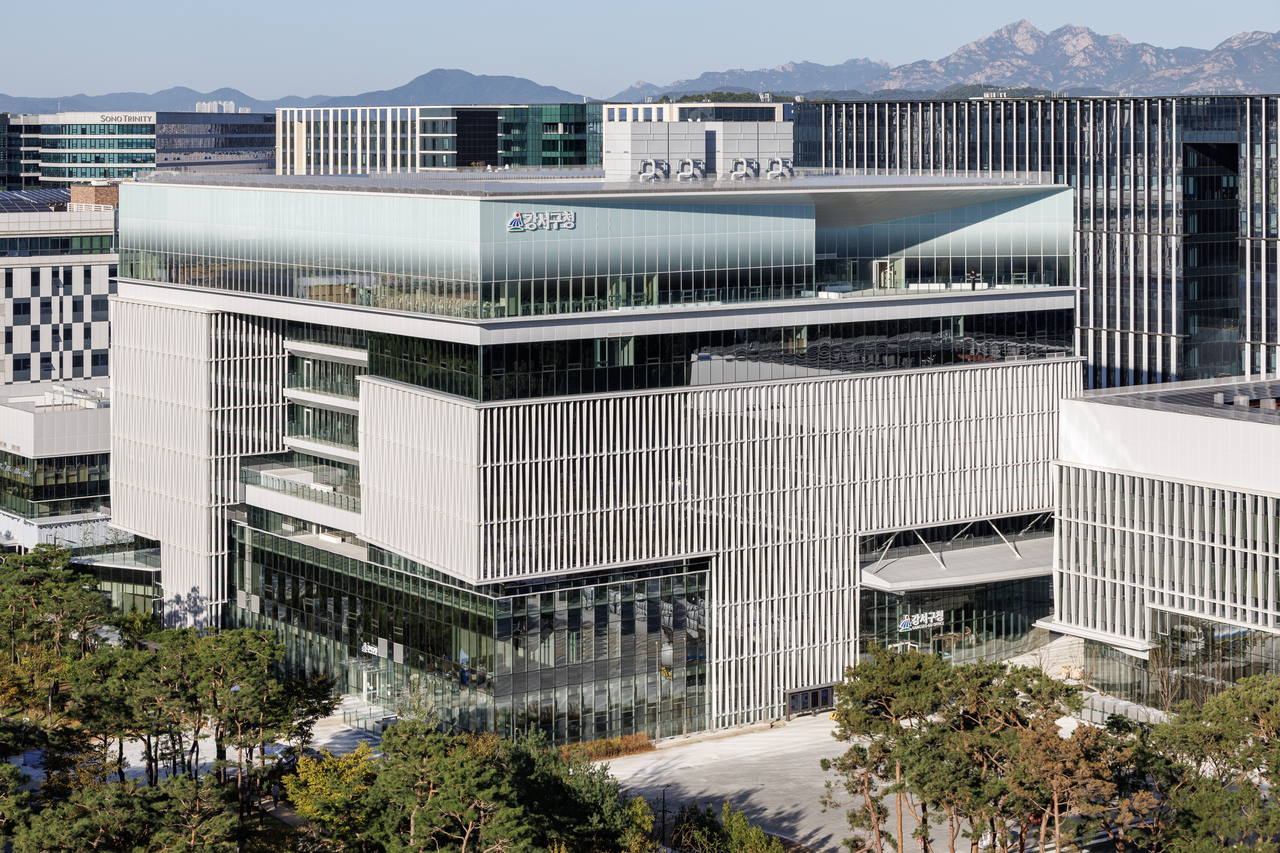
Seoul's Gangseo-gu has closed the chapter on its Hwagok-dong era and opened a new one in Magok — the district's first relocation in 49 years. The district office announced Wednesday that it had completed a month-long move last month from its former Hwagok-dong premises to the new integrated complex at 135 Gonghang-daero.
The new complex was years in the making: a master plan was finalized in 2020, the site was acquired in 2021, and construction began in April 2023. It comprises four buildings — the main district office, a public health center, the district council and an annex — on a 20,244-square-meter lot. Total floor area reaches 59,147 square meters, slightly more than eight soccer fields. The project cost 334 billion won ($249 million) in total.
More significant than the sheer size, officials said, is that offices previously scattered across the district have been brought together into a single, open space for residents. Until now, Gangseo-gu's administrative functions were spread across the main building, annexes in Hwagok-dong and Gayang-dong, the district council and the public health center, forcing residents to travel between multiple locations for routine administrative tasks.
Gangseo-gu District Mayor Jin Kyo-hoon introduced the new complex to reporters on Tuesday, saying it had "greatly improved operational efficiency by consolidating scattered administrative functions in one place" and that the district could now "provide better administrative services from a convenient and comfortable facility."
A visit to the complex on Tuesday confirmed the sense of openness: the ground floor features a wide, unobstructed central atrium. The old office was relatively inconvenient to reach by public transit, but the new complex sits a three-minute walk from Exit 1 of Magok Station on subway Line 5. A total of 405 parking spaces — more than the former site offered — also improve access for those arriving by vehicle.
The district said the new complex was designed to go beyond a purely administrative space, serving as a public and cultural hub where any resident can comfortably spend time.
The Magok Open Library, spread across the basement level and the ground floor, will hold a collection of 30,000 volumes and is being developed as an AI-focused library offering residents both knowledge resources and a place to relax. The multipurpose hall on the second basement level will operate as a public wedding venue every weekend, free of charge to any Seoul resident — a benefit the district expects will help couples planning a budget-friendly wedding. Next month, a Seoul-style kids cafe — an indoor play space where children can run freely — will open on the third floor of the annex.
On the ground-floor lobby, the district has created a history and culture gallery tracing Gangseo-gu's past, present and future. A large screen plays footage spanning the district's history, while archival materials and commemorative plaques document its journey from its founding in 1977 to the present day. The space is intended to foster cultural pride among residents and serve as a landmark that reflects the district's identity.
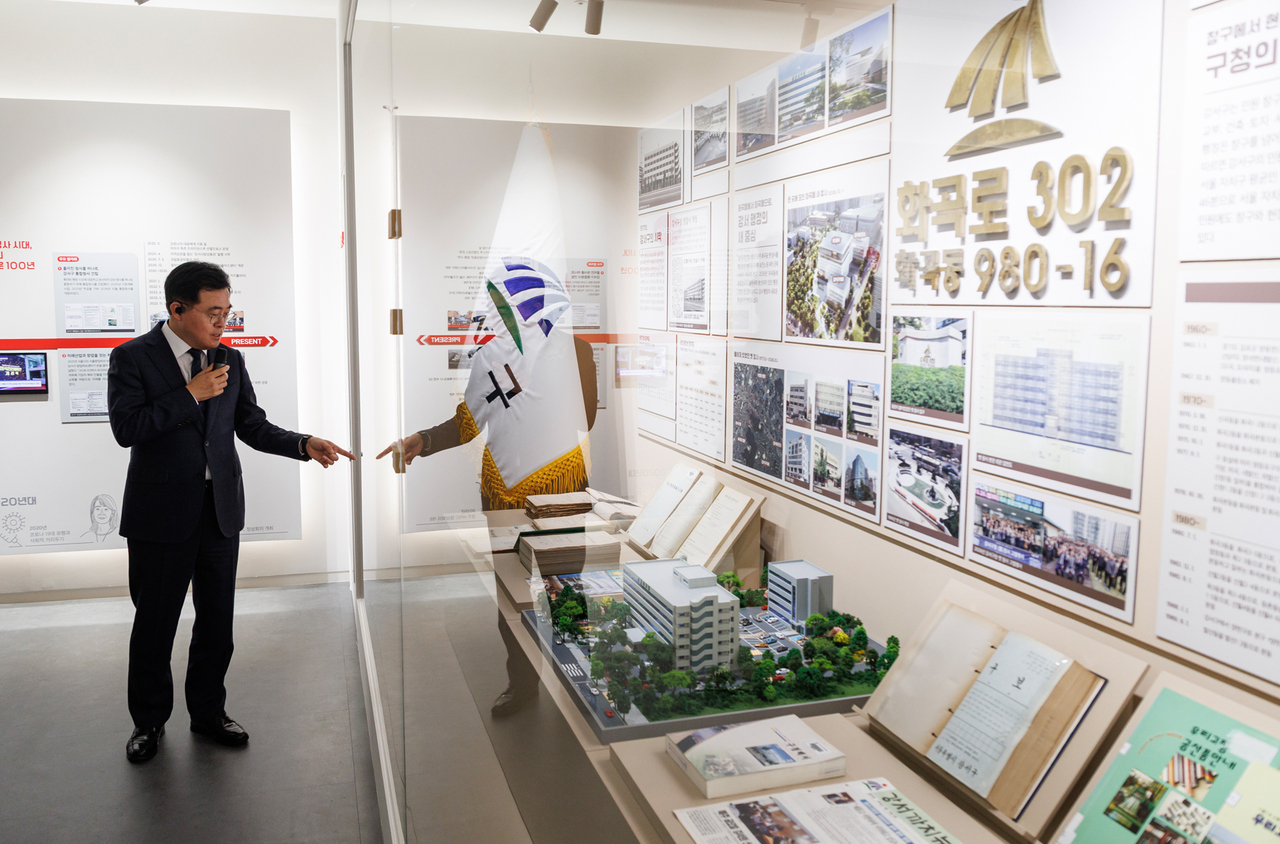
Jin said the gallery was created because he "wanted to give Gangseo-gu residents a space where they could see and remember our neighborhood's yesterday, today and tomorrow."
The vacated Hwagok-dong complex is set to be reborn as a cultural hub that will inject new energy into the older part of the district. The district plans to first convert the former site into a public parking lot to ease the chronic shortage of spaces near the surrounding restaurant district, then develop it over the long term into a mixed-use cultural facility spanning four basement levels and nine above-ground floors. The planned facility would include a performance hall with roughly 1,000 seats, along with a library, sports facilities and commercial spaces.
Jin said the district would "not sell the former site, but instead develop it into a cultural and leisure space for residents to revitalize the nearby commercial district and achieve balanced development with the older part of the city."
Jin added that the opening of the new complex was "a new milestone and starting point for Gangseo-gu to leap toward a greater future," pledging to "throw open the doors of the district office, make it an open space that any resident can visit comfortably, and channel our consolidated administrative capacity into a new engine of growth for Gangseo-gu."
ikson@heraldcorp.com