Last-minute strategies for Korean, math and English sections
Korean: check passage conditions against answer choices
Math: back-substitute answer choices; English: use connectives and pronouns
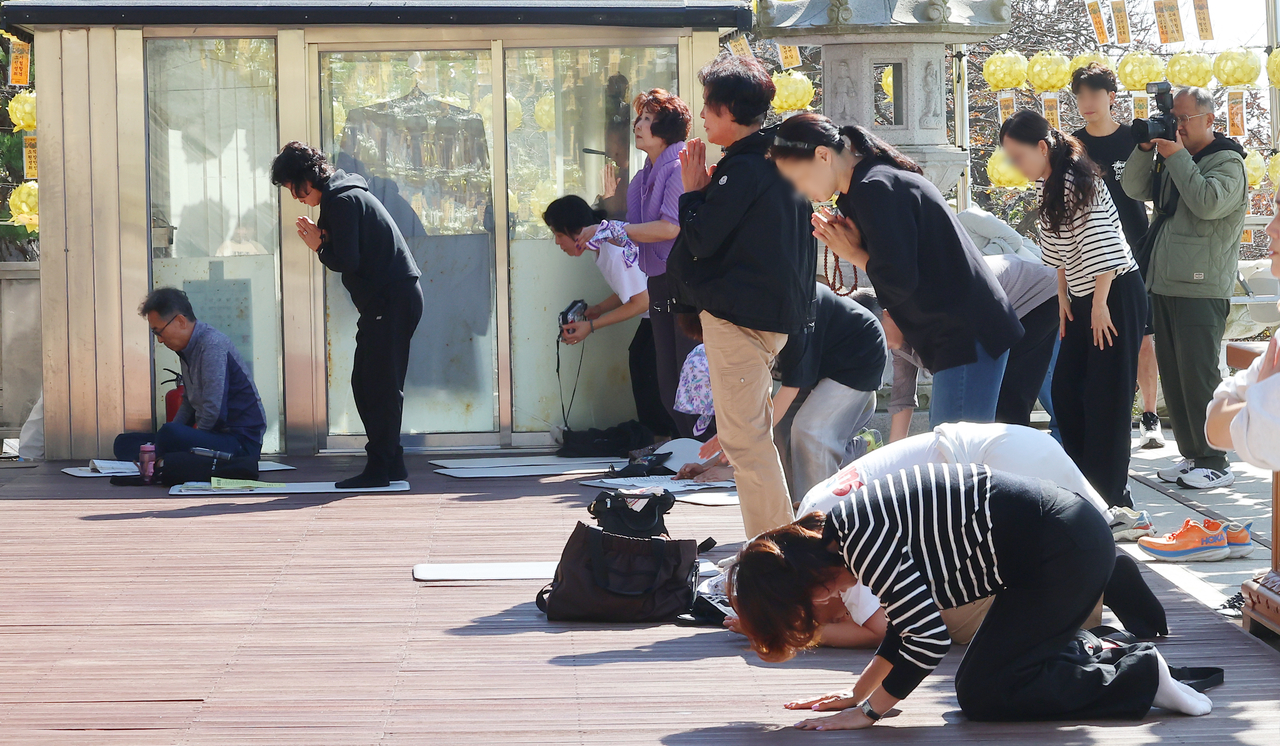
When students hit a question they cannot answer on the College Scholastic Ability Test, what should they do first? The more pressed for time they are, the more important it is to comb the passage and question for remaining clues and eliminate clearly wrong answers before guessing. The key is to secure the questions they can get right rather than banking on which answer numbers have come up most often in the past.
Etoos Education's Education Assessment Research Institute released section-by-section problem-solving strategies for the Korean, math and English portions of the 2027 CSAT on Thursday, two weeks before the exam, along with an analysis of correct answers from the past five years.
For the Korean section, students should compare the wording of answer choices against the conditions stated in the passage. Absolute expressions are the most telling clues — specifically words meaning "always," "without exception," "only" and "all." If the passage says something applies only in certain situations but an answer choice broadens that to all situations, it is likely wrong. However, students should not rule out a choice simply because it contains an absolute expression.
In science, technology and economics passages, students should also pay attention to what is being compared. A description of something as fast or expensive depends entirely on what it is being measured against. Checking whether an answer choice uses the same basis for comparison as the passage can help identify wrong answers. For literary passages that are hard to understand, students may refer to the interpretive perspective provided in the reference box, but should also verify it against the actual expressions and situations in the work.
For multiple-choice math questions, students can back-substitute the values in the answer choices. When a question asks for the solution to an equation or a specific value, the approach is to check whether the numbers in the answer choices satisfy the given conditions. However, if even the substitution process is complicated, it is better to move on to the next question rather than getting stuck.
For short-answer questions with no answer choices, narrowing down the range of the answer comes first. Students should consider whether the answer is a natural number, whether it is greater or less than a certain value, and whether it is a multiple of some number. Even without completing the full calculation, the conditions for the answer can often be found in an expression or graph.
In the English section, connectives and pronouns can provide clues even when students cannot parse every sentence. "But" and "however" signal a contrast between what comes before and after. "For example" is followed by a specific case. Identifying what "this" and "these" refer to also helps with questions about sentence order and where to insert a given sentence.
For questions about the main topic, title or gist, students should be wary of answer choices that describe only part of the passage or introduce content not found in it. For chart questions, students must check not only the figures but also what is being compared and the order in which items are ranked.
A review of correct answers from the past five years also found instances of certain numbers repeating. The correct answer to Question 25 — the chart question in the English section — was choice No. 4 on every CSAT from the 2022 through 2026 academic years. Over the same period, the 20 short-answer responses to Questions 16 through 19 in the common math section produced no three-digit answers. By contrast, five of the 15 answers to Questions 20 through 22 were 100 or above, as were 15 of the 30 answers to Questions 29 and 30 in the elective math section.
Past answer distributions, however, do not reveal what the correct answers will be this year. Automatically choosing or ruling out a particular number can cause students to miss the evidence embedded in the question itself.
"Rather than going on instinct, eliminate wrong answers based on the content of the passage and the conditions of the question," said Kim Byong-jin, director of the Etoos Education Assessment Research Institute. "It is important to secure as many answerable questions as possible within the time limit."
brunch@heraldcorp.com