LH, SH announce compensation plan; objections accepted through Nov. 13
Landowner resistance over payouts, rental housing ratio seen as risk to timeline
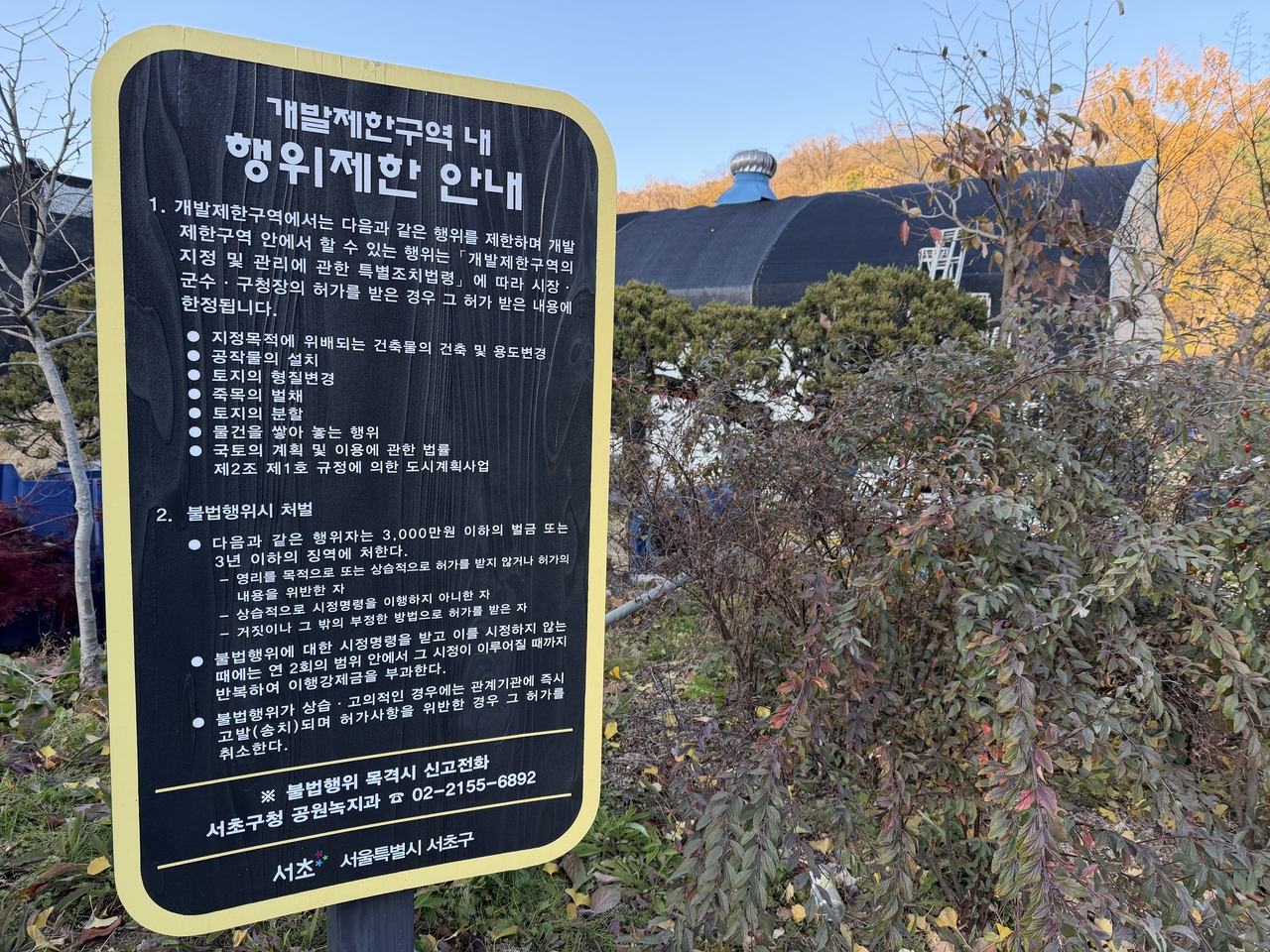
Land compensation procedures for the Seoripool 1 public housing district in Seocho-gu, Seoul, are set to begin in earnest next year. The Seoul Housing & Communities Corporation has launched a procurement process for services covering ownership transfer registration and compensation deposits under compulsory acquisition rulings, while the Korea Land and Housing Corporation plans to begin negotiated compensation in the first half of next year and complete compulsory acquisition proceedings by the second half.
According to SH, the corporation recently published preliminary specifications for a "Seoripool 1 Public Housing District Ownership Transfer Registration and Deposit Service" contract. The project is valued at approximately 330.86 million won ($247,000), with the service period running from the contract signing date through Dec. 31, 2027.
According to the task order, the contract covers not only ownership transfer registration under negotiated compensation agreements but also the deposit of compensation funds under compulsory acquisition and objection rulings, cancellation of existing encumbrances, and investigations into heirs and property rights.
A compulsory acquisition ruling is a procedure in which a land expropriation committee determines whether land should be acquired and sets the compensation amount when a project developer and a landowner fail to reach an agreement. Once the developer pays or legally deposits the compensation determined by the ruling, it acquires ownership of the land on the designated acquisition date. The contract is understood to be a preparatory measure for the follow-on procedures required for forced acquisition in the event that negotiated compensation talks next year break down.
LH also plans to complete compulsory acquisition proceedings next year. "LH likewise plans to begin negotiated compensation in the first half of next year and complete compulsory acquisition rulings by the second half," an LH official said. "The specific compensation amounts will be determined at the project approval stage."
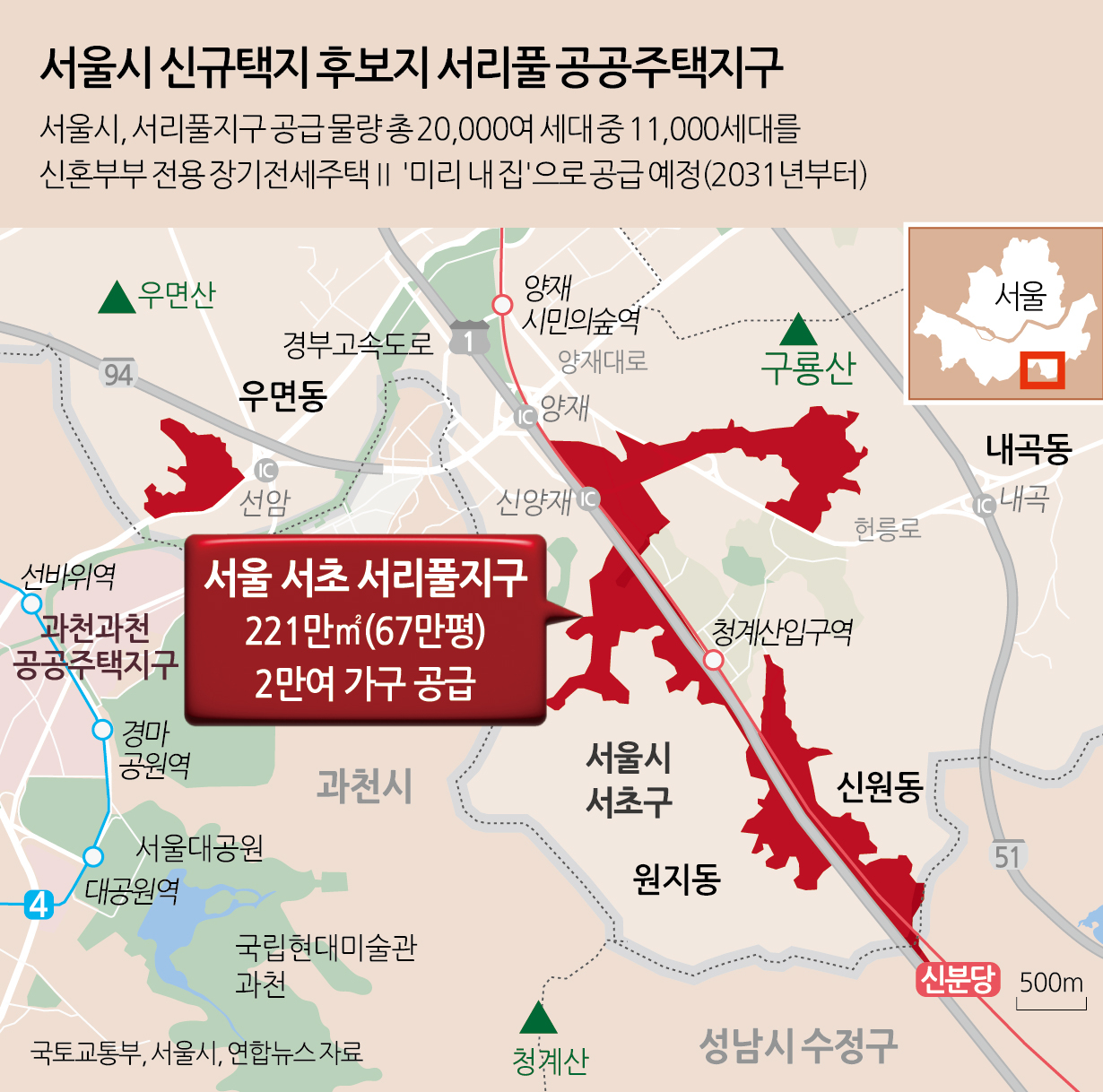
The Seoripool 1 district involves lifting greenbelt restrictions on approximately 2.018 million square meters of land across the Naegok, Yeomgok, Sinwon and Wonji neighborhoods of Seocho-gu, Seoul, to supply 18,000 public housing units. LH and SH are co-developers, with LH handling land compensation for Zones 1 and 4 and SH responsible for Zones 2 and 3.
Since the area was designated a public housing district on Feb. 2, follow-on permitting and land compensation preparations have been accelerating. LH has submitted a district plan approval application to the Ministry of Land, Infrastructure and Transport and is pursuing a plan to designate parts of the district as priority development zones to bring forward housing supply.
On Friday, LH and SH jointly announced a compensation plan. The two agencies will accept applications to review land and property registers and file objections through Nov. 13, after which they will select appraisal firms and determine compensation amounts through formal valuations. Compensation amounts are in principle set by arithmetically averaging the assessments of three or more appraisal firms. Actual compensation payments are scheduled to begin after March next year.
LH is pursuing permitting and compensation procedures in parallel, targeting district plan approval in March next year. The housing groundbreaking, originally planned for 2029, has been moved forward to the second half of 2028, with a first pre-sale targeted for 2029. The overall project is scheduled for completion through December 2035.
Resistance from landowners over compensation terms and the housing supply plan remains a potential obstacle to the project's progress. Landowners in the Seoripool 1 and 2 public housing districts held a rally near Cheong Wa Dae's Sarangchae on Oct. 29 alongside residents from other public housing land development sites, calling for adjustments to compensation terms and supply plans. About 500 residents from eight project sites nationwide — including the Seoripool district as well as Osan Segyo 3, Hwaseong Jinan and Pyeongtaek Jije — were reported to have attended.
Landowners say compensation payments alone will not allow them to resettle in the area after development, given that their property rights have been restricted for years under greenbelt regulations. They are particularly opposed to the Seoul Metropolitan Government's plan to supply 11,000 of the approximately 20,000 units planned for the Seoripool 1 and 2 districts — 55 percent of the total — as "Mirinaezip," a long-term jeonse housing program for newlyweds. The residents' committee argues that when additional public rental units beyond Mirinaezip are included, the overall rental housing ratio could reach 80 percent, and has called for that share to be reduced to around 35 percent with a corresponding expansion of public sale units.
Under public housing law, developers can acquire land through compulsory acquisition rulings even without reaching agreement with landowners. Prolonged resistance, however, could fuel ongoing disputes during the compensation and land handover process. Resolving the conflict over compensation has been identified as a key challenge for the project as the government and developers push to accelerate the housing supply schedule.
Seo Jin-hyung, a professor in the real estate law department at Kwangwoon University, said compensation for greenbelt land is based on current value, while landowners factor in future development gains — making a gap in perceptions of fair compensation inevitable. "Not only in the Seoripool district but across the many greenbelt-release housing supply projects in the pipeline, securing residents' cooperation and reaching agreements through compensation negotiations as quickly as possible will be critical to keeping projects on track," Seo said.
quq@heraldcorp.com