Naver and Google are racing to put user-generated content at the center of their search services.
Naver has rolled out a new search feature that groups user experiences and reviews by topic, while Google has unveiled a program that lets external online communities feed their latest posts directly into its search index. As competition in AI-powered search intensifies, content rooted in real user experience is emerging as a key differentiator.
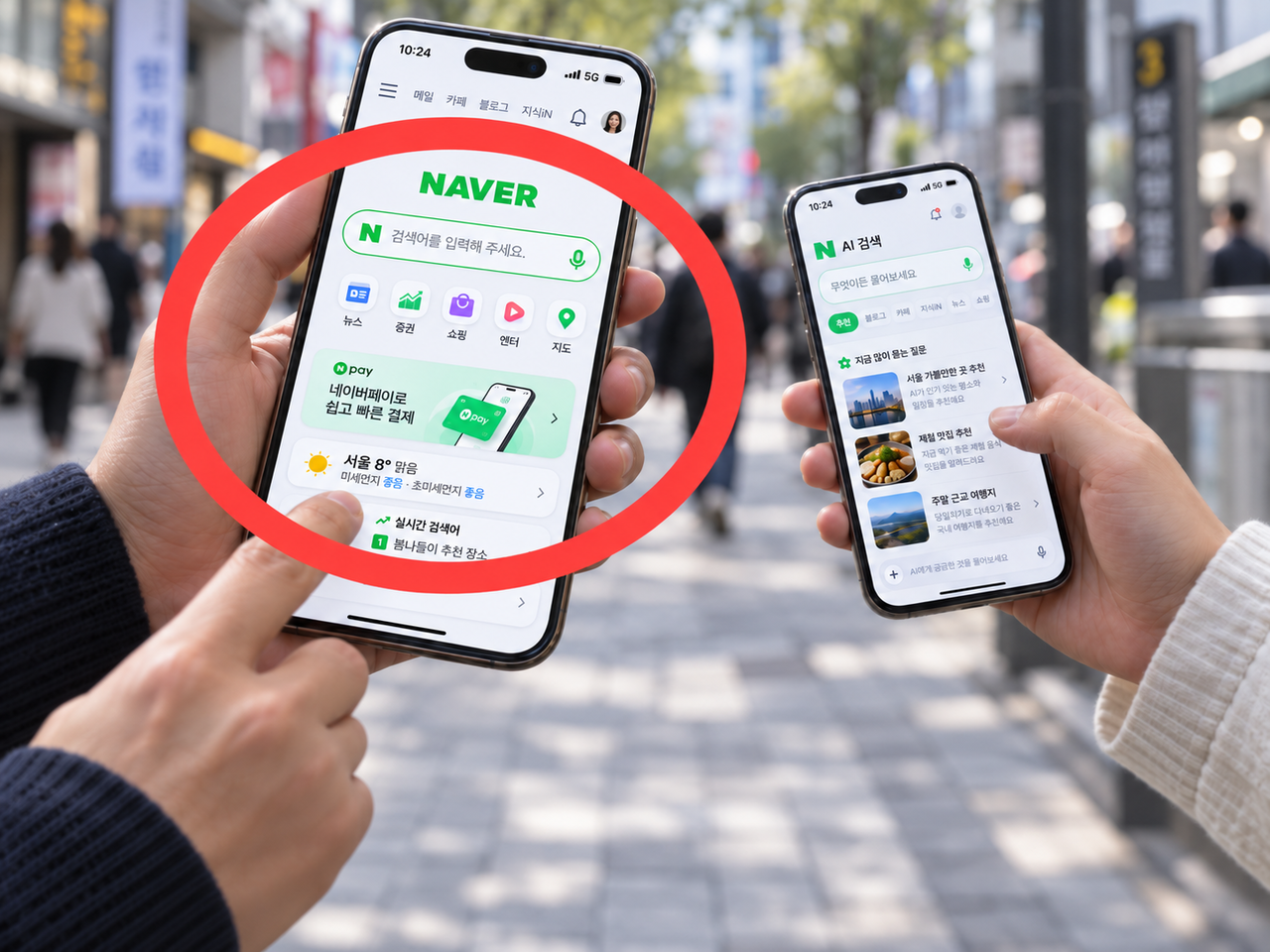
According to the IT industry, Naver introduced an "experience UGC block" to its search service on Thursday, organizing posts around shared topics of interest rather than simply listing results for a given keyword.
When a user searches "Fukuoka travel," for example, subtopics such as "Fukuoka day trips to nearby areas" appear in the results, accompanied by related posts from Naver blogs and cafes. The feature lets users compare experiences and reviews relevant to their interests without sifting through individual posts one by one.
Rather than displaying full post text, the feature excerpts only the portions relevant to each subtopic. Comments on cafe posts are also shown, and short tags summarize the experiences described in each post so users can grasp at a glance what the author actually did or encountered.
Naver is leveraging its own UGC ecosystem as a core competitive asset — connecting accumulated data from its blogs, cafes and Knowledge iN service directly to its AI search offering, rather than relying solely on crawling external websites.
In-house UGC already accounts for a substantial share of Naver's AI search output. According to Naver, as of January this year, its own UGC made up 70 percent of the content cited in AI briefings.
Naver announced in May that it plans to invest 1 trillion won ($745 million) in its content ecosystem over the next five years. It has also launched a "Naver Mate" program that selects top creators frequently cited in AI briefings and pays them activity fees — a strategy aimed at encouraging content production and channeling it back into search competitiveness in a virtuous cycle.
Naver is also pushing back against unauthorized data collection by outside AI companies. Since last year, it has blocked external AI crawlers from accessing its UGC by default.
Google is similarly focused on enhancing UGC-driven search, though its approach differs from Naver's in one key respect: rather than drawing on a proprietary content ecosystem, it is leaning heavily on partnerships with external platforms.
On Oct. 8, Google unveiled its "UGC Fresh Data Program," which allows online communities and social media platforms to transmit their latest posts and user-engagement data directly to Google.
Unlike the conventional method in which Google's search crawlers collect information from web pages, the program gives approved platforms a dedicated data-transmission channel to send user-response data straight to Google — a move aimed at reflecting fast-changing community content in search results more quickly.
This is not Google's first push to secure UGC data. The company previously expanded its data partnership with Reddit, the US online community platform, in 2024, gaining access to Reddit's API to receive real-time posts and structured data.
chami@heraldcorp.com