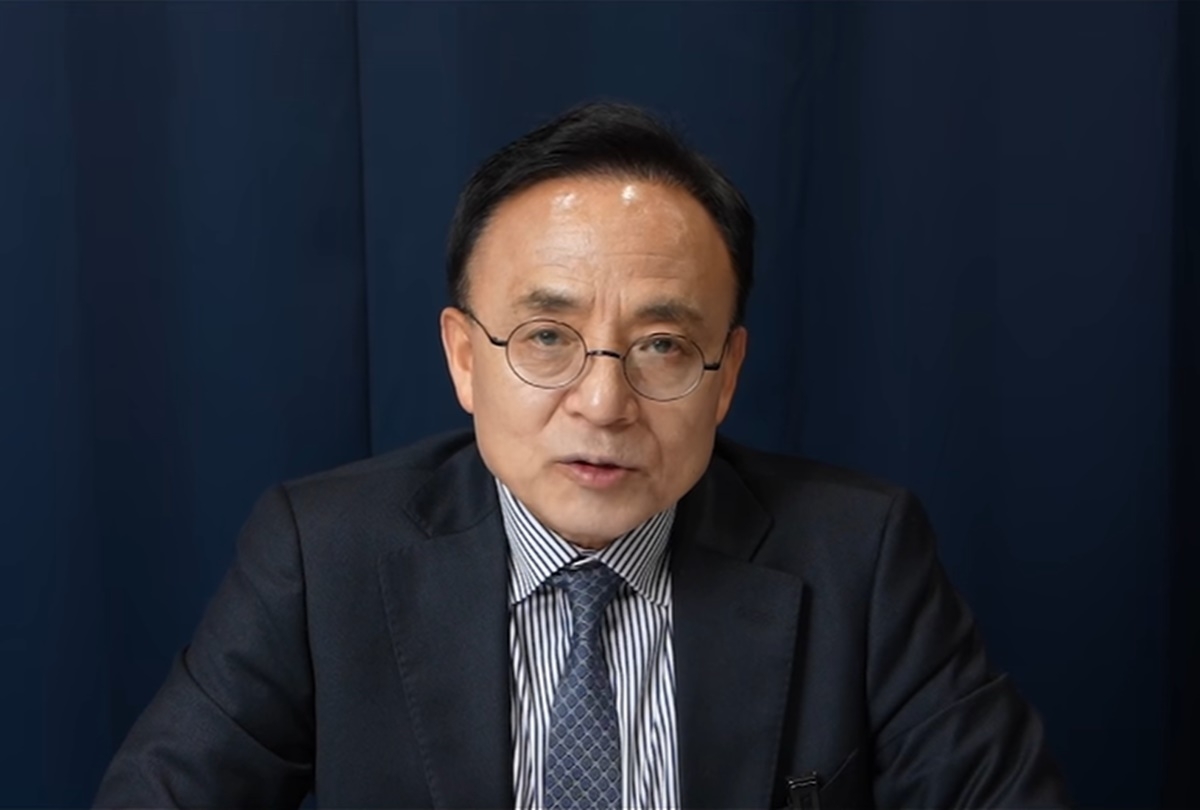
Kim Young-ik, an adjunct professor at Hanyang University's Future Talent Education Institute, is drawing renewed attention after the Kospi slipped below the 5,000 mark for the first time in roughly 10 months — a drop he had warned about three months ago.
While major brokerages had projected the Kospi's second-half range at 6,000 to 10,000 this year, the index plunged below 5,000 on Friday, prompting investors to declare Kim the stock market's unlikely winner of the moment.
In August, Kim appeared on the Chosun Ilbo YouTube channel "Kwak Gija's Reporting Notebook" and warned that the Kospi had "completely lost its upward momentum," saying the index could break below 5,000 in a worst-case scenario.
At the time, Kim cited a slowdown in South Korea's exports as a clear bearish signal and advised investors to boldly cut their equity allocation to around 20 percent of their financial assets.
As early as July, Kim had flagged the possibility of a second-half correction, noting that the Kospi had surged 101 percent in the first half of the year. He pointed out that the news sentiment index, which tends to lead the composite leading index by about five months, had already been declining since March.
When markets rebounded in September, Kim again warned of overvaluation in US equities and a bubble in AI investment. In October, he put the Kospi's floor at 4,500 to 5,000.
'Range-bound through next year — holding cash is also an investment'
Kim continues to warn of a medium- to long-term decline in domestic equities, saying a clear recovery is unlikely anytime soon.
On Tuesday, he said that "once the leading index turns down, it tends to fall for about 20 months," adding that share prices may struggle to rise significantly through next year.
He also said a range-bound correction would likely persist "for at least another year," stressing that patience is key in such an environment. "Waiting with cash in hand is also a form of investment," he said.
Kim advised retail investors to focus on risk management through asset allocation rather than buying more shares. He recommended reducing equities to about 20 percent of financial assets and holding the remainder in cash-equivalent instruments, including short-term bonds.
For those with heavy equity exposure, he said a gradual reduction strategy — using any market rebound as an opportunity to trim holdings — would be prudent.
Major brokerages, however, are maintaining a more optimistic view, identifying the 5,000 level as a strong support line for the Kospi.
IBK Investment Securities said noise around the AI sector outlook and the possibility of Federal Reserve rate hikes had already been "substantially priced in," and forecast that the Kospi would find a bottom in the mid-5,000 range — its price-to-book ratio of 1x and the 60-day disparity line — before staging a November rebound.
Samsung Securities said the 5,000 level, a psychological floor, would hold "as long as a full-scale downward revision to corporate earnings forecasts does not materialize."
bbo@heraldcorp.com