Tentative deal rejected after 140 days of talks
Renegotiations begin; third strike possible
Contrast with peers that have wrapped wage deals
Q3 operating profit hits 455 billion won, up 66%
Pohang and Gwangyang communities warn of prolonged impact
Posco finds itself unable to celebrate even as expectations for a steel-sector rebound grow. A tentative labor agreement reached after 140 days of negotiations was voted down by union members, leaving management and the union unable to narrow their differences — and raising fears that the conflict could deepen into a rift within the union itself.
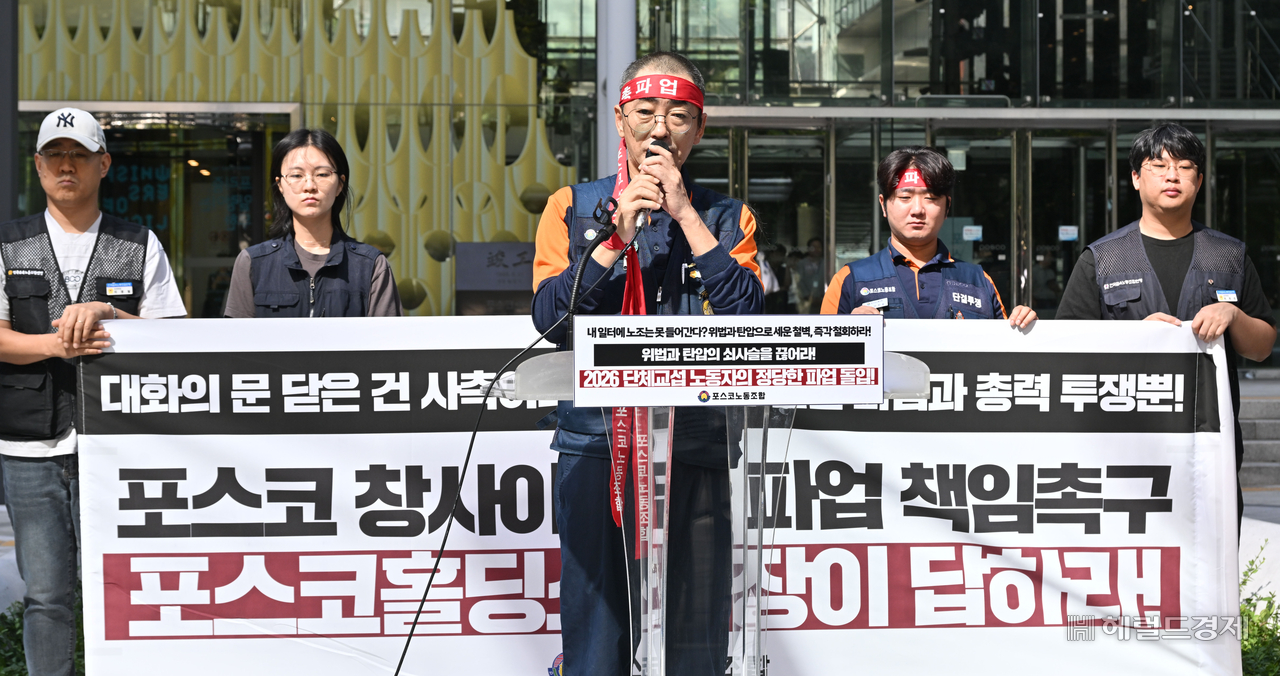
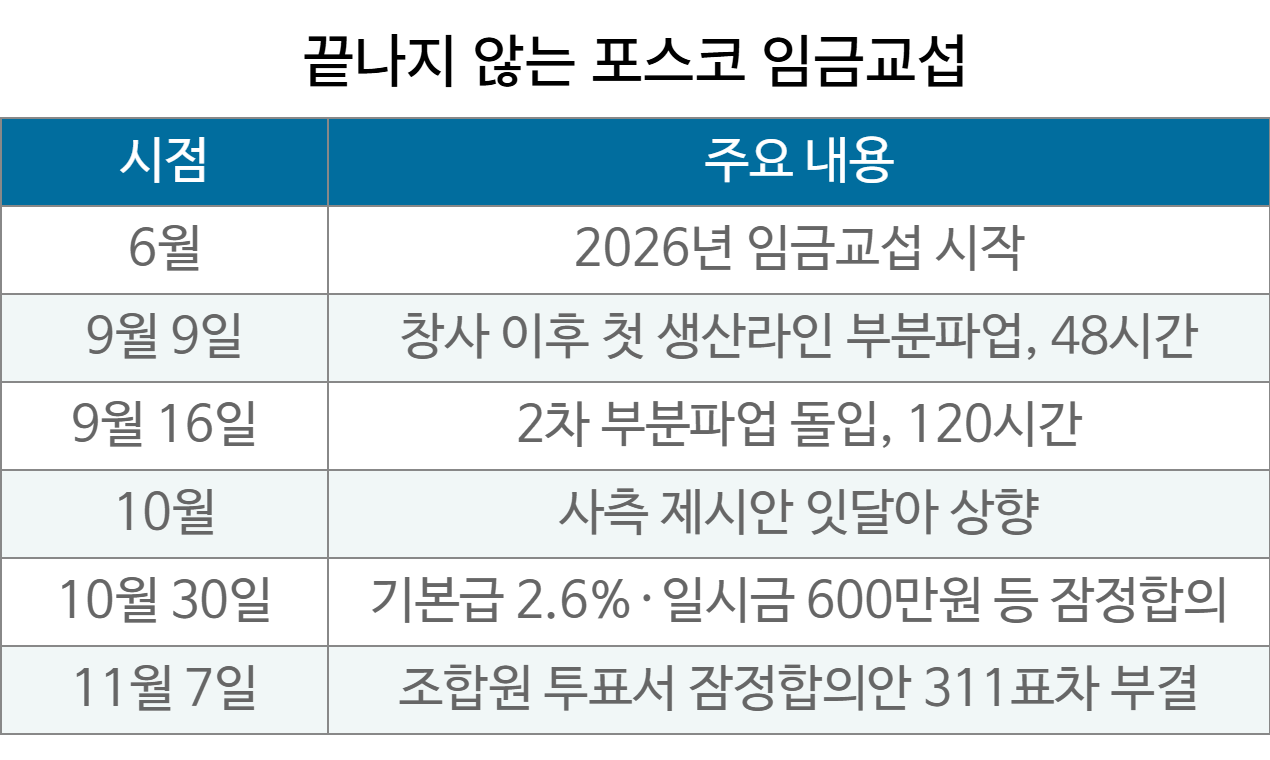
According to industry sources Monday, the Federation of Korean Trade Unions' Metal Workers' Federation Posco Labor Union is set to return to the bargaining table with management this week to work toward a new agreement. Union Chairman Kim Sung-ho said immediately after the tentative deal was rejected Saturday, "We take the members' decision seriously and will resume both negotiations and labor action."
The union now faces a difficult internal calculus. Of the 9,424 eligible voters, 9,177 cast ballots — a turnout of more than 97 percent — yet the margin between the 4,433 votes in favor and the 4,744 against was just 311. Member opinion was effectively split down the middle. Hardliners within the union are calling for a better deal, while a more cautious faction argues that a compromise between the two camps must be found.
Management faces its own difficulties in putting together a new offer. The rejected tentative agreement included a 2.6 percent base-pay raise, a one-time payment of 6 million won ($4,470), a three-step special promotion, expanded holiday bonuses, various allowances and broader medical expense support. Since talks began in June, the company had tabled six successive proposals over roughly five months, gradually improving its terms. Having seen even that hard-won package rejected, management now faces added pressure to craft a new offer capable of winning majority support.
A Posco official said after the vote, "We will continue sincere communication, giving deep thought to business conditions and the sentiments of our employees, so that we can find an amicable resolution."
Another strike during the renegotiation process cannot be ruled out. The union staged the company's first-ever partial strike targeting production lines — a 48-hour walkout — in September, followed by a second partial strike lasting 120 hours.
Core business rebounds, but internal uncertainty grows
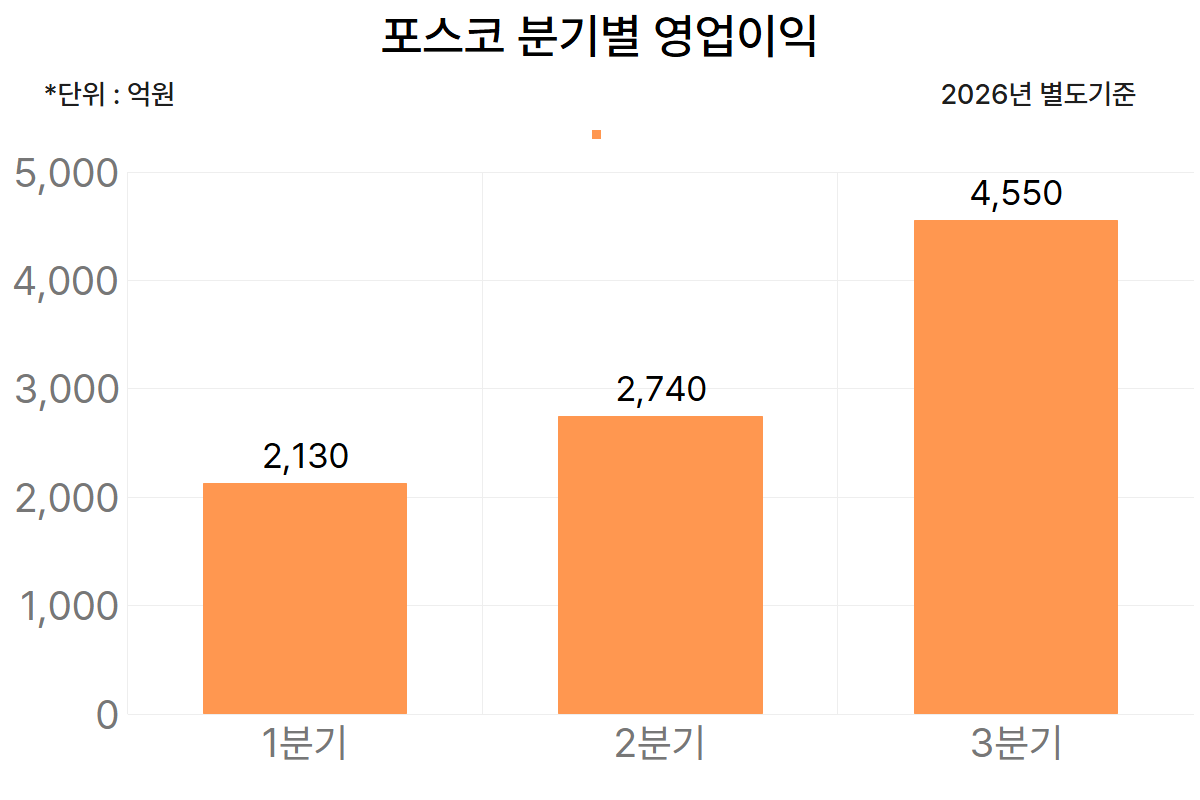
Industry watchers warn that the rekindled labor-management risk could undercut the clear recovery signals emerging from Posco's core steel operations. The company's standalone operating profit for the third quarter reached 455 billion won, up about 66 percent from 274 billion won in the second quarter. After hovering at 213 billion won in the first quarter and 274 billion won in the second, operating profit climbed back above the 400 billion won mark for the first time in four quarters.
Both selling prices and sales volumes improved. Posco's product sales volume rose from 8.357 million tons in the second quarter to 8.559 million tons in the third. The average selling price of carbon steel climbed 20,000 won per ton — from 962,000 won to 982,000 won — while the operating profit margin improved from 2.9 percent to 4.6 percent over the same period.
Cost reductions also supported the earnings improvement. Lower logistics and operating expenses in the third quarter contributed roughly 159 billion won in operating profit gains quarter-on-quarter. The combination of higher sales volumes, improved pricing and cost efficiencies points to recovering profitability in Posco's core steel business.
Posco is also pushing to shift away from price competition in commodity steel and increase the share of high-value-added products for the automotive, shipbuilding and energy sectors. The strategy is to upgrade its product mix and improve profitability in the face of a flood of low-cost Chinese steel and a prolonged slump in the domestic construction market.
Adding to the industry's tailwinds, legislation to strengthen the competitiveness of the steel sector and support its low-carbon transition — commonly known as the K-Steel Act — took effect this year, establishing a policy foundation for industrial restructuring. The law focuses on boosting the domestic steel industry's competitiveness through low-carbon steel certification, the designation of special zones and support for business restructuring.
Discussions are also under way in the National Assembly over a domestic production tax credit the steel industry has long sought. With large-scale capital outlays required for low-carbon equipment upgrades and hydrogen-based steelmaking, the industry views the current convergence of policy support and recovering profitability as a pivotal moment to restore the competitiveness of South Korea's steel sector.
Concern is also mounting in the communities that depend on Posco. In September, Pohang city held an emergency meeting to assess the strike's potential impact on the local economy, reviewing the situation of partner companies' operations and employment as well as conditions facing small businesses and traditional markets. The city also prepared support measures — including business stabilization funds and special guarantees for small merchants — in anticipation of a prolonged walkout.
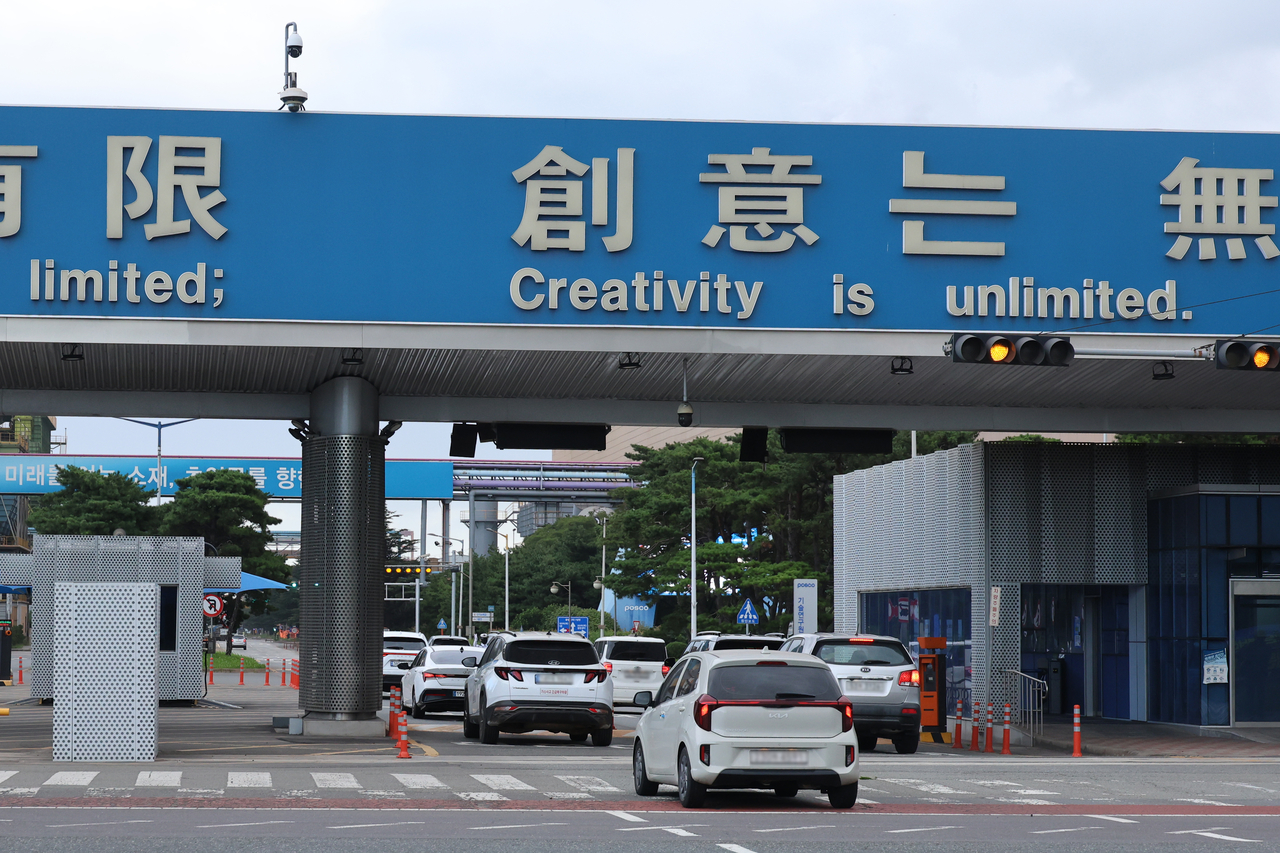
Voices of concern have also been raised in Gwangyang. Gwangyang Mayor Park Sung-hyun urged a swift resolution at the time, saying, "If the labor-management conflict drags on and leads to production disruptions, it could place a considerable burden on the lives of Gwangyang residents and the local economy as a whole." Gwangyang Chamber of Commerce Chairman U Gwang-il also called on both sides to negotiate responsibly, saying, "Posco's competitiveness is directly tied to the survival of the local economy."
An industry official said, "The steel market remains difficult, but recent Posco earnings show signs of a rebound, and policy discussions to strengthen industrial competitiveness are moving forward. If labor risk flares up again at this juncture, it will inevitably weigh on a company that needs to focus on productivity and future investment."
kwater@heraldcorp.com