Editor's note
We tell stories through paintings — exploring the issues, the histories and the human desires and anxieties embedded in art. We begin with a single canvas, then step out beyond the frame.
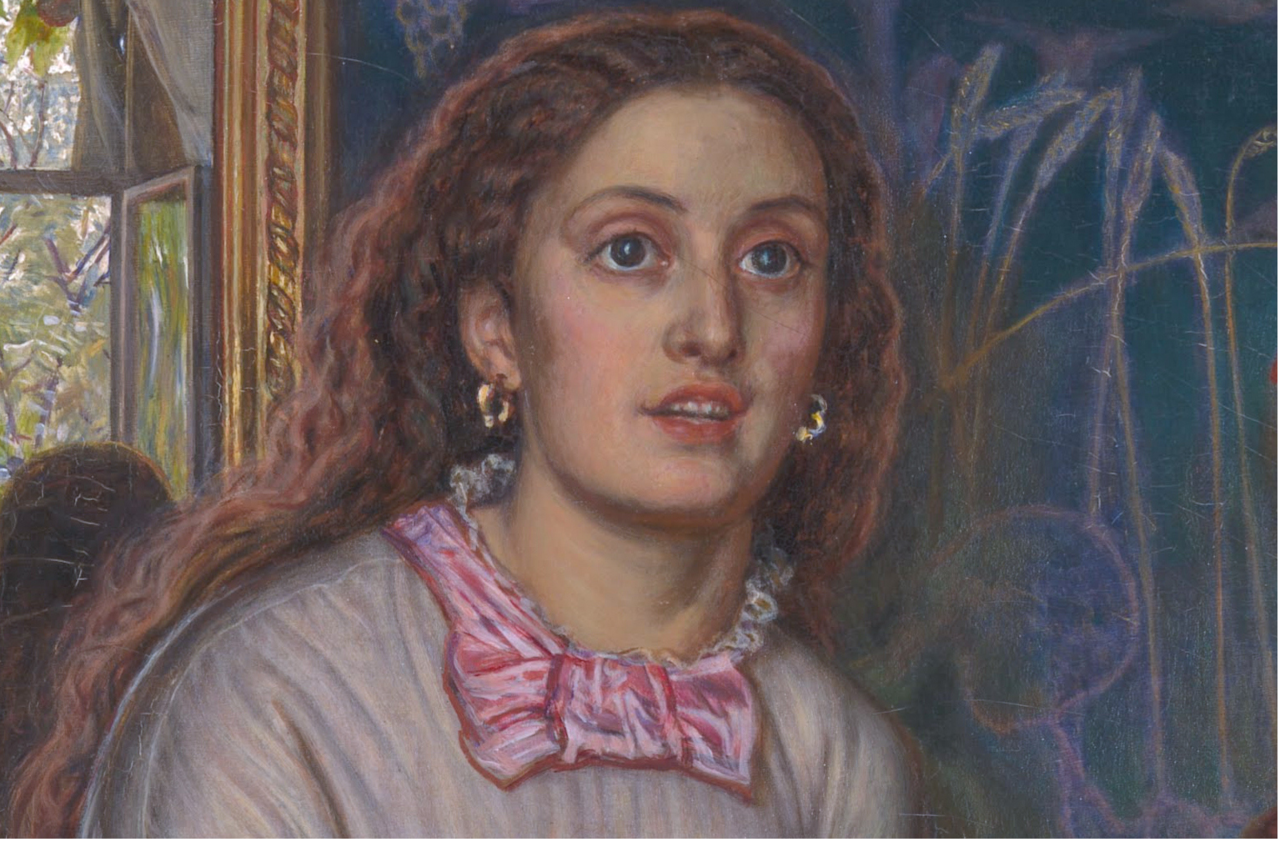
...Why am I doing this?
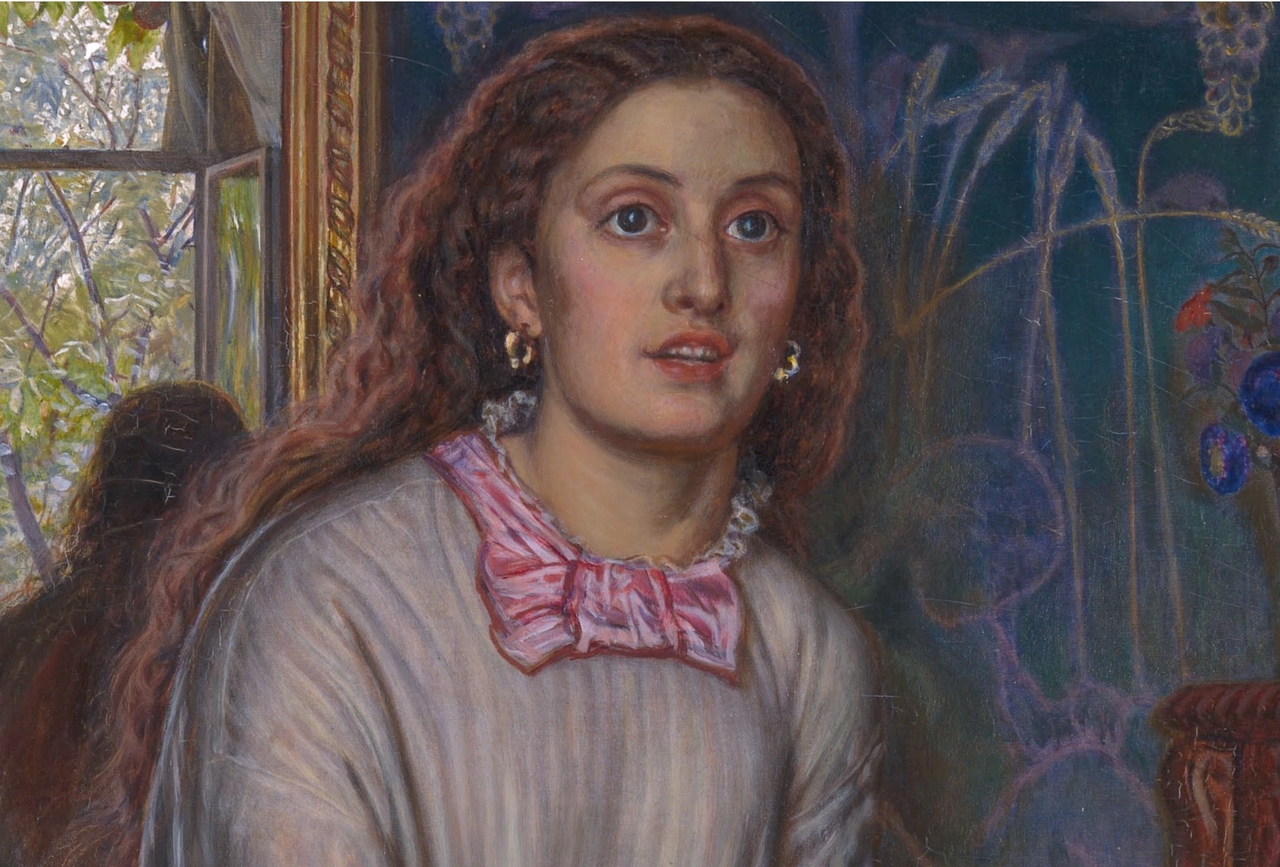
The woman opens her eyes. She pauses, suddenly taking stock of the moment — prompted by the words drifting into her ears.
The man on whose lap she sits, grinning broadly, is humming a song. Its title is "Oft in the Stilly Night."
The smiles, the tears of boyhood's years,
the words of love then spoken,
the eyes that shone, now dimmed and gone...
It is unmistakably the folk song she once sang with friends in her girlhood. Back then, she had dreams that shone. The woman is suddenly able to reach back into the past — or more precisely, to hold the past up against the present. The man, whether or not he grasps the meaning of the lyrics, is absorbed in stroking her once more.
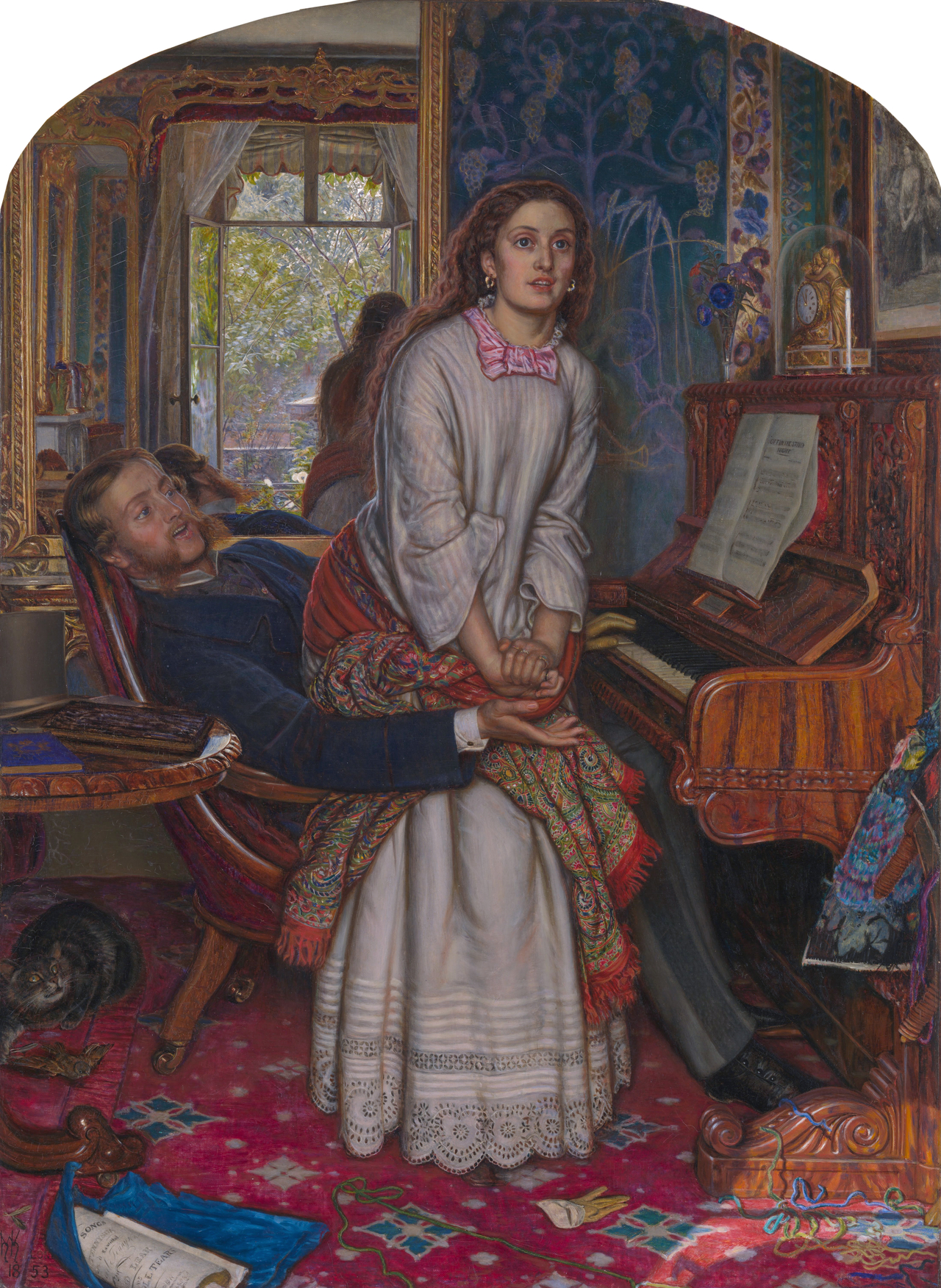
At first glance, the two look so affectionate they might be mistaken for a devoted couple.
The man is dressed in smart going-out clothes; the woman, her hair loose, wears the most comfortable of everyday garments. The furniture and wallpaper, the sheet music and piano, the embroidery and books on the table — even their apparent hobbies and tastes seem refined. Yet they are neither married nor formally betrothed.
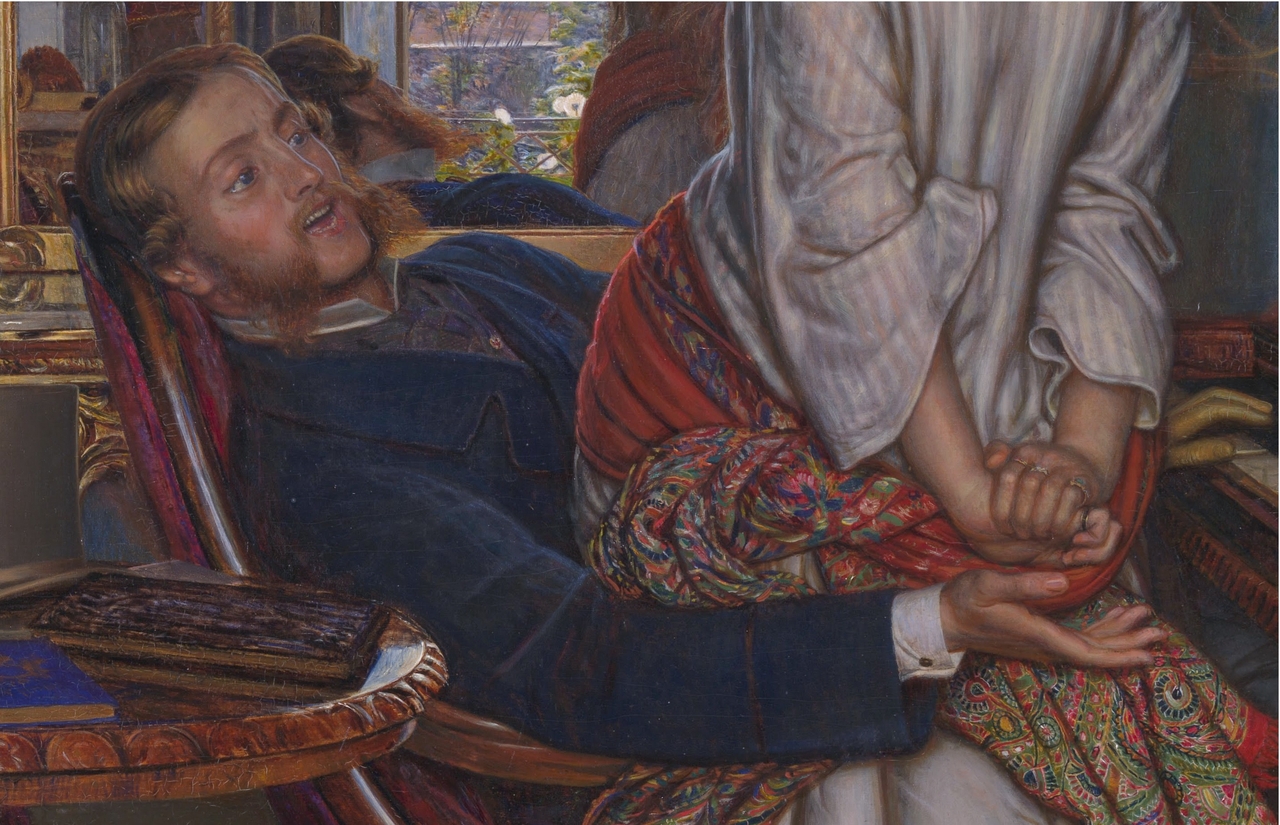
The two carry an uncomfortable secret: a relationship that cannot be shown to the world.
Clues are scattered throughout the canvas.
Look first at the woman's fingers — the place where a wedding ring should be is bare. Everything else in the room also fails to cohere. Each object glitters and dazzles, yet no consistent taste runs through them. Like the colored threads tangled and twisted in the lower right of the painting, the furnishings feel as though they belong to different worlds. This is no ordinary home. It reads as a hastily arranged meeting place. Art historian Elizabeth Prettejohn described the space as quintessentially Victorian while also carrying, unsettlingly, "the vulgarity peculiar to the nouveau riche."
Carol Jacobi, curator of British art at Tate Britain, offers a more direct explanation.
"In fact, her clothes, the room and the jewelry were most likely all 'bought for her' by the man beside her."
The two are not bound by love but by mutual desire — a transaction. He sees only her vitality; she sees only his wealth.
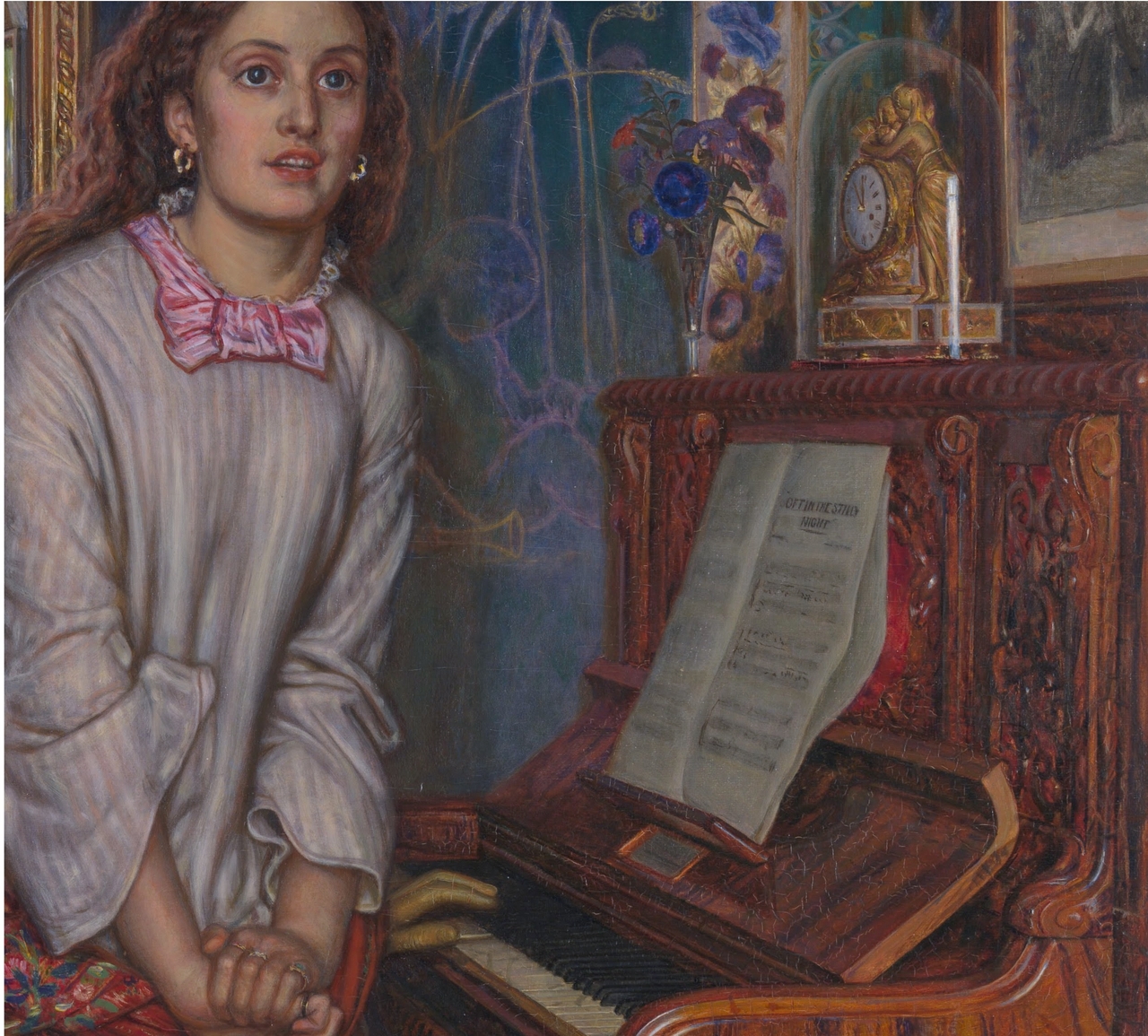
The man holds the woman in his arms and plays the keys himself.
He opens the sheet music.
Thus, in the stilly night,
ere slumber's chain has bound me...
The song continues. The woman may not know how to play the piano, or even how to read the lyrics. The evidence is there: hands clasped stiffly before the piano keys, and a writing primer on the table, crisp and untouched as if brand new.
A clock trapped beneath a glass dome, an unfinished piece of embroidery, a cat toying with a dead bird — all three warn of the woman's predicament. She is imprisoned by this man; their arrangement cannot last; and the end of this liaison may not be a happy one.
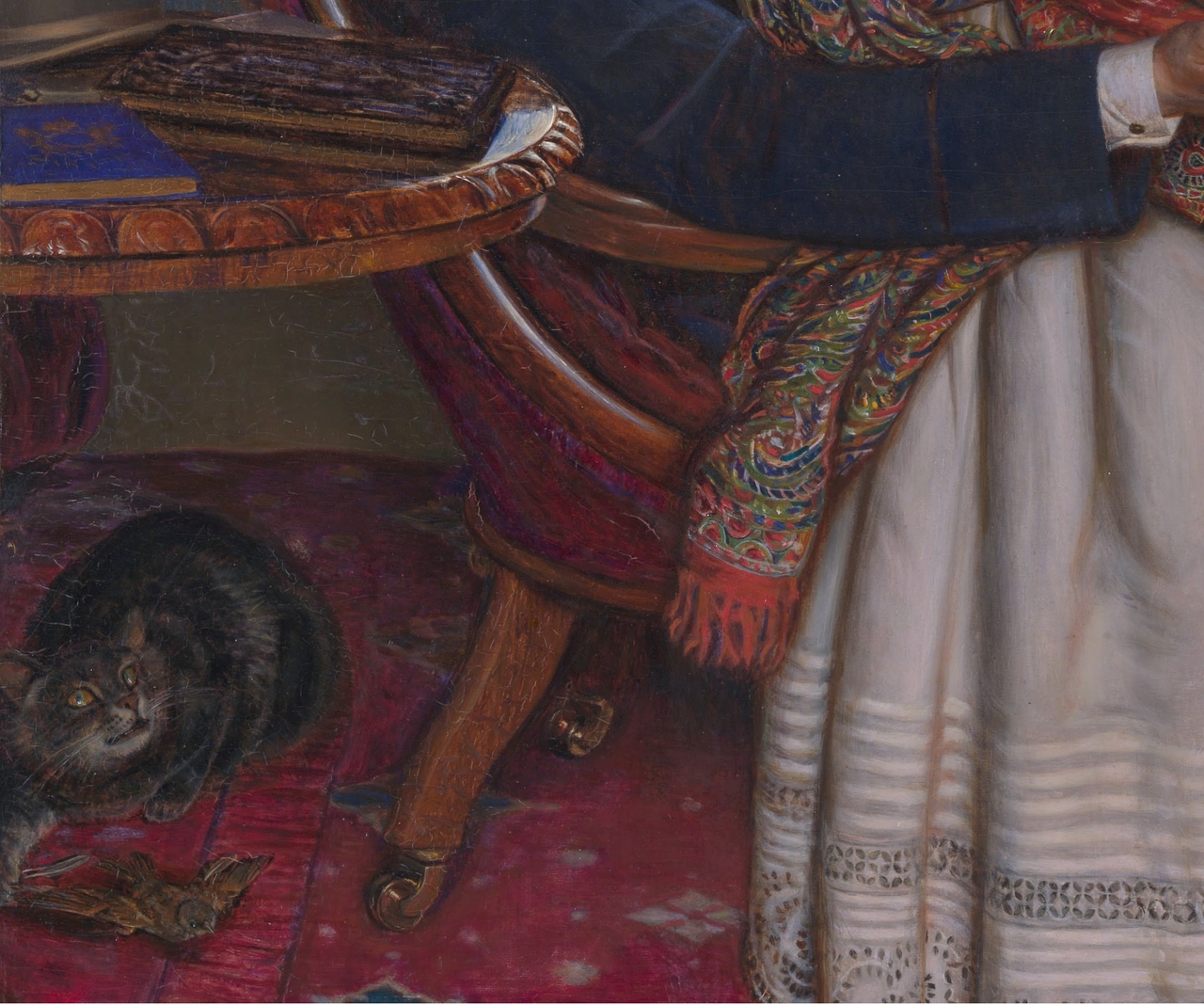
Perhaps one day she will end up like the glove that has fallen to the floor at her feet — limp, discarded.
Amid all this, the woman is struck by a sudden awakening. Her conscience is stirring. The past that surfaced unbidden seems to have shamed her present and shown her a bleak future that may yet come. Outside the window, the world is bright. Spring sunlight pours in; the swaying trees are still green. The scene suggests that hope remains — if she can rise now, leave behind the easy downward path and set her feet once more on the hard climb upward. In that she is looking inward and reaching toward escape, the woman stands morally ahead of the man beside her, who lingers in pleasure without a second thought.
The woman, as if breaking free from a gilded cage,
maintains a sacred self-restraint amid her astonishment
as she draws away (from the place of their meeting).
Her frivolous companion, oblivious to it all, sings on,
unwittingly hardening her resolve to repent.
This is understood to be a commentary left by the painter himself.
William Holman Hunt was a painter active in 19th-century Britain.
The painting is titled "The Awakening Conscience." It is also read as a work conceived with a particular segment of the Victorian upper class in mind — those who kept up a strict outward appearance while living dissolute lives behind closed doors.
In Hunt's original version, the woman's face was gripped by terror and anguish. The businessman Thomas Fairbairn, who commissioned the work, found this objectionable, and after discussions between the two, the expression was softened. Hunt is said to have deeply regretted the change in later years.
"The Awakening Conscience" made its public debut at the Royal Academy exhibition in 1854. Critics including John Ruskin praised its clear moral purpose and meticulous detail. Yet a significant number of critics found the painting's message preachy and off-putting.
"The details of the picture — the trees of spring, the piano, the bronze ornaments under the lamp — are wonderfully real. But the murky indigo and red lead the eye toward gloom, and the tones are somber rather than beautiful. ( ... ) Those who sympathize with the sentiment will feel pain; those who do not will feel disgust." That was the assessment of the British literary journal The Athenaeum that year.
yul@heraldcorp.com