Authorities conduct intensive probe of 43 complexes in Seoul and other regulated and popular areas
Sham address registrations account for 94% of suspected violations
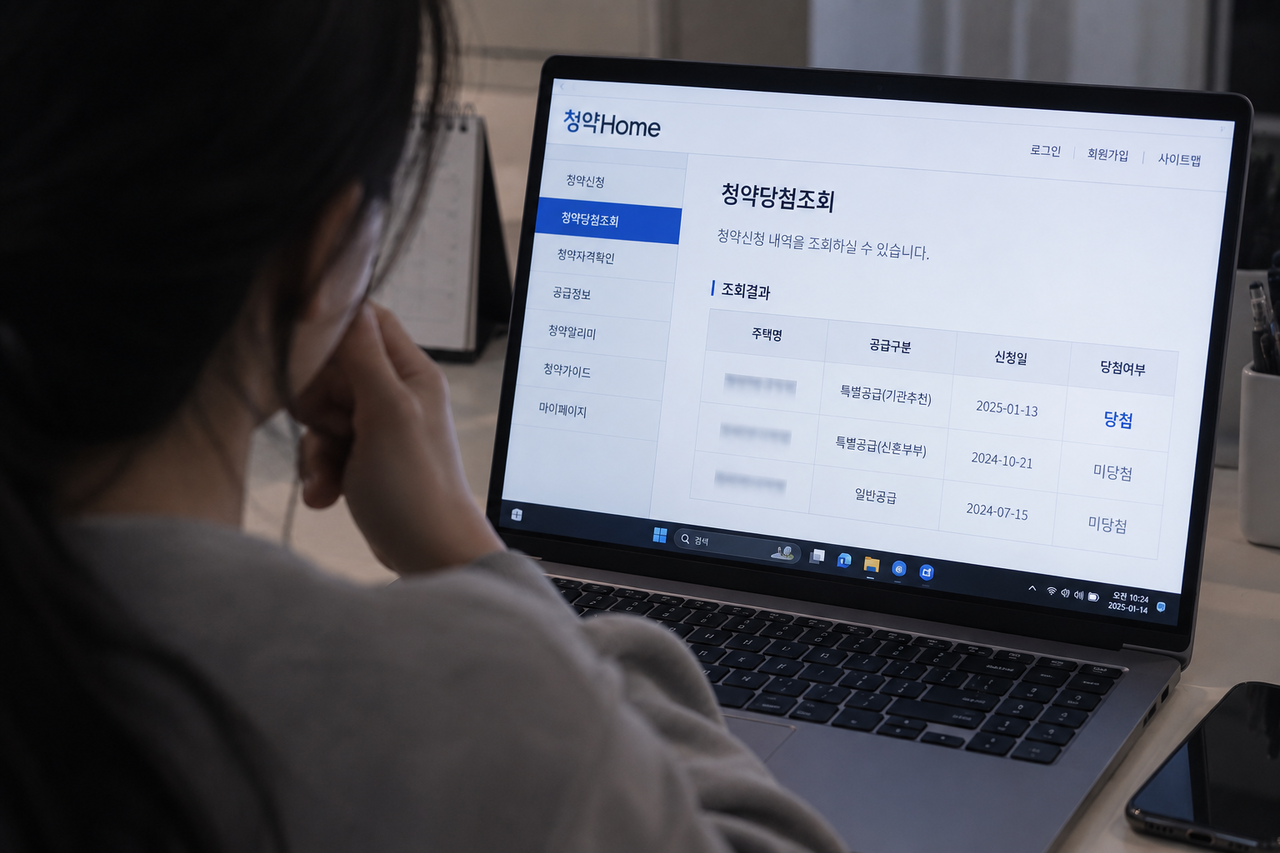
A high-income doctor couple, identified as H and I, falsely reported leaving their hospital jobs just before the resident recruitment announcement date to meet low-income eligibility requirements, then rejoined the hospital shortly after the announcement. The scheme allowed them to win a special supply unit in Seoul reserved for newlywed couples earning less than 120 percent of the median income.
A four-person household identified as the A family, which owned three homes and lived together in a townhouse in Bundang, registered their two sons — B and C — at sham addresses in Seoul and Suwon, respectively. Both sons then applied for apartments being pre-sold in Seoul through the general lottery and won units.
A joint investigation by the Ministry of Land, Infrastructure and Transport and the Office for Government Policy Coordination's real estate oversight task force has uncovered 354 suspected cases of fraudulent apartment subscriptions, focusing on whether winners' claimed dependents actually lived at the registered addresses.
The Ministry of Land, Infrastructure and Transport said Tuesday it conducted an intensive review of all complexes in regulated areas including Seoul, as well as other popular areas — 43 complexes and 25,000 households in total — covering pre-sales from July 2025 through March this year.
Of the suspected violations, 334 cases, or 94 percent, involved sham address registrations. The practice involves falsely filing a change-of-address to claim residency in a target area, qualify as a household with no home ownership, or inflate dependent scores before submitting a subscription application. Investigators found a wide range of schemes depending on who carried out the false registration.
In one case, a person identified as D, who lived in Seoul with a spouse and children, registered the spouse at the in-laws' address within the same complex. By adding the father-in-law as a dependent, D won a general supply unit in Seoul through the points-based subscription system.
Investigators also found 18 cases in which applicants were living with a homeowning partner and raising children together but had not registered their marriage in order to maintain eligibility as home-free applicants. In one such case, a person identified as J had held a wedding ceremony with K — who owned two homes, including an apartment subscription in Incheon — four years before the resident recruitment announcement. The two raised a child together but J did not register the marriage, allowing J to apply for and win a general supply unit in Incheon under the lottery system reserved for applicants with no home ownership.
Investigators also uncovered one case each of subscription credential brokering — in which an applicant conspired with a broker to hand over financial authentication certificates and passwords, allowing the broker to apply and sign contracts on the applicant's behalf in exchange for payment — and a fake resignation, in which an applicant falsely reported leaving a job to meet low-income eligibility requirements before applying.
The investigation examined not only parents' medical facility usage records but also children's workplace locations and rental payment histories for all household members to verify whether claimed dependents actually resided at the registered addresses. The number of on-site inspectors was increased from eight to 15, and the inspection period per complex was extended from one day to three to five days.
Choi Byung-gil, head of the Housing Fund Division at the Ministry of Land, Infrastructure and Transport, said the ministry would spare no effort to stamp out fraudulent subscriptions and create a fair market. "When a fraudulent subscription is confirmed, we are taking strong measures including criminal prosecution, contract cancellation, forfeiture of the deposit and a 10-year ban on subscription eligibility," Choi said, urging applicants to exercise particular caution to avoid civil and criminal penalties.
hss@heraldcorp.com