Rubio: 'No need for major combat operations right now'
Secretary says Iran's economic pain grows daily; warns of military response if red lines crossed
Rubio calls Ukraine truce talks 'very productive,' stresses European role
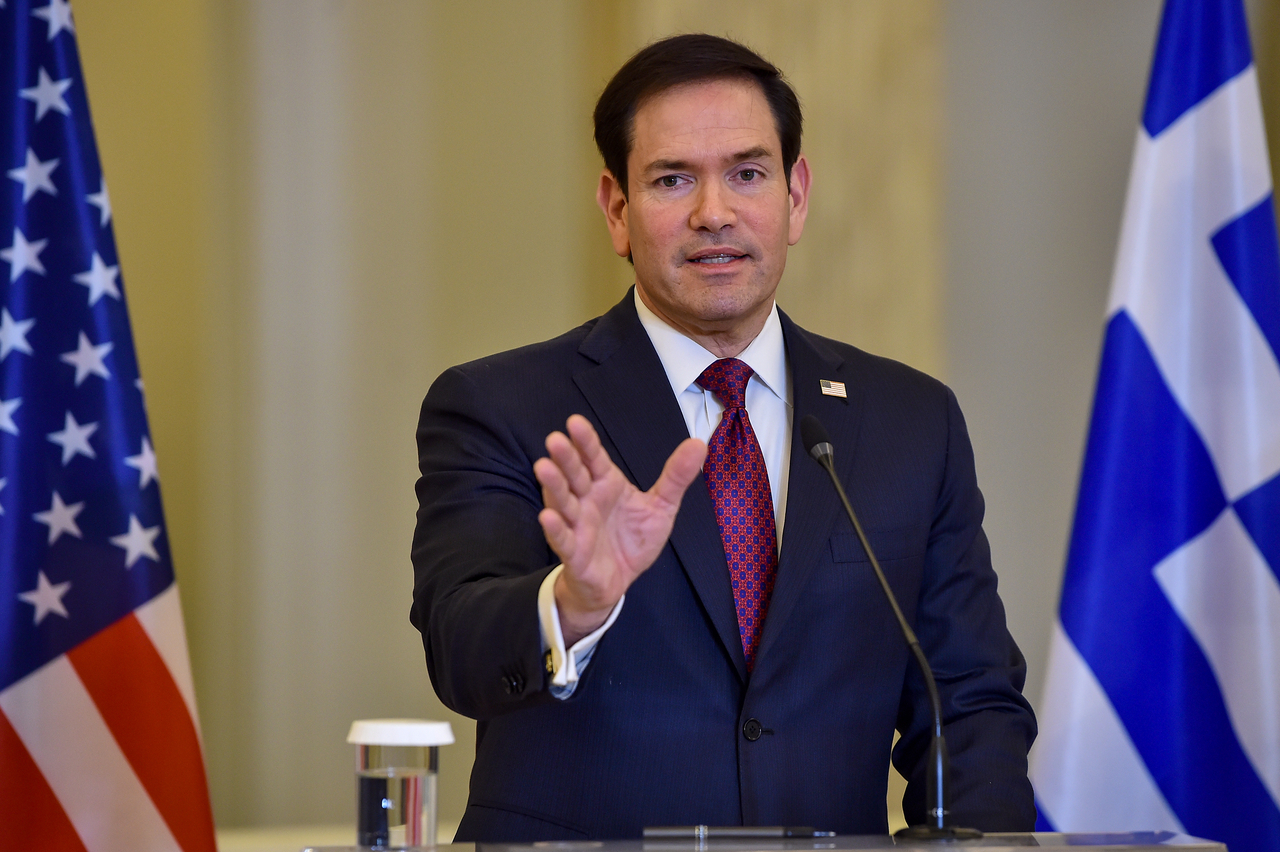
The United States said it will hold off on large-scale military operations against Iran for now, opting instead to squeeze the Iranian government through economic pressure. Washington also warned, however, that military action remains on the table if Iran crosses US red lines.
Speaking to reporters on the sidelines of the G7 foreign ministers' meeting in Paris on Tuesday (local time), Secretary of State Marco Rubio said the economic campaign against Iran had been so damaging that major combat operations were not immediately necessary, according to AFP and Bloomberg.
"President Donald Trump has concluded that, for now, large-scale combat operations are not needed," Rubio said, "because we are achieving the same objectives through economic means."
Rubio said US interdiction efforts have cut off Iran's oil supply, adding that "the economic pain of Iran and the Iranian regime is growing every day." He also criticized the government, saying "this crazy radical regime is transferring the pain onto its own people."
Rubio did not rule out military options entirely, however. He warned that US forces stand ready to respond if Iran crosses American red lines, and that Tehran would pay a "terrible price" if it did.
The statement came as the economic burden of a prolonged confrontation with Iran has mounted. European allied foreign ministers at the G7 meeting urged Rubio to avoid further escalation.
British Foreign Secretary Ed Miliband said the situation — "neither war nor peace" — amounted to a deadlock that "is causing deep economic pain to our countries."
A diplomatic breakthrough between Washington and Tehran remains elusive, however. Rubio said Iran was not approaching negotiations realistically but would ultimately come to terms with economic reality.
Iranian Foreign Minister Abbas Araghchi pushed back, telling state news agency IRNA that the dispute "cannot be resolved through military means or by tightening sanctions." He said the only solution was "to use the language of respect, engage in diplomacy and consider Iran's demands."
Separately, Rubio offered a positive assessment of the three-way US-Russia-Ukraine truce talks that resumed in Abu Dhabi, UAE, on Tuesday (local time) after a nine-month hiatus.
He described the talks as "very productive" and said "what really matters is that the European side is at the negotiating table" — a remark seen as addressing concerns that Europe could be sidelined from US-led peace efforts.
"We know where we stand — we stand with Ukraine," Rubio said, adding that the United States was supporting Ukraine militarily, financially and in the energy sector while maintaining pressure on Russia through sanctions.
Rubio also held a separate meeting with Ukrainian Foreign Minister Andrii Sybiha on the sidelines.
Sybiha told Reuters after the meeting that he had urged the United States to continue its peace efforts while keeping pressure on Russia. He also said he had asked Washington to accelerate additional support for Ukraine's power grid, the supply of interceptor missiles and intelligence sharing.
Sybiha said a Black Sea truce proposal had been conveyed to Russia through mediating countries including Turkey, Egypt and India, but struck a cautious tone on the prospects for progress.
sjy@heraldcorp.com