Export contracts rise 18% from a year earlier
Fresh produce, traditional liquor deals surge 515%
1,000 firms from 46 countries join; 56,000 visitors attend
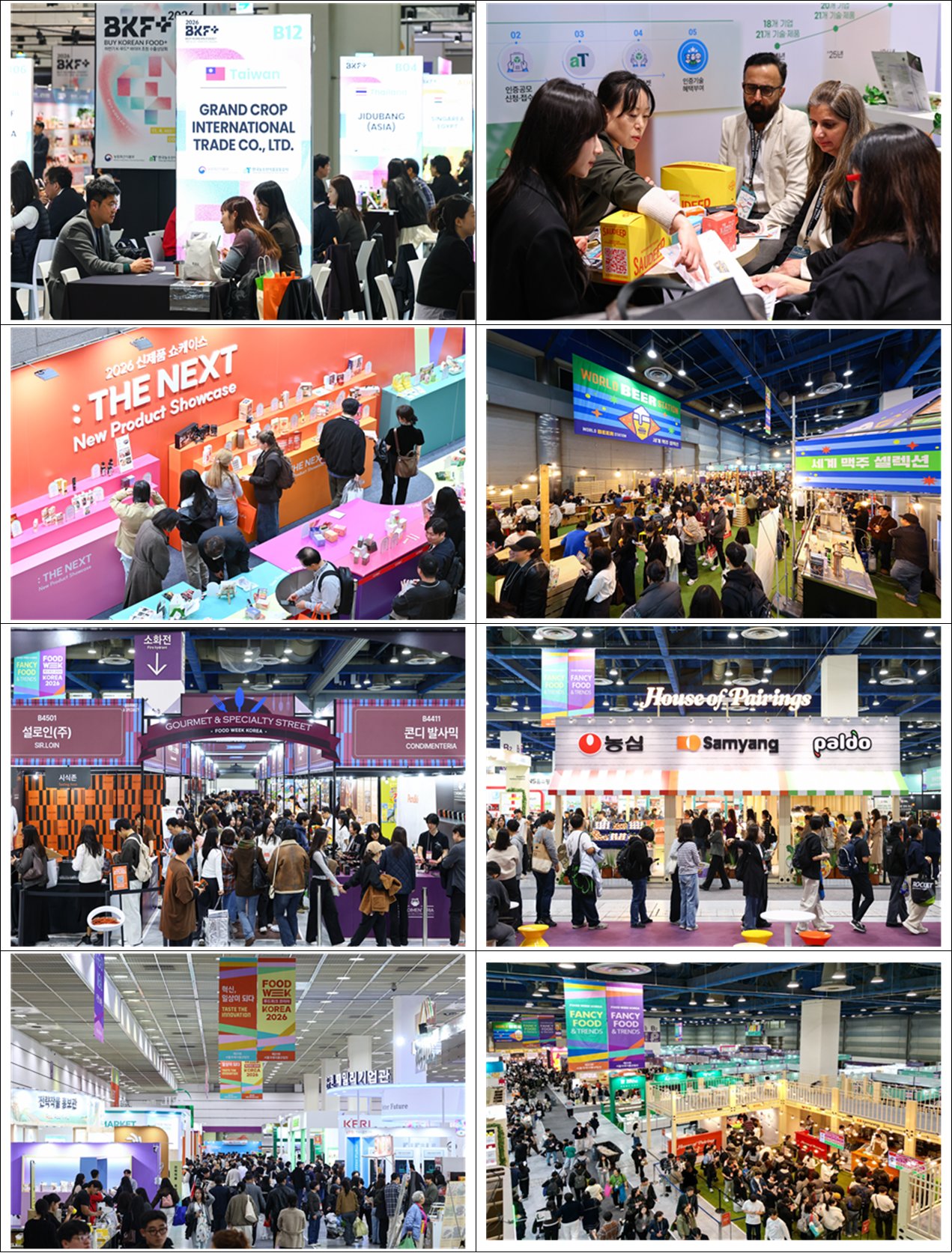
Overseas interest in Korean food — from bulgogi marinade sauces and fresh fruit to traditional liquors — translated into $14 million in on-site export contracts at the country's largest food industry fair in Seoul, up 18 percent from a year earlier. Fresh produce and traditional liquor deals surged 515 percent, signaling a broadening of K-food export categories.
The Ministry of Agriculture, Food and Rural Affairs said Wednesday that Food Week Korea 2026, held at COEX in Seoul from Nov. 4 to Nov. 7, generated 2,937 export consultations and 47 on-site contracts. The total contract value of $14 million represented an approximately 18 percent increase from the previous year.
This year's fair drew about 1,000 food companies and 252 buyer firms from 46 countries, with 1,622 booths set up across the exhibition floor. Total attendance, including general visitors and buyers, reached about 56,000 — surpassing last year's 55,000 and setting a new all-time record.
Among the standout items at the fair were Korean-made sauces and food ingredients, led by bulgogi marinade sauce. Representatives from major US food service and retail companies expressed interest in incorporating Korean ingredients into institutional catering and restaurant markets in the United States, and held detailed discussions with domestic firms on supply arrangements.
The development is notable because K-food export consultations, which had long centered on finished products, are now expanding into sauces and raw ingredients used by local restaurants and catering companies.
Fresh produce and traditional liquors also drove the jump in export contracts. On-site deals for fresh fruits and vegetables — including grapes and strawberries — and traditional liquors totaled about $8 million, a 515 percent increase from a year earlier.
The fair featured tasting events pairing fresh produce with traditional liquors. A live showcase called "K-Joomak" was held to promote Korean traditional liquors and give overseas buyers a chance to sample the products firsthand.
Desserts made with regional agricultural products also drew attention. Offerings included a premium dessert featuring Sancheong dried persimmons combined with yuzu, jujube, pine nuts and ginseng, alongside a range of other products using local specialty ingredients. Overseas buyers explored export potential through tastings and consultations.
The fair also produced a new cooperation agreement to open fresh export channels for domestic produce. Producers, exporters and a Singaporean buyer signed a memorandum of understanding for a pilot program to export fully ripened Korean strawberries. The agreement lays the groundwork for expanding the overseas market presence of Korean strawberries.
Agriculture Minister Song Mi-ryeong visited the fair on its final day, Saturday, to encourage representatives of domestic food companies and hear their views from the export front. Song reviewed participating companies' products as well as food-tech innovations including AI and robotics.
"K-food is now at a golden moment, capturing the palates of people around the world and expanding its global footprint," Song said. "We will spare no policy or diplomatic support to help our food companies make a powerful leap onto the world stage."
Jeong Gyeong-seok, the ministry's director general for food industry policy, said the government would "help diversify exports of promising items such as sauces and food ingredients, and actively support their convergence with advanced food technologies including AI and robotics, to strengthen the competitiveness of K-food."
adastra@heraldcorp.com