Only 4.6% of Korea Workers' Compensation and Welfare Service's 37 billion won budget request was approved — wage-gap funds cut entirely
Agency's workload grows with every new policy, but staffing and pay remain stagnant
27% of new hires quit within five years; average pay trails National Health Insurance Service by 7.72 million won
Next year's total spending rises by 93 trillion won, with AI and industry getting the lion's share — budget officials say they will 'consult further'
"Sort out your own house first."
That was a reader's comment posted Tuesday on a news article about the poor working conditions of employees at the Korea Workers' Compensation and Welfare Service, published in connection with a National Assembly Budget and Accounts Committee hearing. The reader also criticized the Ministry of Employment and Labor for "squeezing its own subsidiaries like a dry rag." The language was blunt, but the point was clear: a government that has made protecting workers' rights and strengthening the employment safety net a core policy priority is being stingy with the very public institution employees who carry out that work on the ground.
Of the 37.01 billion won ($27.5 million) in additional funding the Korea Workers' Compensation and Welfare Service requested for the 2027 budget, only 1.69 billion won was reflected in the government's draft — a reflection rate of just 4.6%. The entire 21.75 billion won the agency sought to close the wage gap with other public institutions — covering long-service allowances and holiday bonuses — was cut. Only the standard 0.5 percentage-point additional increase in total personnel costs applied to lower-wage public institutions was approved.
The government has pledged to pour trillions of won in additional investment into AI and advanced industries as future growth engines next year. Yet it has allocated virtually nothing beyond existing policy for improving the conditions of the workers who protect industrial accident victims and support the unemployed. The gap between the weight the government places on its stated policy priorities and the budget it directs toward the people who execute them has been laid bare.
From industrial accidents to retirement pensions: the agency underpinning government policy
The Korea Workers' Compensation and Welfare Service is far more than an industrial accident compensation body. It is the country's leading public labor institution, handling core functions for two of Korea's four major social insurance programs — employment insurance and industrial accident insurance — including enrollment, coverage management and premium assessment.
The agency reviews whether injuries or illnesses sustained on the job qualify as occupational accidents and pays out insurance benefits. It also operates industrial accident hospitals and rehabilitation facilities to help injured workers recover and return to work. When employers cannot pay wages, the agency administers the government's advance payment system, which covers wages on the employer's behalf under certain conditions.
On top of that, it runs a retirement pension program for workers at small and medium-sized enterprises and manages "Pureun Ssiat," the SME retirement pension fund system. In effect, the agency serves workers across their entire working lives — covering industrial accidents, unemployment, unpaid wages and retirement income.
The problem is that every time the government expands the social safety net for workers, the agency's workload expands with it.
Extending industrial accident insurance coverage to special-employment and platform workers means more enrollment management and compensation reviews. Shortening processing times for accident claims demands faster assessments and payments. Restructuring employment insurance premiums around an income-based system brings a new wave of administrative work — calculating premiums, notifying policyholders and handling complaints.
When the government broadens retirement pension enrollment for SME workers, the agency must manage more workplaces, more subscribers and more accumulated funds. The union argues that every new policy requires more people and organizational capacity to implement, but staffing levels and pay structures have not kept pace with the growing workload.
The more the government touts the achievements of its policy agenda, the heavier the burden becomes for the agency employees who carry it out.
27% quit within five years — nearly three in ten skilled workers walk out the door
Poor working conditions are already translating into a staffing exodus.
Democratic Party of Korea lawmaker Heo Seong-mu said at the National Assembly Budget and Accounts Committee hearing on Tuesday that the rate of employees leaving the Korea Workers' Compensation and Welfare Service within five years of joining had reached 27% — meaning more than one in four new hires does not stay five years.
According to the agency's union, 855 people who had previously worked at the Korea Workers' Compensation and Welfare Service were hired by the National Health Insurance Service between 2020 and 2024. The figures confirm a pattern of employees moving from the agency to other social insurance public institutions.
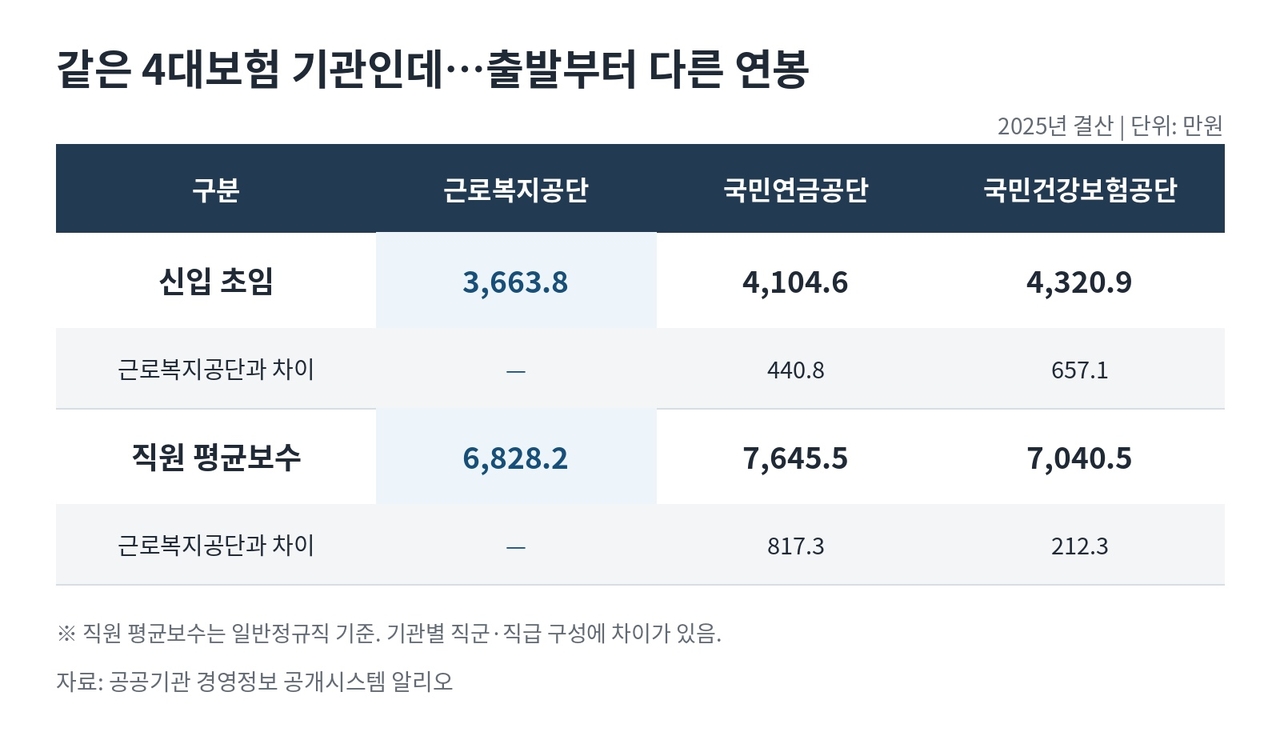
The wage gap is also significant. Based on 2025 settlement figures, the average annual pay per employee at the Korea Workers' Compensation and Welfare Service — excluding medical staff — was 62.69 million won. That is 7.72 million won less than at the National Health Insurance Service and 13.77 million won less than at the National Pension Service.
Determining whether an industrial accident qualifies for compensation or reviewing complex insurance benefit claims requires considerable experience and expertise. When skilled workers leave, the burden on remaining staff grows and the cost of training new hires rises — ultimately affecting how quickly accident claims are processed and the quality of public services.
If the government continues to promise swift treatment and compensation for industrial accident victims and a broader employment safety net while failing to create conditions that allow the people who deliver those services to stay in their jobs, the effectiveness of those policies will inevitably suffer.
New hires added by policy mandates — but paid out of existing staff's wages
The agency's low wages are also rooted in a structural problem: the personnel costs for staff added under past government policies were never properly funded.
Employment and Labor Minister Kim Young-hoon raised the issue at Tuesday's committee hearing, referring to a staffing increase at the agency in 2008. According to the union, 71 positions were added at that time to staff a newly established occupational disease adjudication committee, but no separate budget was allocated to cover their salaries. As a result, the agency has been absorbing 6.43 billion won in personnel costs from its existing total wage budget.
The government expanded headcount in line with its own policy but required the agency to cover the cost from the wage pool already allocated to existing employees. The union says this structure, now nearly 18 years old, has been a persistent drag on the agency's overall pay levels.
The same pattern is repeating itself under new policy mandates.
According to the union, of the 564 additional positions requested to implement the income-based employment insurance premium restructuring, only 100 were approved as net new hires. Of the 185 positions sought to expand the Pureun Ssiat retirement pension program, just five were granted.
When adequate staffing is not provided, the agency must either redeploy existing workers or pile more work onto them to carry out the policy. The government keeps launching new programs without fully funding the people and resources needed to run them.
Trillions for AI, 1.7 billion won for an agency seeking 37 billion
The contrast with the government's broader fiscal direction for next year is stark.
According to a report by the Narasallim Research Institute on the 2027 budget draft, total government spending next year will reach 820.9 trillion won, an increase of 93 trillion won over this year's original budget. National tax revenue is projected at 584.4 trillion won — up 194.2 trillion won from this year's original budget and 105.8 trillion won above the revised estimate released in September.
The government is channeling its expanded fiscal capacity into securing future growth engines. The communications budget, which reflects higher AI spending, will rise 30.0 percent, while the industry, SME and energy budget will increase 29.7 percent.
One flagship example: the project to strengthen AI computing infrastructure will grow from 2.11 trillion won to 4.28 trillion won — an increase of 2.17 trillion won — when accounting transfers are included. This signals an aggressive commitment of public funds to nurturing future industries. AI investment and public-sector personnel costs are, of course, different in nature and purpose, and there is no reason to question investment in future growth drivers in itself.
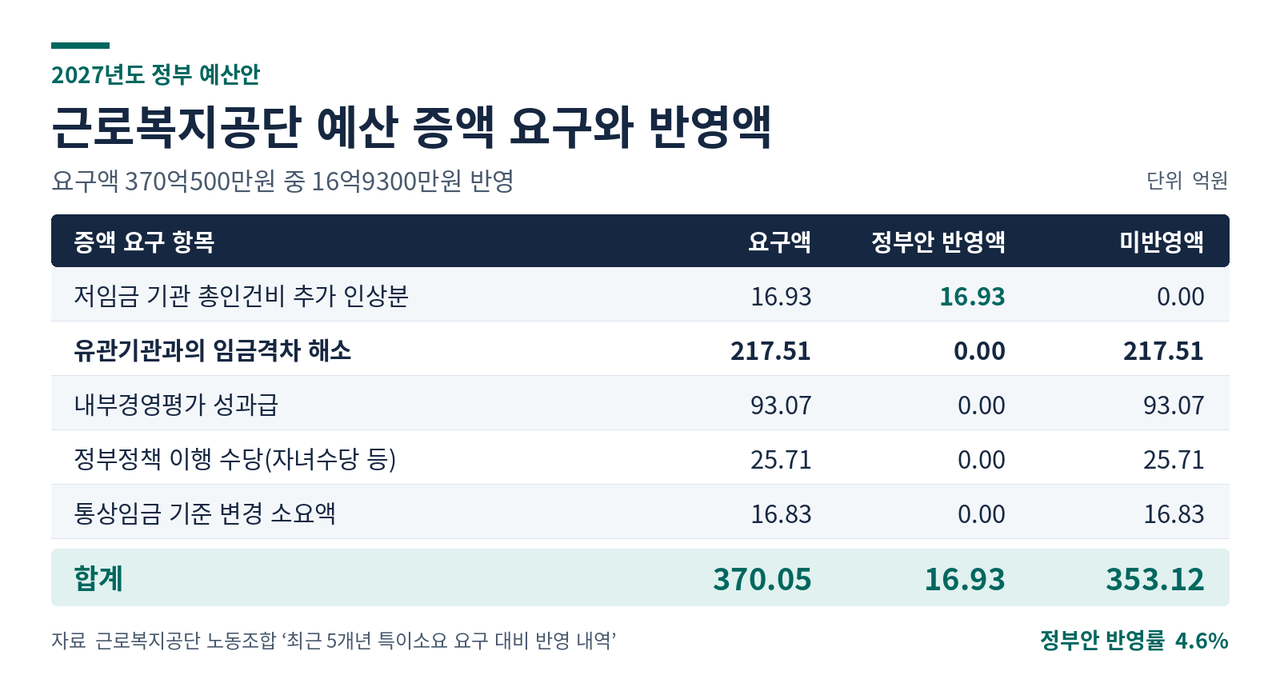
What is worth examining, however, is that while the government is actively using fiscal expansion to back its stated priorities, it has deferred improvements for the public institution employees who carry out core policy mandates — including industrial accident prevention and compensation and the expansion of the employment safety net.
The 37 billion won the agency requested amounts to roughly 0.04 percent of next year's 93 trillion won spending increase. That is not an argument for approving every won of it — but the fact that more than 95 percent of the request was rejected even amid a period of fiscal expansion raises questions about how the government is allocating its resources.
Labor minister calls for 'drastic action' — budget ministers say they will 'consult further'
Even within the government, there are clear differences in how seriously officials view the problem and how willing they are to act.
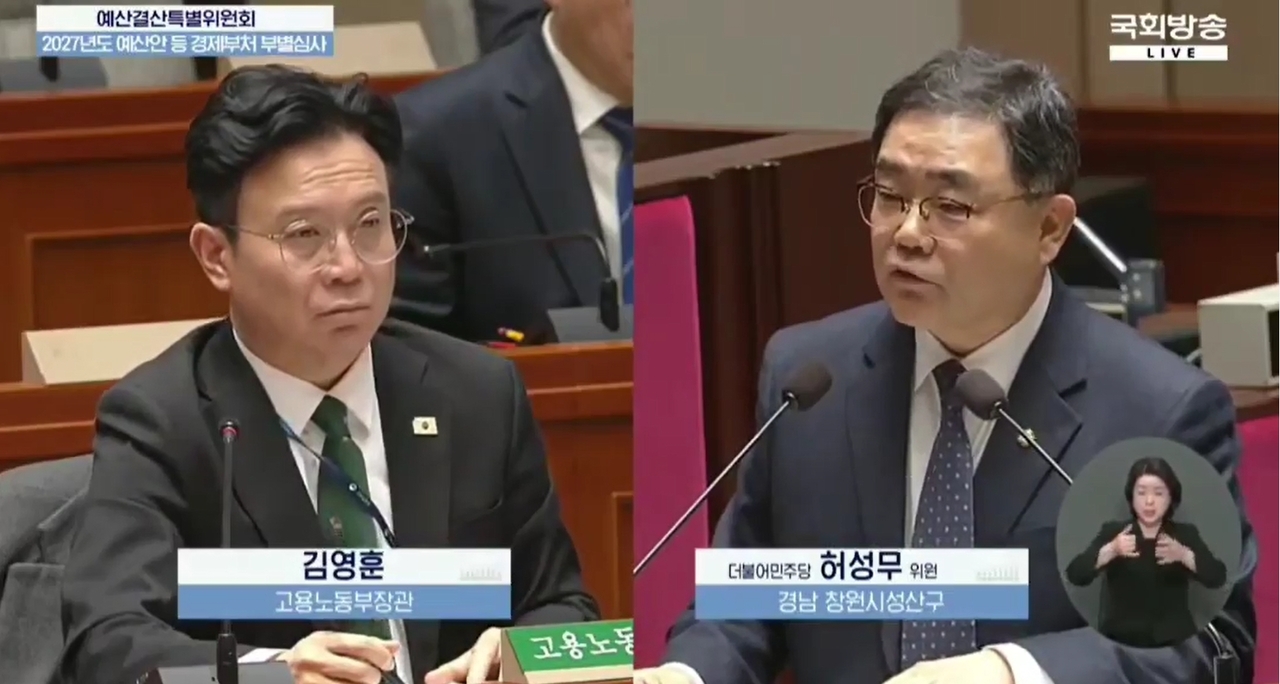
Employment and Labor Minister Kim said at Tuesday's committee hearing that the agency's low wages and poor working conditions were "deeply painful" and that he believed "there needs to be some kind of drastic action at some point."
Ministry of Planning and Budget Minister Park Hong-keun, who oversees budget drafting, explained the additional total personnel cost increase rate for lower-wage institutions and said he would "consult further" with related ministries. Deputy Prime Minister and Minister of Economy and Finance Lee Hyeong-il also mentioned the issue of differentiated total personnel cost application and said he would "keep looking into it."
The minister responsible for labor policy acknowledged that drastic action was needed, but the two ministers who control the budget offered no specific figures or timeline for additional support.
The agency's personnel cost problem is not new. It is a structural issue that has accumulated since the 2008 staffing expansion, compounded more recently by the growing workload from new policy mandates. If the government has failed to resolve the wage problem despite years of expanding the agency's duties under its own policies, observers say what is needed now is a concrete solution — not more interministerial consultations.
It is also difficult to reconcile, from a policy consistency standpoint, the government's calls on private companies to create quality jobs and improve worker treatment while allowing wage gaps and staff attrition at its own public institutions to persist for years.
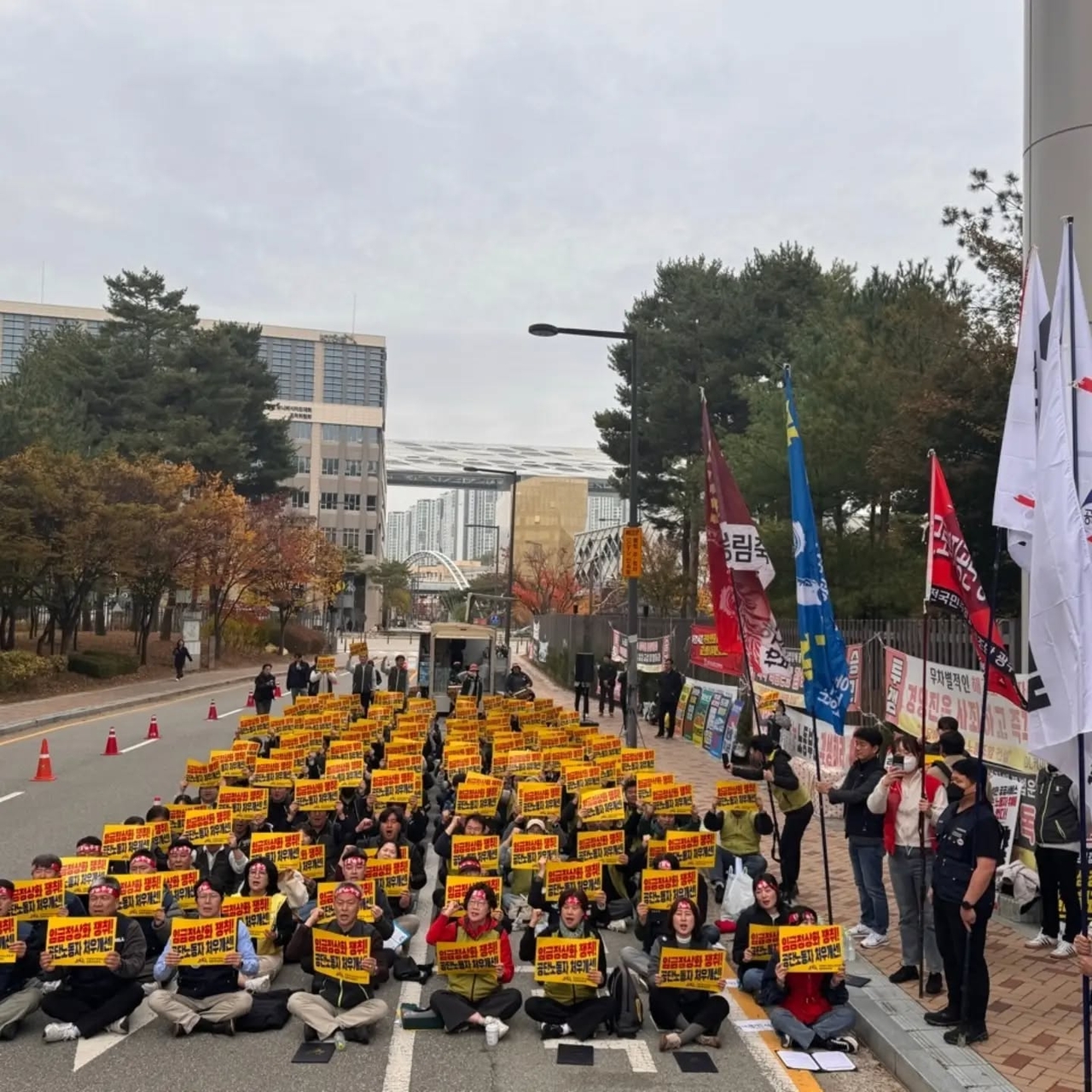
The Korea Workers' Compensation and Welfare Service union has announced a general strike of some 8,000 workers — including staff at industrial accident hospitals — on Nov. 26. If the strike goes ahead, there are concerns it could disrupt public services directly tied to workers' livelihoods, including industrial accident compensation and employment insurance.
The government's policy priorities cannot be realized simply by listing program names in a budget document. For industrial accident victims to receive timely compensation, for workers with unpaid wages to keep their households afloat, and for SME workers to have income security in retirement, the employees who handle those cases must be able to build expertise and work in stable conditions.
If investing in AI and advanced industries is the cost of securing future growth, then investing in the people who run the workers' social safety net is the cost of sustaining the society those industries are meant to serve.
As long as the answer given to the people carrying out what the government calls its most important policy priorities remains "we will consult further," critics say rising tax revenues and an expanding budget will feel not like good news but like confirmation of their exclusion.
This article is part of the Sejong Backbrief series, in which reporters based in Sejong cover the background and context behind government policy announcements, including informal briefings and the stories behind the headlines. The series aims to deepen readers' understanding of policy while sharing the lighter side of life in the government district.
fact0514@heraldcorp.com